


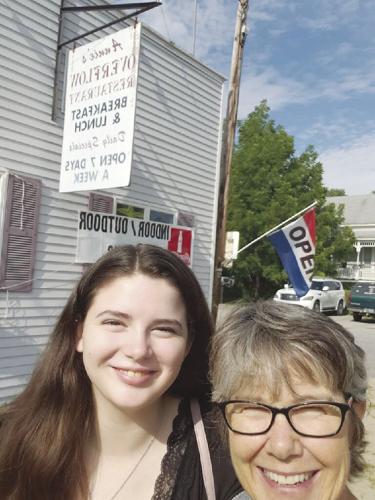
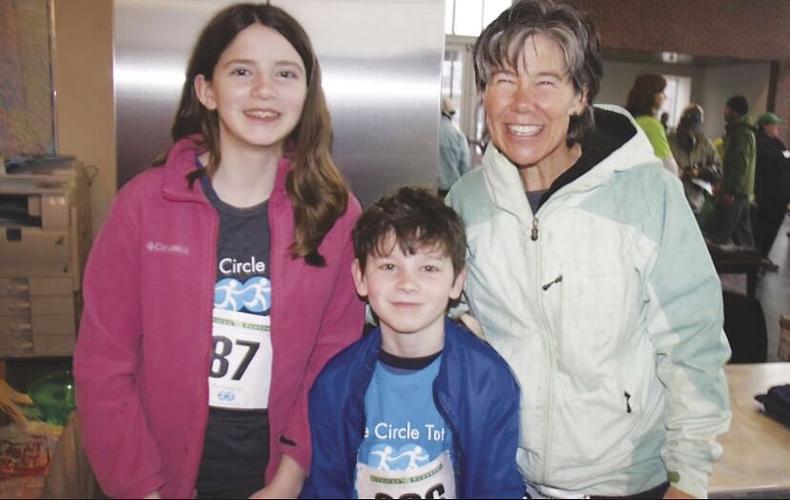
Since 2008, Tracy White, a former ski racing coach, has mentored two Circle Program girls, and that gift has flowed in both directions.
Jasmine Tewskbury, the nine-year-old White first mentored, is now a rising junior at Champlain College in Vermont, the first in her family to go to college and a sociology major who is planning a career helping children. Today, the young woman White remembers as being “as quiet as a church mouse” is confident and proud of what she can do. “She’s finding her voice and is passionate about mental health and wellbeing. She walks with self-confidence and pride in who is she is,” said White.
Tewksbury remembers mentoring as a formative experience that segued into a lasting friendship.
“Before I went to Circle, I was such a shy kid and didn’t have many friends and I had never spent time a away from home," said Tewksbury, who was White’s mentee for 10 years until she outgrew the program. “Circle Program helped me get out of my comfort zone and grow into the person I am today. Tracy helped with that, too. Having someone to look up to as a role model was very important. My mom wasn’t around much because she was always working. It was like having that other adult.
“After all these years of building that bond, [White] considers me a daughter in addition to her own two sons," said Tewksbury. They still meet for breakfast once or twice a month. “I have her in my life after all these years. That’s the case with a lot of Circle girls and their mentors.”
It’s been a life-changing experience, one that has become increasingly important in a fast changing world where many connections are made or preserved online. Since the program’s beginning, approximately 1,200 mentors have served, and roughly 20 new volunteers are needed each year to mentor girls coming in, said Beth Dever, Circle Program’s executive director.
“It makes sense that children who have an adult mentor to assist them in navigating through various challenges and provide support will certainly benefit from that intervention,” said Charlotte Hassett, director of child and family services at Lakes Region Mental Health Center, which supplies mental health support for Circle Camp in Groton and coaching for its staff.
For it to work, mentoring is a personal commitment and a time commitment that requires no special training in education or social work.
During their relationship, White took Tewksbury on a variety of outings to expand her experiences and exposure, including trips to restaurants, the Currier Museum in Manchester and orchards for apple picking.
“At the end of the day, when I asked her what she enjoyed most she said, ‘I love to come to your house to bake.’ I realized my house was a refuge for her. Their world isn’t always calming,” said White. They crave “a safe place to hang out and let their hair down.”
White’s newest mentee is a 15-year-old student who uses the pronouns they, them or their, who hasn’t found acceptance at home. They like to come to White’s house to draw or play the piano, or play with her cat and dog. During COVID they met over Zoom and taught White how to draw anime figures. “They were feeling really good about helping someone learn something,” White said.
Tewksbury learned how to ski on Circle Program outings with White. “I used to go over to her house a lot. We both loved baking. We’d get together and try new recipes. Now, when I tell people I’m having breakfast with my mentor, sometimes I just end up calling her my grandmother. That’s how much she means to me. I can’t see my life without her because she’s had such an impact on me as a person.”
There are some simple ingredients for cooking up a worthwhile mentor-mentee relationship.
“I would say they honestly just have to care about the kid they’re looking after. They have to realize how much it means to the kids to have you in their life,” said Tewksbury. “Recognizing the influence of the friendship and relationship. That’s so important to know before being a mentor.”
Many Circle Program mentees have had multiple homes, multiple schools, and multiple people they live with.
“It’s critical to be someone who they can count on,” said White. “It’s not a casual commitment. You develop that relationship so the child can trust you. The requirement is that your follow through is good. You do what you say you’ll do or explain why you can’t. There’s nothing left to guess work.”
The girls referred to the program by their school guidance counselors “can’t count on life. There are just too many people who are unable to meet their expectations,” White saidd.
Research into social-emotional wellness and outcomes for children with insecure finances, family, housing or food indicate the game-changing potential of having one trusted adult, a constant to help them navigate difficult times as well as a companion to spend time with.
Being a Circle Program mentor requires meeting at least once or twice a month until a girl turns 18 — but many of the relationships continue.
The benefits go beyond the mentee, said White. For single parents, the Circle Program provides more adults in a child’s sphere of influence and caring so that “everything doesn’t rest on them,” said White. Thinking of Tewskbury’s mother, she said, “She’s incredibly capable and just needed those breaks. We became a little bit of a village for her family.”
When she looks at Tewksbury’s success in college and well-rounded school life, “I like to believe her experiences at Circle helped foster that,” White said. Throughout critical formative times, Circle Program believed in Tewksbury enough to say, ‘You can do this.’ Now the young woman’s positive self-talk comes from inside. The program’s legacy is validating, and confidence building.
“At the end of the day for me, I feel like I’m making an impact,” said White, and her mentees have turned into an extension of her family.
“Being around people younger than you is a source of joy and energy,” said Mattie Leighton of Ashland, who currently mentors a 13-year-old through Circle Program. Over the winter the two stayed in touch by phone. “When I don’t see her I really miss her,” Leighton said. “There’s a term, ‘chosen family.’ In a way it’s like that. Her whole family has been super welcoming.”
For information on being a Circle Program mentor, visit circleprogram.org.


(0) comments
Welcome to the discussion.
Log In
Keep it Clean. Please avoid obscene, vulgar, lewd, racist or sexually-oriented language.
PLEASE TURN OFF YOUR CAPS LOCK.
Don't Threaten. Threats of harming another person will not be tolerated.
Be Truthful. Don't knowingly lie about anyone or anything.
Be Nice. No racism, sexism or any sort of -ism that is degrading to another person.
Be Proactive. Use the 'Report' link on each comment to let us know of abusive posts.
Share with Us. We'd love to hear eyewitness accounts, the history behind an article.