


FRANKLIN — The city will sell tax credits to finance the second water feature to be constructed at Mill City Park.
Councilors voted to approve City Manager Judie Milner submitting the application for tax credit funding at their work session Feb. 26.
Milner said tax credit sales benefit the city and private businesses alike, and business support so far suggests the project is a good one.
“Citizens can put their money toward projects instead of state taxes,” she said. “They’re not going to buy tax credits for a project that doesn’t make sense.”
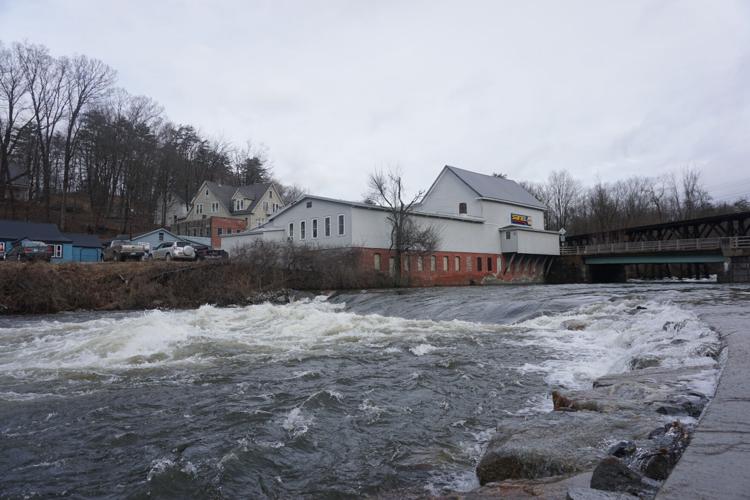
The second water feature, which will include amenities intended to enhance stand-up water sports including surfing and paddle boarding, will be located upstream of water feature No. 3, which is already constructed.
Upon completion, the park will boast three whitewater features and a slalom course. It is the only whitewater park in New England.
The tax credits, available through the Community Development Finance Authority Tax Credit Program, will finance the city’s $500,000 match to a federal Land & Water Conservation Fund grant, which it applied for last year.
The city has received pledges from businesses that intend to purchase tax credits to partially fund the second whitewater feature. Grappone Automotive Group Chief Executive Officer Larry Haynes signed his support for the project and pledged to purchase “five or six figures” in tax credits in a letter dated Feb. 15, 2022.
Feature No. 1 will cost $1.5 million, and feature No. 3 another $1.2 million, rounding out the overall cost of the project at $4 million.
The total cost of the tax credits will be $625,000, while the grant’s value is $500,000. There is an administrative fee of 25% of the cost to be paid to the CDFA.
Upstream of the feature already constructed, No. 2 will serve a new purpose.
“This one is geared more toward board and stand-up surfers,” Mill City Park board President Jeremy Laucks said. “We’re ready to build as soon as we get the funding.”
There isn’t a definitive timeline for the construction of the second feature, he said. But building will likely be easier in the fall, when water levels along the Winnipesaukee river are lower.
The features are considered for construction separately because of funding. Tax credits have so far been the city's main funding mechanism for Mill City Park. Laucks noted the cost of constructing each feature separately does marginally increase overall costs.
“If we have the funding, we’ll do both of them at once,” he said. “But the second one, that’s the focus right now.”
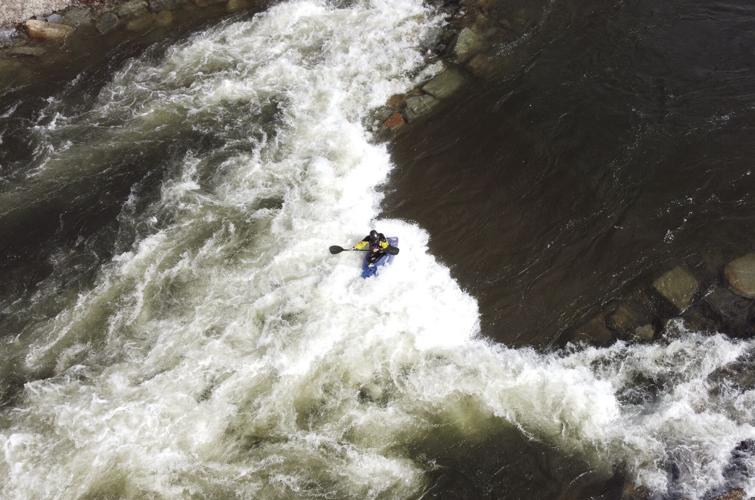
The existing water feature creates a perpetual wave where paddlers of canoes, rafts and kayaks can test their skills. A small amphitheater has also already been completed.
There will also be a land-based portion of the park, consisting of outdoor recreational amenities including camping areas, hiking and mountain biking trails. The 30-acre park would include the 13-acre public recreation area and an adjacent 18 acres of conservation land.
The city was successful in selling all tax credits for the existing water feature. Development of the park could help increase the tax base in Franklin, which has a tax cap. Previous bond proposals met fierce opposition among city residents, so the tax credit plan is a better way to proceed, Milner said.
The tax cap presents problems for city leaders, where the opera house inside City Hall is in need of significant repair.
“This building is the city not doing its due diligence for the past 65 years,” she said. “It’s the city’s responsibility to do deferred maintenance.”
A public hearing regarding the tax credits drew residents in favor and against the proposition. Milner said the vast majority of feedback was in favor of tax credits, but seven letters were written in opposition to the project.
Milner said most opposition centered around the belief the project would raise resident taxes, which she said is not accurate.
“I would encourage the public to continue to educate themselves to make decisions that are going to move Franklin forward,” she said. “This isn’t about just people in the water, it’s about the development of the town.”
Mayor Desiree McLaughlin and Councilors Ed Prive (Ward 3) and Timothy Johnston (Ward 1) did not support the resolution.
McLaughlin said city officials should prioritize investment in schools and infrastructure.
“I feel that investment in our schools is not only an investment in our schools but also in our students — there’s never been enough money for the schools,” she said. “I also objected to the excessive use of staff for the project because it appears that that has been the sole focus.”
She noted the water park depends on future private sector investment to ensure long-term growth, which is a risk.
City employees have applied for 48 grants over the last five years, and department heads and the city manager are already overworked, she said. She wondered to what degree preparing and writing grant applications adds to that problem.
“Why are we going full-valve on this?” she asked. “I’m not saying there’s not value in what they’re doing, it’s just a shock to the taxpayer. It’s not a bad thing that we’re investing in this water park — I think we need more balance in our investments.”
McLaughlin said residents have also expressed skepticism about the operations of the Mill City Park organization.
“It’s very important for nonprofits to appear above reproach,” she said. “A little more transparency would be appreciated by the taxpayer.”
Prive said wages paid to city employees to complete the tax credit program application are funded by taxpayer monies, which he disagrees with. He said the nonprofit leading the project, the Mill City Park board, should shoulder the expense.
“It’s got to stand on its own,” Prive said. “Not by city employees. It’s generated downtown business but not enough to offset the tax increase.”
He said he’s heard from constituents who claim their taxes have risen by $800 in a year.
“When you’re on a fixed income, that got expensive, fast,” he said.
Prive said although it may not seem like it at first glance, several rounds of funding and the resources associated with each add up to lots of money quickly.
“It may not be millions of dollars, or hundreds of thousands of dollars, but that’s taxpayer money,” he said.
“Our school systems are in dire straits,” he said. “We have to send kids to LRCC to get accredited because we don’t have the teachers or the staff to do that.”
Prive said the tax credit program is a good idea, but city employees shouldn’t administer them.
McLaughlin said she and some city residents are concerned about the amount of taxpayer funds spent on the application process, including the hours and wages necessary to submit the required documents to move the application forward.
“I share the same perspective as Ed,” McLaughlin said. “But I am definitely not against the concept of this water park.”


(0) comments
Welcome to the discussion.
Log In
Keep it Clean. Please avoid obscene, vulgar, lewd, racist or sexually-oriented language.
PLEASE TURN OFF YOUR CAPS LOCK.
Don't Threaten. Threats of harming another person will not be tolerated.
Be Truthful. Don't knowingly lie about anyone or anything.
Be Nice. No racism, sexism or any sort of -ism that is degrading to another person.
Be Proactive. Use the 'Report' link on each comment to let us know of abusive posts.
Share with Us. We'd love to hear eyewitness accounts, the history behind an article.