




AI for employee burnout: How leaders can help, not harm
AI is changing how people work. For HR leaders, the question is whether that change will reduce burnout or quietly add to it.
Leaders play a crucial role in whether AI becomes a source of relief or another demand on employees.
What stands out most is the tension leaders are navigating. AI can free up mental bandwidth, reduce repetitive work, and create more space for higher-value thinking. It can also feel overwhelming and cause anxiety, especially when employees are asked to learn new tools without enough clarity, training, or trust.
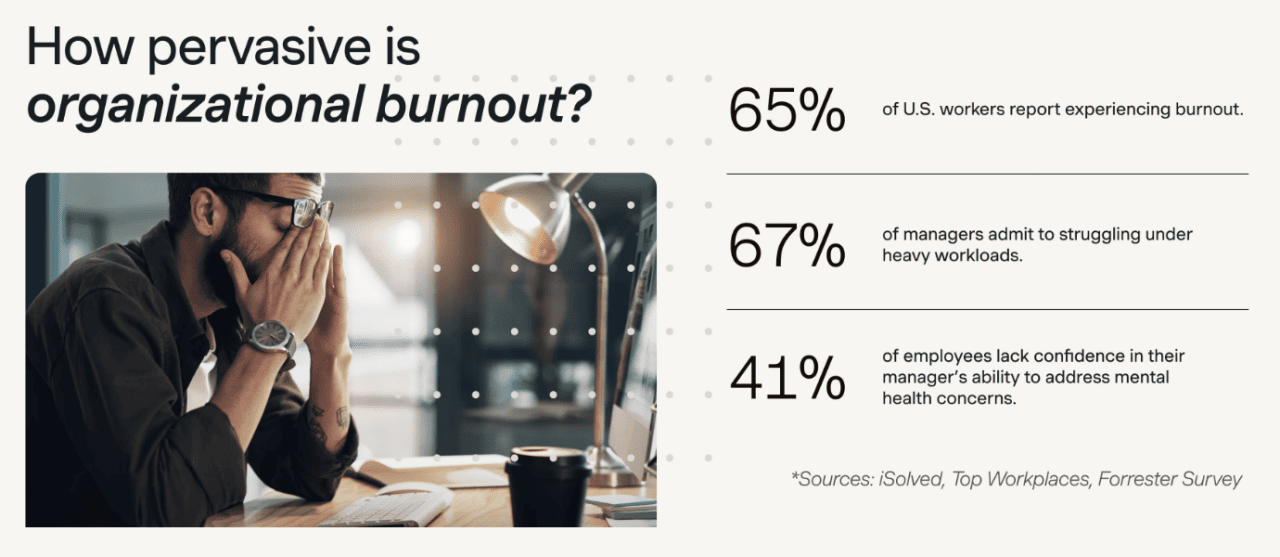
Employee burnout has long been fueled by always-on work, digital overload, and rising job complexity. AI adds another layer. It can help reduce the load, or it can become one more thing employees have to manage.
As Spring Health explains below, the challenge for HR leaders is how to implement AI with enough care that employees feel supported by the change, not buried under it.
Key takeaways
- Employee burnout is one of today’s most pressing workforce challenges, and AI is shaping how employees experience it.
- AI can reduce burnout when it removes repetitive work, improves access to support, and gives people more room to focus.
- AI can also create stress when adoption is rushed, unclear, or poorly integrated.
How AI can reduce burnout
When implemented thoughtfully, AI can give employees more breathing room and more energy for the work that matters most.
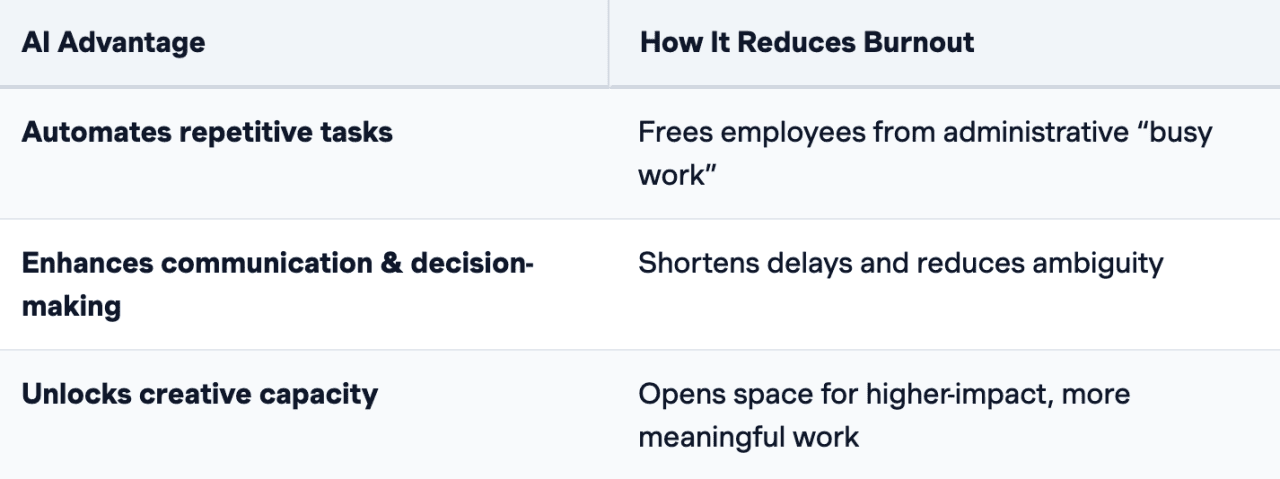
The best use of AI is not simply to help people do more. It is to help people spend less time on work that drains them and more time on work that uses their judgment, creativity, and care.
How AI can create burnout
AI can also add pressure if organizations adopt it without a clear strategy.
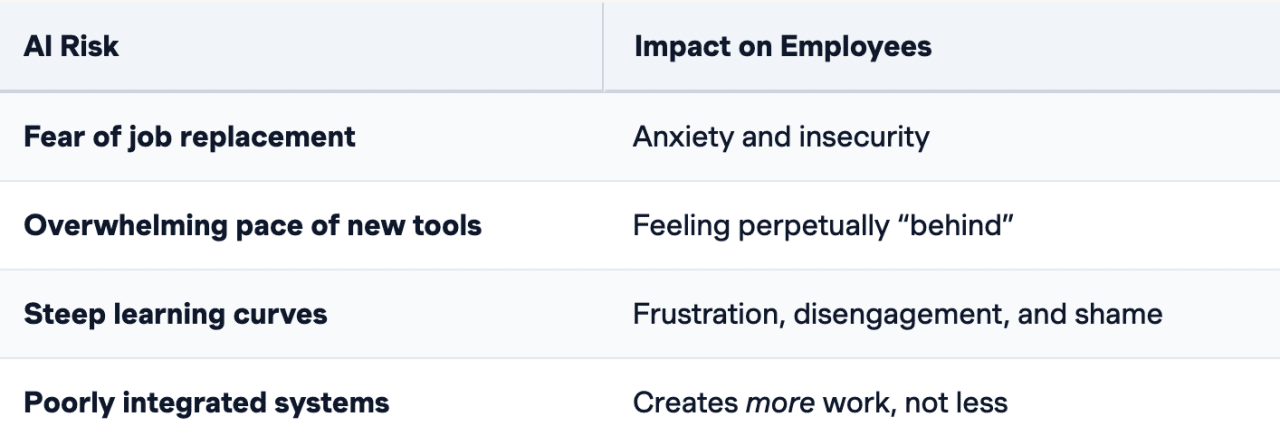
The emotional toll of constant adaptation is real. Employees may be excited about what AI can make possible and still feel exhausted by the pace of change.
That is why AI adoption needs more than a rollout plan. It needs empathy, communication, and a clear connection to the problems employees are actually experiencing.


What leaders can do
Leaders help determine whether AI becomes a source of relief or another source of exhaustion. Three steps matter most.
- Look inward. Use the listening mechanisms you already have, including engagement surveys, feedback channels, and team conversations, to identify your organization’s specific burnout drivers. Every workforce has a different mix of stressors.
- Align your leadership team. Create a clear AI philosophy: Where AI should be used, where it should not, and how decisions will be made. Without clarity at the top, even useful tools can create confusion.
- Prioritize with intention. Focus AI investments on the areas where they can reduce friction for employees and improve outcomes for the business. The highest-value use cases are the ones that make work clearer, lighter, or more supportive.
AI should help people thrive, not just increase productivity.
AI brings both promise and pressure
When organizations listen first, align around a clear philosophy, and prioritize the use cases that reduce friction, AI can help open space for more meaningful, human-centered work.
That is the opportunity in front of HR leaders — not to adopt AI for its own sake, but to use it in ways that protect people’s mental health and strengthen the systems around them.
FAQ
Can AI really reduce employee burnout?
Yes, when it is implemented thoughtfully. AI can reduce burnout by removing repetitive work, improving access to support, and helping employees spend more time on focused, meaningful tasks. It can also increase burnout if adoption is rushed or poorly integrated.
What is the biggest AI-related burnout risk for employees?
The biggest risk is poorly managed change. Employees may worry about job replacement, feel pressure to learn tools quickly, or experience frustration when new systems create more work instead of less.
How can HR leaders use AI to support mental health?
HR leaders can start by identifying where employees are experiencing the most friction, then prioritize AI use cases that reduce that burden. The goal should be clearer access, better support, and less administrative strain.
Research from Spring Health’s 2026 Workplace Mental Health Annual Report suggests employees are already seeing AI’s upside when it improves access to support. When asked how AI affected their mental health related to getting mental health support, 35% said it improved their mental health, compared with 14% who said it worsened it.
This story was produced by Spring Health and reviewed and distributed by Stacker.


(0) comments
Welcome to the discussion.
Log In
Keep it Clean. Please avoid obscene, vulgar, lewd, racist or sexually-oriented language.
PLEASE TURN OFF YOUR CAPS LOCK.
Don't Threaten. Threats of harming another person will not be tolerated.
Be Truthful. Don't knowingly lie about anyone or anything.
Be Nice. No racism, sexism or any sort of -ism that is degrading to another person.
Be Proactive. Use the 'Report' link on each comment to let us know of abusive posts.
Share with Us. We'd love to hear eyewitness accounts, the history behind an article.