


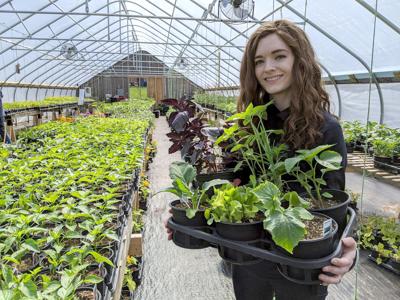
LACONIA — During World War I, and again during World War II, citizens were encouraged to dig up a part of their yard to plant a so-called “Victory Garden,” as a peaceful way to encourage the war effort. Now, during a different time of crisis, gardening is seeing another surge in interest.
Patty Gianunzio and her husband, Pat, own Petal Pushers Farm in Laconia. She said they were taking a walk through the woods earlier this year when their conversation turned toward the coronavirus pandemic, and how it felt as though the world was going through its first global struggle in decades.
“It’s like we’re going through World War II right now, with everything that’s happening,” Patty said. That’s how they conceived of the idea to start a marketing campaign for this year’s growing season, centered around victory gardens. The business’s campaign is being managed by Sarah Gabert, an employee of the farm.
“We’re trying to take something that was part of history and make it modern. This did help in a national crisis before, if we ever were in one again, it seems like it would be now,” Gabert said.
Gabert, 26, said she hadn’t heard of victory gardens before this spring, but after reading about them, she thinks the time is right for them to make a comeback.
In prior eras, victory gardens lessened the public’s need for commercial agriculture products, which made it easier for the government to send food to troops. In some cases, food was rationed, so those with gardens enjoyed a more varied and plentiful diet than those without.
A widespread food shortage isn’t considered likely due to the coronavirus, but there are still good reasons for gardening to be more attractive this year. Having fresh produce available in your backyard could mean fewer visits to the grocery store, and therefore a lowered risk for infection.
It’s been a hit for Petal Pushers, as both Gianunzio and Gabert said their sales are up, especially for this time of the year.
Emma Erler, a horticulture expert who works for the University of New Hampshire’s Cooperative Extension, said the gardening hotline she helps answer is ringing off the hook.
“There has been a lot of interest in vegetable gardening this spring,” Erler said. “Since stay-at-home orders and COVID became a problem, people became really interested in vegetable gardening.” It has become so popular, she said, that some seed suppliers have eliminated sales to the general public, in order to ensure their ability to supply commercial growers.
Erler, who manages the County Extension’s Master Gardener program, said she’s pleased by the sudden interest in gardening. “It’s rewarding and fun, and great to do with families,” she said.
Unless someone has been developing a garden for years, it’s unlikely to expect that they’d be able to raise enough produce to keep their pantry stocked through the winter. But they ought to be able to harvest some of their own vegetables during the summer months, and that can be enough of a reward.
“What I’ve told people is to start small,” Erler said. Everyone wants to be able to pick a bushel full of tomatoes come August, but tomatoes can be “fussy,” she said, particularly if the growing season is too wet. “Challenging, but not insurmountable.
“Some of the other stuff, like all of the greens, are actually quite easy to grow,” Erler said.
It’s still too cold for most vegetables. Erler said plants should be started or nurtured indoors until at least Memorial Day, perhaps mid-June. But some cold-hardy plants can be planted now – spinach and kale, for example.
Other plants, which should wait until later but are friendly to the new gardener, include peppers, cucumbers, summer squashes and bush beans.
Erler said that there are plenty of resources available for the beginning gardener. The UNH Cooperative Extension website is a great place to start.
Kelly McAdam, who also works for the Cooperative Extension, encouraged people to give gardening a shot and see what works for their unique plot.
“Just start out and experiment with it, just try a few things. Some things are easier to grow than others,” McAdam said. She likes to grow peas, which she said are already sprouting in her garden. “It’s exciting to see some green.”


(0) comments
Welcome to the discussion.
Log In
Keep it Clean. Please avoid obscene, vulgar, lewd, racist or sexually-oriented language.
PLEASE TURN OFF YOUR CAPS LOCK.
Don't Threaten. Threats of harming another person will not be tolerated.
Be Truthful. Don't knowingly lie about anyone or anything.
Be Nice. No racism, sexism or any sort of -ism that is degrading to another person.
Be Proactive. Use the 'Report' link on each comment to let us know of abusive posts.
Share with Us. We'd love to hear eyewitness accounts, the history behind an article.