


LACONIA — Students throughout the Lakes Region are about to begin a whole new learning experience. Starting next Monday, every public school student will return to class in a whole new way.
The unprecedented switch to remote learning comes as the number of COVID-19 cases around the state and across the country continues to climb. Schools are closed until at least April 6.
School closures are among the restrictions on group gatherings that are continuously increasing in order to curb the spread of coronavirus. So far, 39 states have closed schools.
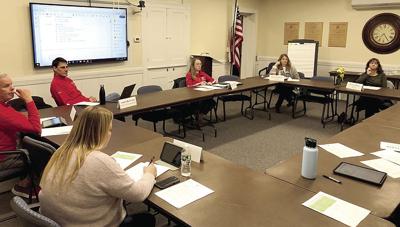
At Tuesday’s Laconia School Board meeting, Superintendent Steve Tucker reported teachers were continuing to work on lesson plans, create activities, and finalize assignments.
Tucker said teachers and other school staff have been working hard as they prepare for the unprecedented challenges of remote learning.
But Tucker conceded the Laconia School District, like every other district in the state, was trying to make the best out of a bad situation.
“I don’t believe full online is good for kids,” Tucker said. “This is an emergency measure.”
School Board members were particularly concerned, especially if schools remained closed beyond April 6.
“There’s no way it’s going to be the same quality as what we do every day,” member Bob Champlin said. “Remote learning is not public education.”
“Having kids in school with other kids is the best way to learn,” Tucker agreed.
Removing the face-to-face interaction between a student and a teacher or between students is a disadvantage, said Andrew Coppens, an assistant professor of education at the University of New Hampshire. But he said while remote learning presents certain constraints, it also affords opportunities.
The biggest drawback in the current situation, he said, is that teachers and school administrators have had to rush to come up with remote learning lessons plans in just a few days.
“We have (an adage) that 70 percent of education is in preparation and planning,” said Jade Caines Lee, who is also on the faculty of the Education Department at UNH.
“Kudos to those teachers who are having to retool themselves in a matter of days,” Lee added.
Coppens said he understood local school officials’ misgivings, but he urged against a rush to judgment.
“I would be open to being surprised,” he said.
One of the real challenges in a radical shift like this, said Lee, is for educators to be flexible without lowering standards.
Coppens said this is a great time for teachers to become creative. They could use their students’ interest in the coronavirus as a lead-in to offering some learning about health. Or with kids learning at home, they can more easily tell their students to go outside and find an example of what they are learning in a natural science class.
Coppens and Lee think that teaching during this crisis could prompt more teachers to take courses or attend workshops about online learning in the future.
The feelings of anxiety are understandable, Lee said.
“In times of trouble it’s easy to criticize change,” she said. “But we must remember the enemy here is the virus, not the change.”


(0) comments
Welcome to the discussion.
Log In
Keep it Clean. Please avoid obscene, vulgar, lewd, racist or sexually-oriented language.
PLEASE TURN OFF YOUR CAPS LOCK.
Don't Threaten. Threats of harming another person will not be tolerated.
Be Truthful. Don't knowingly lie about anyone or anything.
Be Nice. No racism, sexism or any sort of -ism that is degrading to another person.
Be Proactive. Use the 'Report' link on each comment to let us know of abusive posts.
Share with Us. We'd love to hear eyewitness accounts, the history behind an article.