


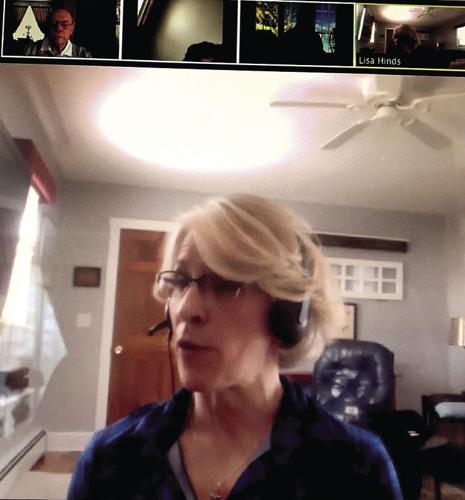
LACONIA — Juniors and seniors in Lisa Hinds’ calculus class used video conferencing as they listened and watched her explain a problem in implicit differentiation.
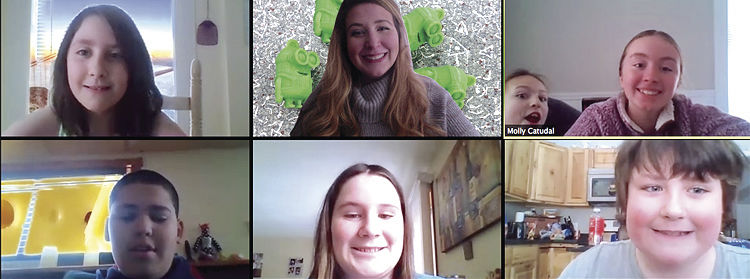
Sixth graders in Sonya Roberts’ science class watched from home on Zoom as she explained how the rotation of the Earth causes light from the sun to cast shadows that shorten and lengthen as the day progresses. And after hearing the lesson, they went outside to observe the phenomenon for themselves.
These are but two examples of how remote learning has become real to Laconia’s 2,000 public school students and their teachers as they adapt to the closing of school buildings — just one of the extraordinary changes in daily life occurring in the face of the spreading coronavirus.
“It’s been quite a process,” said Hinds, who also chairs the high school’s Math Department.
Hinds spent about an hour with students on Tuesday, reviewing material before an already-scheduled test they would be taking the following day.
The students were in so-called break-out rooms as Hinds wrote out various problems on a white board. Hinds explained the problem and students let her know whether they understood, or asked her to go over another problem that could likely be on the upcoming 90-minute test. The flow of questions and answers sounded much like the back-and-forth would take place in the classroom. But the format was strikingly different.
Noah Mousseau, a senior, said he prefers to learn face-to-face, but he acknowledged that remote learning offers students like him more freedom. “But you have to figure it out,” he said, adding that teachers have been working to make it easier for students like him to adjust to the change.
Fellow student Nicole Turpin said she is unsure whether she and a classmate will be able to complete a collaborative project for a physics class because they have been unable to get together, given social distancing precautions.
“People are learning to adjust using the different web environments,” Hinds said.
Teachers like Hinds and Roberts use words like patience and adaptation as they talk about what is truly a unique experience for them and their students.
“It’s unprecedented,” Hinds said as she sat at her home computer, the sound of her snoring dog occasionally audible in the background.
Jessica Couglin, a fifth-grade teacher at Woodland Heights School, is also using Zoom video conferencing in addition to Google Classroom as she interacts with her students.
Coughlin says the biggest problem she has seen so far is that teachers did not have any time to prepare their students for the switchover to remote learning. But she says students, by and large, are showing themselves adaptable to the change.
“Google Classroom is now set up and they are doing pretty well,” she said. “The coolest thing is that the sense of the classroom community is there. If they have a question they post it and the kids talk back and forth to try to help each other out.”
But the one-on-one online instruction has its drawbacks, notably the absence of the clues that teachers often get from being able to read students' facial expressions or body language.
But Hinds says online instruction can make students much more aware of how responsible they are for their own education.
“Wow I’m responsible for what I’m learning. It’s on me. That’s more important than using the technology,” she said.
Teachers are using the completion of the various assignments as a way of monitoring attendance.
In some classes the teacher and the students interact continuously throughout the period. In other classes the teacher gives the students time to complete a reading assignment and then asks them to answer questions about what they read.
Providing meaningful instruction for students who lack internet access is a big challenge. In some cases teachers have put families in contact with an internet provider which is offering free internet access for online learning during the pandemic. But for some students it has meant providing them with textbooks and written assignments.
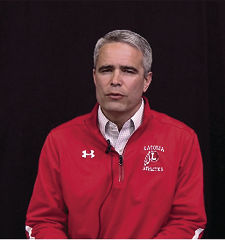
School Superintendent Steve Tucker acknowledged, in a video posted on the School District’s website, that remote learning is “trying to make the best out of a bad situation.”
Tucker said there is “a real possibility” that remote learning will continue beyond April 6 when students were tentatively expected to return to school under Gov. Chris Sununu’s school closing order announced on March 15.
“We are working to prepare should this happen,” Tucker said. Meanwhile, he urged patience and offered a message of hope. “Another day of our schools being closed is another day closer to our schools opening.”


(0) comments
Welcome to the discussion.
Log In
Keep it Clean. Please avoid obscene, vulgar, lewd, racist or sexually-oriented language.
PLEASE TURN OFF YOUR CAPS LOCK.
Don't Threaten. Threats of harming another person will not be tolerated.
Be Truthful. Don't knowingly lie about anyone or anything.
Be Nice. No racism, sexism or any sort of -ism that is degrading to another person.
Be Proactive. Use the 'Report' link on each comment to let us know of abusive posts.
Share with Us. We'd love to hear eyewitness accounts, the history behind an article.