


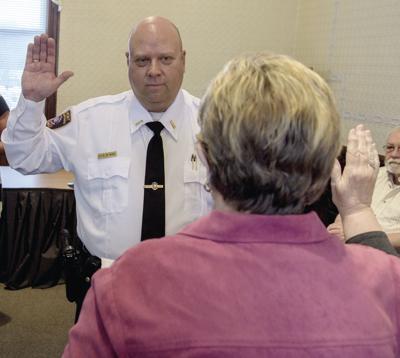
BELMONT — After 27 years in police work, Capt. Rich Mann handed in the keys to his police cruiser and was cleaning out his office Thursday as he prepared for a new life in the private sector.
“It’s a bittersweet thing,” Mann, 54, said in a final interview. “It has been a rewarding career. Every day I’ve been happy to be here.
“But it’s also been the most difficult job in my life. I spent eight years in the military and I thought that was challenging. As a police officer, you are trained well, but when you get on the road and get to your first call, that’s when the real learning begins.”
Mann, whose father was a Massachusetts State Police officer, was an Air Force police officer before he joined the Belmont force as a patrolman.
He’s going to miss the camaraderie and the feeling that everyone has each other’s back.
One time, Mann was directing traffic on Route 3 and was run over by a car.
“I was knocked out,” he recalled. “Just laying there feeling helpless and then I could hear sirens in the distance. I have to tell you, hearing one when you need one is the best thing in the world.”
He ended up with a concussion, a rib injury, loss of hearing in his right ear, and was sidelined for three months.
There have been other instances when Mann needed backup.
“There have been scuffles,” he said. “Sometimes you tell somebody they are under arrest, they don’t make the best decision and people have latched on to me.
“There’s a button on the radio, an emergency beacon. You push it and you know the cavalry is coming. I’ve had to push that a couple times.”
He’s never had to use his gun.
“I’ve been very lucky in that aspect,” Mann said. “Because of the training you get, there are other tools that you have, one is your mouth, the other is your brain.
“I have been very fortunate that I have never been involved in a deadly force encounter and had to draw my gun and use it.”
His ability to talk to people, his sense of humor and his desire to help others are among his strengths.
“I drive around town and I try to have my windows down,” Mann said. “I’ll see someone mowing their lawn and I’ll say, ‘When you’re done, can you come to my house?’”
“I’m open to people, friendly to people. You learn things. Maybe the neighbor has seen an activity that is concerning. They'll give you intelligence. It is important to be friendly, open and approachable.”
During his career, he has noticed an uptick in violent crime.
“When I started in 1993, you’d have the typical bar fight, the neighbor dispute, the drunken driving call, but now there is far more physical violence. Crimes are more graphic in nature.
“People who are assaulted, stabbed or the victim of gunshots were few and far between. As a nation, they have risen and that’s true here in New Hampshire, too. There’s more true violence.”
It is difficult for officers when they go to trauma-filled events, whether it is violence or serious traffic accidents. If there is a crash, usually it will be a police officer who is first on the scene.
“You break out the medical kit, sometimes you can smell gas leaking, the person in the car is not conscious. There is a feeling of helplessness initially and then you get to work.”
As difficult as such calls may be, he remembers another call, early in his career, that was challenging in a different way.
“Being a very young officer, I became a DARE instructor,” he said. “You should have seen the look of horror on my face. Having to teach four- and fifth-graders was more horrifying than walking into a bar fight. I was not used to being in front of children and I gained a new found respect for people who do that full time.
“The teacher told me there was nothing wrong with me. She had some of those feelings when she first started.”
He recalls what it’s like being on the road when the town is sleeping.
“It’s Christmas Eve, 10:30 or 11 at night. Everybody is in their houses, tucked in their beds. Maybe it’s snowing and you’re the only one on the road, no radio traffic. It’s challenging to stay mentally alert.
“But other times, there’s a parade in town and hundreds of people are waving at you and that recharges your batteries.”
As he moves into the private sector, he is looking forward to having a little more flexibility with time off.
“I love to mountain bike and kayak and I’ll have more time for that. My son is in college, and it will be easier to break away and surprise him.”
He is also a justice of the peace and officiates at weddings in the Lakes Region.
Mann likes to cook, so much so, that some of his fellow officers wondered if he would do that full-time.
“Everybody is surprised I’m not going into cooking,” he said. “Sometimes I post pictures of prime rib on the rotisserie and they say, ‘Don’t do that. It’s 4 o’clock, and I’m starving.”
Capt. Rich Mann calls retirement from Belmont PD ‘bittersweet’
By RICK GREEN, The Laconia Daily Sun
BELMONT — After 27 years in police work, Capt. Rich Mann handed in the keys to his police cruiser and was cleaning out his office Thursday as he prepared for a new life in the private sector.
“It’s a bittersweet thing,” Mann, 54, said in a final interview. “It has been a rewarding career. Every day I’ve been happy to be here.
“But it’s also been the most difficult job in my life. I spent eight years in the military and I thought that was challenging. As a police officer, you are trained well, but when you get on the road and get to your first call, that’s when the real learning begins.”
Mann, whose father was a Massachusetts State Police officer, was an Air Force police officer before he joined the Belmont force as a patrolman.
He’s going to miss the camaraderies on the force and the feeling that everyone has each other’s back.
One time, Mann was directing traffic on Route 3 and was run over by a car.
“I was knocked out,” he recalled. “Just laying there feeling helpless and then I could hear sirens in the distance. I have to tell you, hearing one when you need one is the best thing in the world.”
He ended up with a concussion, a rib injury, loss of hearing in his right ear, and was sidelined for three months.
There have been other instances Mann needed backup.
“There have been scuffles,” he said. “Sometimes you tell somebody they are under arrest, they don’t make the best decision and people have latched on to me.
“There’s a button on the radio, an emergency beacon. You push it and you know the cavalry is coming. I’ve had to push that a couple times.”
He’s never had to use his gun.
“I’ve been very lucky in that aspect,” Mann said. “Because of the training you get, there are other tools that you have, one is your mouth, the other is your brain.
“I have been very fortunate that I have never been involved in a deadly force encounter and had to draw my gun and use it.”
His ability to talk to people, his sense of humor and his desire to help others are among his strengths.
“I drive around town and I try to have my windows down,” Mann said. “I’ll see someone mowing their lawn and I’ll say, ‘When you’re done, can you come to my house?’”
“I’m open to people, friendly to people. You learn things. Maybe the neighbor has seen an activity that is concerning. They'll give you intelligence. It is important to be friendly, open and approachable.”
During his career, he has noticed an uptick in violent crime.
“When I started in 1993, you’d have the typical bar fight, the neighbor dispute, the drunken driving call, but now there is far more physical violence. Crimes are more graphic in nature.
“People who are assaulted, stabbed or the victim of gunshots were few and far between. As a nation, they have risen and that’s true here in New Hampshire, too. There’s more true violence.”
It is difficult for officers when they go to trauma-filled events, whether it is violence or serious traffic accidents. If there is a crash, usually it will be a police officer who is first on the scene.
“You break out the medical kit, sometimes you can smell gas leaking, the person in the car is not conscious. There is a feeling of helplessness initially and then you get to work.”
As difficult as such calls may be, he remembers another call, early in his career, that was challenging in a different way.
“Being a very young officer, I became a DARE instructor,” he said. “You should have seen the look of horror on my face. Having to teach four- and fifth-graders was more horrifying than walking into a bar fight. I was not used to being in front of children and I gained a new found respect for people who do that full time.
“The teacher told me there was nothing wrong with me. She had some of those feelings when she first started.”
He recalls what it’s like being on the road when the town is sleeping.
“It’s Christmas Eve, 10:30 or 11 at night. Everybody is in their houses, tucked in their beds. Maybe it’s snowing and you’re the only one on the road, no radio traffic. It’s challenging to stay mentally alert.
“But other times, there’s a parade in town and hundreds of people are waving at you and that recharges your batteries.”
As he moves into the private sector, he is looking forward to having a little more flexibility with time off.
“I love to mountain bike and kayak and I’ll have more time for that. My son is in college, and it will be easier to break away and surprise him.”
He is also a justice of the peace and officiates at weddings in the Lakes Region.
Mann likes to cook, so much so, that some of his fellow officers wondered if he would do that full-time.
“Everybody is surprised I’m not going into cooking,” he said. “Sometimes I post pictures of prime rib on the rotisserie and they say, ‘Don’t do that. It’s 4 o’clock, and I’m starving.”


(0) comments
Welcome to the discussion.
Log In
Keep it Clean. Please avoid obscene, vulgar, lewd, racist or sexually-oriented language.
PLEASE TURN OFF YOUR CAPS LOCK.
Don't Threaten. Threats of harming another person will not be tolerated.
Be Truthful. Don't knowingly lie about anyone or anything.
Be Nice. No racism, sexism or any sort of -ism that is degrading to another person.
Be Proactive. Use the 'Report' link on each comment to let us know of abusive posts.
Share with Us. We'd love to hear eyewitness accounts, the history behind an article.