


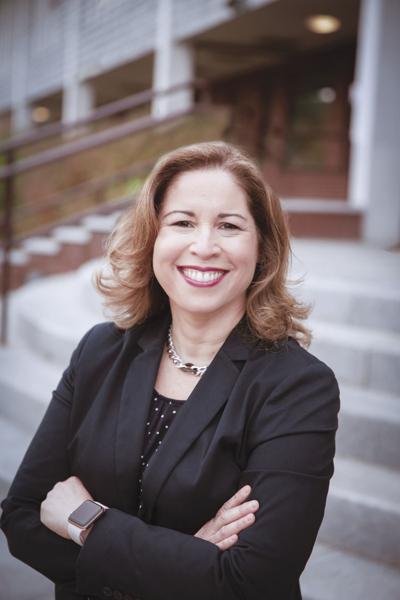
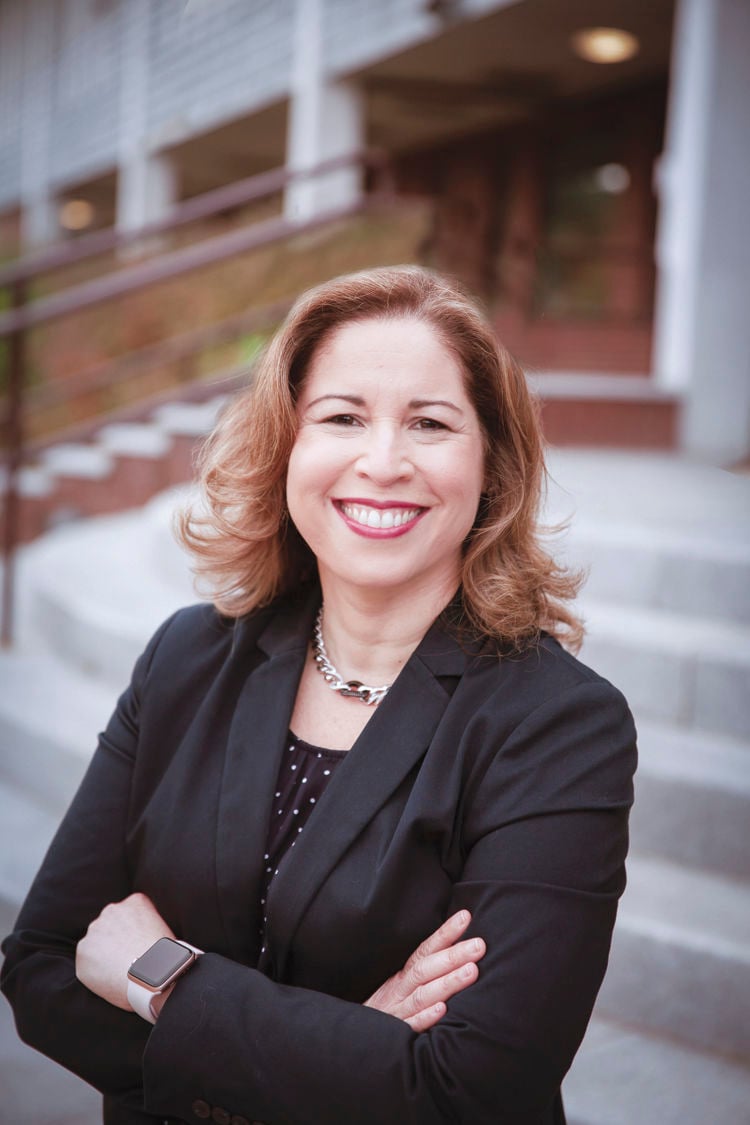
Larissa R. Baia
As more and more individuals consider going to college as adult learners or straight out of high school, they may evaluate the most common barriers, such as tuition costs and time commitment. But on many occasions, it’s the smaller — and possibly unexpected — expenses that challenge some students in continuing their education. At Lakes Region Community College (LRCC), we’re working to reduce these barriers to help more individuals reach their goal of earning a college degree.
It is very difficult to encounter a student who dropped out of college because they could not afford their textbooks, or meet basic needs, such as food and housing. Unfortunately, this happens all too often. An unexpected large car repair, a $400 bill for textbooks, a temporary job loss or a healthcare bill are some of the reasons that cause students to give up on their education.
There are many hidden expenses that create additional barriers. In her 2018 book, Paying the Price: College Costs, Financial Aid, and the Betrayal of the American Dream, Sara Goldrick-Rab identified the impact dropping out for financial reasons has on students. The book focused on a study of 3,000 young adults who attended public colleges and universities in Wisconsin and were eligible for federal aid and grants based on their income. The study found that half of the students left without a degree and only 20 percent completed a degree after five years.
In the book’s overview, the author states the following: “The cause of their problems, time and again, was lack of money. Unable to afford tuition, books and living expenses, they worked too many hours at outside jobs, dropped classes, took time off to save money and even went without adequate food or housing. In many heartbreak cases, they simply left school — not with a degree, but with crippling debt.”
As a community college, LRCC believes that part of the way we can best serve our community is to develop unique and innovative ways to help students overcome these barriers so they can complete their degree or program. Textbooks represent one of the largest potential expenses for college after tuition and can cost $300-400 per semester. This cost is often cited as one of the largest obstacles for students to enroll in college and complete a program. The Community College System of NH has been working with Plymouth State University and the University System of NH to develop and utilize open educational resources (OER) or no cost/low cost textbooks. All seven community colleges are working with faculty to develop and share OER resources for the courses they teach. We project that, once fully implemented, this will save students nearly half a million dollars a year in textbook expenses.
Another concern we have been addressing is food insecurity. Studies show that individuals with food insecurity (or those who do not have reliable access to affordable meals on a consistent basis) will not be successful students. Based on a model employed at River Valley Community College in Claremont, we have created a Community Cupboard on campus where those who are unable to afford or access meals consistently can have free meals. The Community Cupboard began with generous donations from faculty and staff and LRCC’s Student Senate. Today, we are grateful to also have the support of the NH Food Bank.
Another obstacle for students in our region is affordable housing. While very few community colleges offer housing for students, LRCC is one that does. Although LRCC tries to keep housing costs affordable, we recognize that our housing offering can be out of reach for some students. For that reason, last year we created a scholarship fund specifically targeting residential students. Eligible incoming students can now count on this additional financial support. Efforts like these can often times make the difference for helping students stay in college.
Our ultimate goal through these and other efforts is to help more people achieve their dream of going to and completing college, realizing the economic advancement that enables, and growing the region’s skilled workforce. Fifty percent of Belknap County’s population over age 24 does not hold a credential beyond high school. Yet, most of the job openings today and in the future will require some education beyond high school. We, therefore, have a responsibility to give everyone a chance to gain the skills they need to obtain full-time work with benefits and opportunities for growth. This includes those who thought they could never afford to attend college; those who may be suffering from or recovering from a substance misuse disorder; and those who were formerly incarcerated. The prosperity of our communities depend upon it.
At LRCC, we know that our work changes lives. We also know that we can move more quickly toward that goal by eliminating barriers and developing creative and flexible models that help people go to and stay in college.
•••
Larissa Baia is the president of Lakes Region Community College, a fully accredited, comprehensive community college in the Lakes Region that serves over 1,200 students annually.


(0) comments
Welcome to the discussion.
Log In
Keep it Clean. Please avoid obscene, vulgar, lewd, racist or sexually-oriented language.
PLEASE TURN OFF YOUR CAPS LOCK.
Don't Threaten. Threats of harming another person will not be tolerated.
Be Truthful. Don't knowingly lie about anyone or anything.
Be Nice. No racism, sexism or any sort of -ism that is degrading to another person.
Be Proactive. Use the 'Report' link on each comment to let us know of abusive posts.
Share with Us. We'd love to hear eyewitness accounts, the history behind an article.