


New Hampshire’s community colleges have always been nimble. Historically, we have quickly built academic programming that addresses growing or future workforce needs. More recently, this has included shorter, stackable programming offered on weekends, at nights and virtually to address the busy schedules of today’s working adults. Additionally, we are known as a partner of choice for building custom training programs for many of our community partners to help them upskill their workforce.
This focus on personalized education and flexibility has been put to the test this spring as Lakes region Community College moved all programming online due to COVID-19 and the need to socially distance. The rapid and radical shift has impacted everyone at the college — most notably our students who have had to adapt from what was a hands-on experiential learning environment for many to a virtual and more self-managed education experience. We’ve learned a lot in a few weeks, some of which will likely be embedded in future learning and training practices as we look ahead to the summer, fall and beyond.
First and foremost, we recognize that the impact of recent events for many of our students go well beyond the changes that impact their studies. Rapid losses in jobs, reductions in hours, disrupted lives due to Stay at Home requirements and concerns about staying healthy are all real, major concerns. At LRCC, we are working to serve the community in as many ways as possible to help.
Our food bank, the Community Cupboard, remains open to anyone in our community who is food insecure. We have increased our emergency aid program and have provided supermarket and Visa gift cards to students with financial obstacles. We have also set aside up to $50,000 in scholarships for NH residents enrolling in the fall term to ensure that the loss of family or employment income isn’t an obstacle to new students seeking a post-secondary education.
From an education perspective, technological advances — including those in education — have been key to the move to online learning and our ability and need to stay in close contact with our students over the past several weeks. If this pandemic happened f ten years ago, it’s unlikely that students could have continued their education this semester. As always, we are working one-on-one with students to help them achieve their goals, but we are using different tools to do so. For those students who did not have the ability to access classes remotely, we purchased extra laptops and have been loaning them out to students so they can keep up with their studies. Staff have been available to help with technical challenges along the way and everyone has recognized that times call for new levels of flexibility and creativity to problem solve.
We have all taken a group crash course in instantly adapting to a new landscape and will come out of this with new skills and problem-solving abilities that will most certainly be applied in the future. Here are a few examples:
LRCC, like most community colleges, has relied on laboratories for hands-on learning. The move to remote learning has eliminated the on-site lab access for the time being and we’ve moved to simulations in many cases. These simulations are critical to make up for missed clinical hours for many students in our Allied Health programs. As a result, students are generally able to stay on track and meet the academic requirements they need to complete their degree or certificate as planned.
When someone thinks of a hands-on program, what could be more hands-on than our culinary and pastry programs? Our culinary and pastry faculty have enhanced their YouTube video content to ensure that students are able to practice their recipes from home. Of course, having ingredients is critical. As a result, faculty have recreated the model popularized by the Food Network’s "Chopped” show and are preparing baskets with these ingredients that students pick up every week for the meals the students would have prepared in class. Students pick up the baskets, prepare the meals at home and are able to feed family members or friends at no additional cost to them. This is the one time that our students can actually say they (and/or the dog) ate their homework!
These are just a few examples of how we are adapting academic and non-academic supports in response to the Covid-19 pandemic. A month into these changes has given me some perspective. And what I see is that LRCC’s response ingeniously aligns with our mission and day to day work supporting students who often times are disproportionately impacted by economic/societal shocks. Since this work is part of LRCC’s DNA, the challenge has been developing mechanisms that provide instructional and non-instructional support at a rapid pace but without risking quality. And while we are still all learning and adapting to these changes, I want to say how proud and grateful I am of the LRCC community for working through these paradigm shifts that are personally so challenging. I also want to encourage those who need additional support and assistance to ask for help email lrccinfo@ccsnh.edu. In times of crisis, it is even more important for us to come together as a community. Your local community college is here and ready to help.
•••
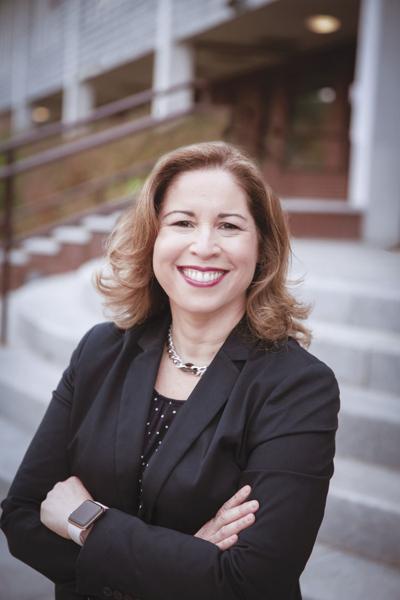
Larissa Baía is the president of Lakes Region Community College, a fully accredited, comprehensive community college in the Lakes Region that serves over 1,200 students annually.


(0) comments
Welcome to the discussion.
Log In
Keep it Clean. Please avoid obscene, vulgar, lewd, racist or sexually-oriented language.
PLEASE TURN OFF YOUR CAPS LOCK.
Don't Threaten. Threats of harming another person will not be tolerated.
Be Truthful. Don't knowingly lie about anyone or anything.
Be Nice. No racism, sexism or any sort of -ism that is degrading to another person.
Be Proactive. Use the 'Report' link on each comment to let us know of abusive posts.
Share with Us. We'd love to hear eyewitness accounts, the history behind an article.