


The Community College System of New Hampshire (CCSNH) just completed its annual report for the past year. The theme is “within reach and in touch.” This essentially means our seven colleges focus on putting postsecondary education within reach of every New Hampshire resident, and we work hard to stay in touch by providing the skills needed for students and employers to support local and statewide workforce demands. This is essential to Lakes Region Community College’s (LRCC) mission, and I believe this theme is extremely relevant to us today and into the future.
CCSNH has long recognized that there is a great need to ensure that New Hampshire residents are prepared for the jobs of tomorrow. As a result, CCSNH introduced the 65 by 25 initiative – which targets having 65 percent of working-age adults in New Hampshire with some form of postsecondary education, from certificates to advanced degrees, by 2025. This goal aligns with projections by researchers at Georgetown University’s Center on Education and the Workforce.
However, a recent poll of young people by the Associated Press found that 51% of teens (13–17 years old) believed that a high school education was sufficient to succeed. Although this same survey reports that more than half of those surveyed agreed that higher education was a good investment, it is concerning to hear that so many of our teens don’t see the opportunities they will leave on the table if they choose not to pursue any postsecondary education. That decision can have negative consequences for the individual, as well as for the economic growth potential of our communities.
New Hampshire – like most New England states – has seen a decline in number of high school students, and our overall population is aging. The number of high school seniors has been in decline since 2009 and this trend is projected to continue until 2032. According to the U.S. Census Bureau, the median age of a New Hampshire resident is currently 43.1 years, the second highest nationally, with Maine taking top honors.
These two trends put significant pressure on our employers and on our educational systems to educate, retain and prepare people for the jobs of today and tomorrow. This means making the case to new high school graduates who may think that college is not for them, or to those who may only see themselves attending college out of state. It also means convincing adults who want to return to the workforce or change careers that there is support at our community colleges for them to gain the skills they need to pursue new opportunities.
The fact that we have a smaller number of high school graduates makes it critical that we stress the importance of continuing education after high school. Not doing so means that we won’t have enough of a pipeline of individuals prepared for the jobs of today and tomorrow.
Upskilling and retraining adults is another way of developing our talent pipeline. In Belknap County, among those over the age of 25, 30.5% have a bachelor’s degree or higher, and 10.2% have an associate degree. That means that only 40.7% of this population has a postsecondary credential, while 59.3% do not, according to statisticalatlas.com. Locally, that leaves us well short of the 65 by 25 goal.
At LRCC, we have designed many programs to serve adults. The average age of our students is 25 –seven years older than a college freshman coming straight from high school. A 25-year old is likely to be more established in their community, more likely to be living independently of their parents, may have a partner or a family and is most likely working full or part-time. This means that fitting college into an established lifestyle can be challenging.
For adult learners, upskilling can include retraining programs that may result in a promotion or embarking on an entirely new career that’s personally fulfilling and supports the economic prosperity of the region. LRCC is committed to supporting adults and developing programs that align with our region’s needs. Our marine technology and culinary arts programs are good examples of that alignment, as both support industry sectors that are prominent in our part of the state. Moreover, our small size and the personalized nature of our college enables us to focus on our students – on their needs inside the classroom, on their need for scheduling structures that fit into busy lives, and on the programs and services that will help them be successful.
This is where the tie to being within reach and in touch comes in. Community college in New Hampshire is within reach financially, with tuition that is the lowest in the state. In fact, rates have only gone up by 2% in total over the last eight years. We are within reach geographically. LRCC primarily serves the Lakes Region, and combined with our sister colleges, there is an option within commuting distance of all New Hampshire communities. And we are in reach to students of all ages, backgrounds and aspirations. LRCC offers 28 degree programs and 37 certificate programs, many with flexible or accelerated schedules and online options.
We are in touch with the needs of area businesses and offer many customized training programs with regional employers. Because of the work we do to establish and keep these relationships, we are also in touch with employers, understand their skills gaps and can build or modify programs to address them. And we are in touch with statewide needs. As a result, the vast majority of our graduates remain in New Hampshire and contribute to our economy and quality of life.
New Hampshire community colleges are vital to our residents’ economic future. As more and more people understand the value proposition of a community college education, the more they will be prepared for the jobs of today and tomorrow, and the closer we can get to meeting the goals of 65 by 25.
•••
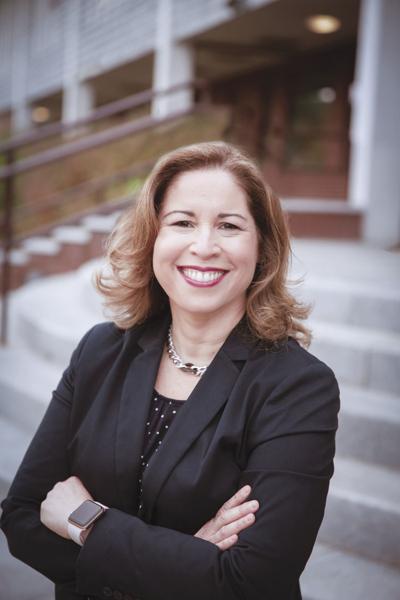
Larissa Baía is the president of Lakes Region Community College, a fully accredited, comprehensive community college in the Lakes Region that serves over 1,200 students annually.


(0) comments
Welcome to the discussion.
Log In
Keep it Clean. Please avoid obscene, vulgar, lewd, racist or sexually-oriented language.
PLEASE TURN OFF YOUR CAPS LOCK.
Don't Threaten. Threats of harming another person will not be tolerated.
Be Truthful. Don't knowingly lie about anyone or anything.
Be Nice. No racism, sexism or any sort of -ism that is degrading to another person.
Be Proactive. Use the 'Report' link on each comment to let us know of abusive posts.
Share with Us. We'd love to hear eyewitness accounts, the history behind an article.