


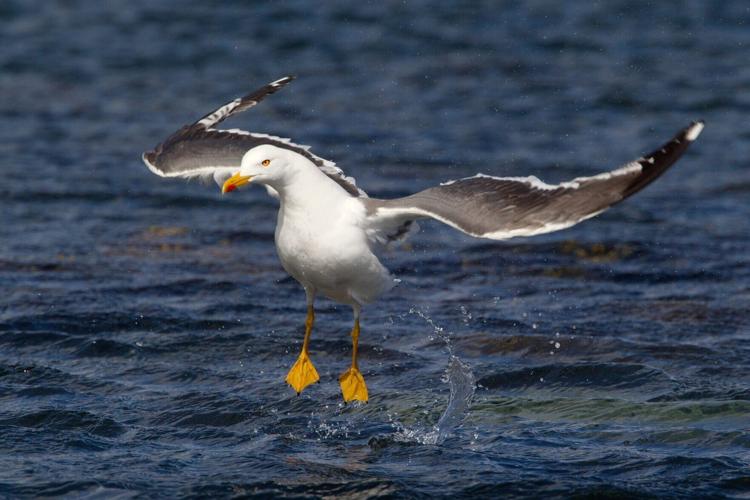


Lesser black-backed gull near the ocean. (Courtesy of British Trust for Ornithology via SWNS)
By Faye Mayern
Seagulls acting "drunk" and disrupting traffic by stumbling around could be due to feasting on swarms of flying ants coming out in the heat of summer.
The birds, which are partial to munching on the insects, have been seen woozy and staggering around particularly in coastal towns like Lowestoft and Aldeburgh in Suffolk.

Dr. Viola Ross-Smith from the British Trust for Ornithology says eating flying ants makes seagulls act strange. (Courtesy of British Trust for Ornithology via SWNS)
One theory, as explained by Viola Ross-Smith from the British Trust for Ornithology, is that the gulls are getting "drunk" on an acid released by the ants.
The insects discharge formic acid — a chemical defense when under threat — and if gulls eat enough ants, the acid leaves them unsteady on their feet.
Ross-Smith explained: "Ants produce formic acid and because it's a mild toxin, the gulls can act a bit woozy and come across as drunk.
"The hypothesis is the formic acid is affecting them as ethanol affects us."


Flying ants are especially active for a period around mid-July in which they set up new colonies as their queens emerge.
With the heat this summer, many in Suffolk have already witnessed swarms — and gulls diving down to catch them.
Ross-Smith said: "It is just a hypothesis at the moment. Some say the birds might be so distract by the food source they're not paying attention.
"You do see blankets of gulls walking in the road and staggering around on the pavement, getting in the way of cars.

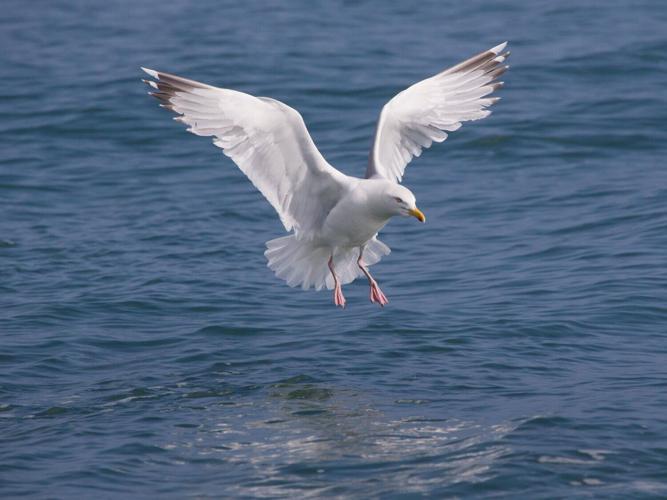
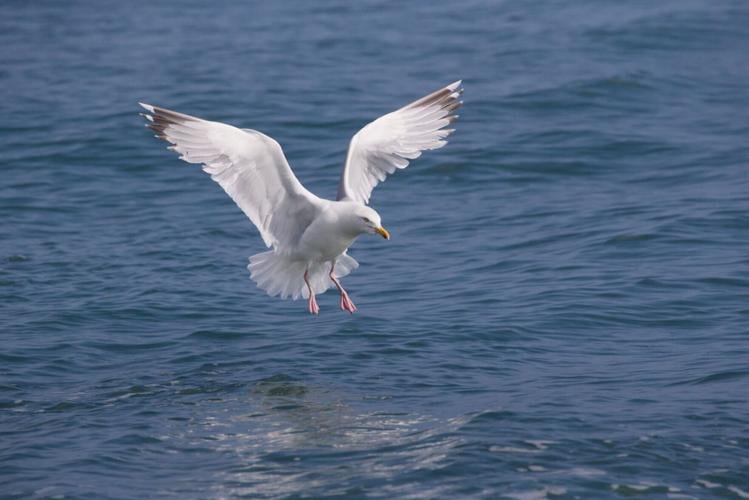
A herring gull swoops down. (Courtesy of British Trust for Ornithology via SWNS)
"Usually they're bold birds who don't shy away from humans.
"I would really love for someone to test the theory and see if formic acid is making the gulls drunk."
Ross-Smith said the public shouldn't be concerned if they see a woozy bird, but seek help if a gull seemed considerably ill.
She added: "They're taking the opportunity to gorge on the insect protein. We're happy to let nature get on with it."


(0) comments
Welcome to the discussion.
Log In
Keep it Clean. Please avoid obscene, vulgar, lewd, racist or sexually-oriented language.
PLEASE TURN OFF YOUR CAPS LOCK.
Don't Threaten. Threats of harming another person will not be tolerated.
Be Truthful. Don't knowingly lie about anyone or anything.
Be Nice. No racism, sexism or any sort of -ism that is degrading to another person.
Be Proactive. Use the 'Report' link on each comment to let us know of abusive posts.
Share with Us. We'd love to hear eyewitness accounts, the history behind an article.