



New research explores how drivers trade off between cognitive tasks, driving and using the touch screen.
By Stephen Beech
Motorists face a potentially deadly struggle to multitask when using dashboard touch screens, warns new research.
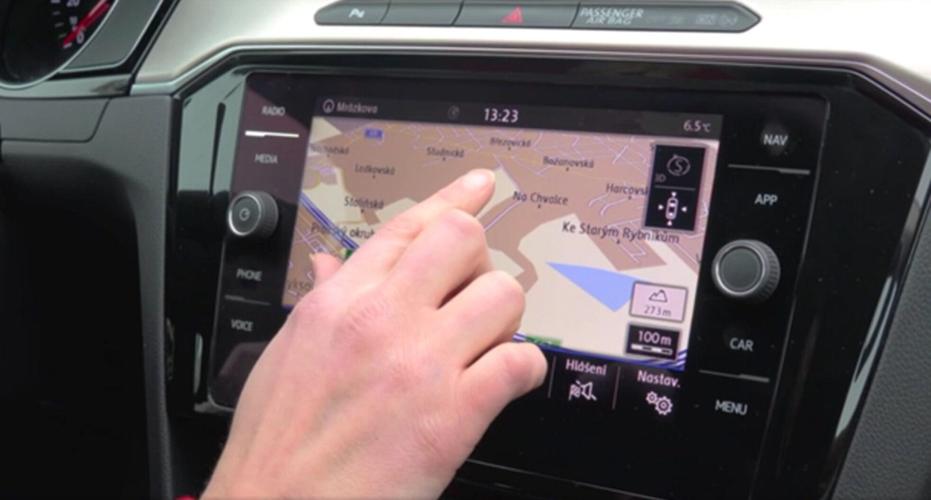
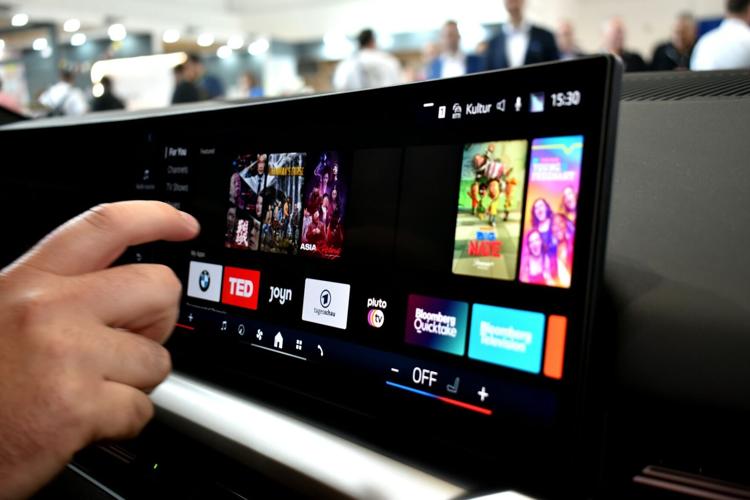
Once the preserve of buttons and knobs, today's car dashboards are increasingly home to large touch screens.
While that makes following a mapping app easier, it also means drivers can’t feel their way to a control; they have to look.
The American study looked at how motorists balance driving and using touch screens while distracted.
Participants drove a vehicle simulator, interacted with a touch screen and completed memory tests that mimic the mental effort demanded by traffic conditions and other distractions.

Gavin Phillips
The research team, from the University of Washington and the Toyota Research Institute (TRI), California, found that when people multitasked behind the wheel, their driving and touch screen use both suffered.
The car drifted more in the lane while people used touch screens, while their speed and accuracy with the screen declined when driving.
The researchers say the effects increased further when the memory task was added.
The researchers say the results could help car manufacturers design safer, more responsive touch screens and in-car interfaces.
Study co-senior author Professor James Fogarty, of the University of Washington, said: “We all know it’s dangerous to use your phone while driving.
“But what about the car’s touch screen? We wanted to understand that interaction so we can design interfaces specifically for drivers.”
As the 16 participants drove the simulator, sensors tracked their gaze, finger movements, pupil diameter and electrodermal activity.
The last two metrics are common ways to measure mental effort, or “cognitive load.” For example, pupils tend to grow when people are concentrating.
While driving, participants had to touch specific targets on a 12-inch touch screen, similar to how they would interact with apps and widgets.


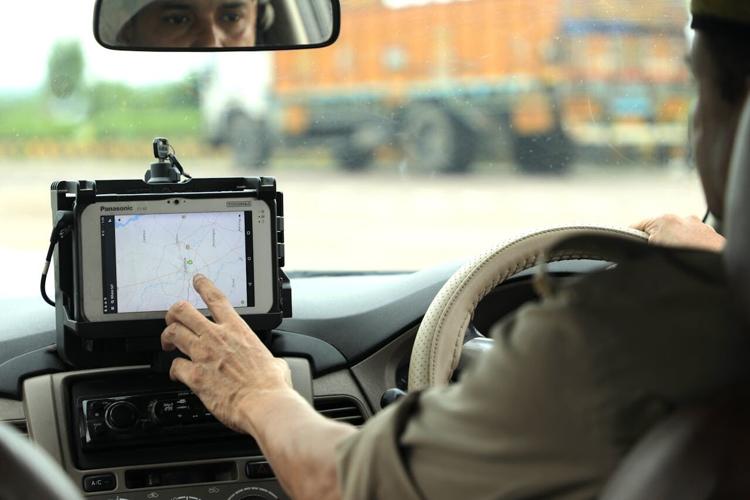
(Photo by 112 Uttar Pradesh via Pexels)
They did that while completing three levels of an “N-back task” - a memory test in which the participants hear a series of numbers, 2.5 seconds apart, and have to repeat specific digits.
The participants’ performance changed "significantly" under different conditions, according to the findings.
When interacting with the touch screen, participants drifted side to side in their lane 42% more often. Increasing cognitive load had no effect on the results.
Touch screen accuracy and speed decreased 58% when driving, then another 17% under high cognitive load.
Each glance at the touchscreen was 26.3% shorter under high cognitive load.
A “hand-before-eye” phenomenon - in which drivers’ reached for a control before looking at it - increased from 63% to 71% as memory tasks were introduced.
The researchers also found that increasing the size of the target areas participants were trying to touch did not improve their performance.
Research team member Xiyuan Alan Shen, a University of Washington doctoral student, said: “If people struggle with accuracy on a screen, usually you want to make bigger buttons.

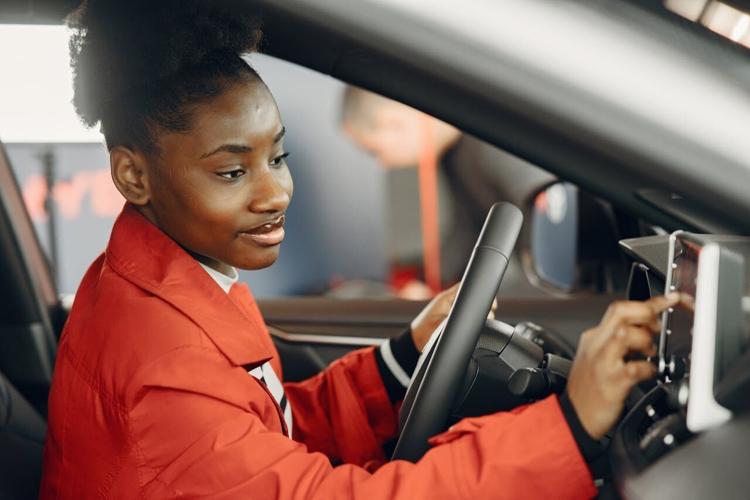
(Photo by Gustavo Fring via Pexels)
“But in this case, since people move their hand to the screen before touching, the thing that takes time is the visual search.”
The research team, based on their findings, suggest future in-car touch screen systems might use simple sensors in the car - eye tracking, or touch sensors on the steering wheel — to monitor drivers’ attention and cognitive load.
Based on the readings, the car’s system might adjust the touch screen’s interface to make important controls more prominent and safer to access.
Study co-senior author Professor Jacob Wobbrock, of Washington's Information School, said: “Touch screens are widespread today in automobile dashboards, so it is vital to understand how interacting with touch screens affects drivers and driving."
He added: “Our research is some of the first that scientifically examines this issue, suggesting ways for making these interfaces safer and more effective.”
The findings were presented at the Association for Computer Machinery (ACM) Symposium on user interface software and technology in Busan, Korea.


(0) comments
Welcome to the discussion.
Log In
Keep it Clean. Please avoid obscene, vulgar, lewd, racist or sexually-oriented language.
PLEASE TURN OFF YOUR CAPS LOCK.
Don't Threaten. Threats of harming another person will not be tolerated.
Be Truthful. Don't knowingly lie about anyone or anything.
Be Nice. No racism, sexism or any sort of -ism that is degrading to another person.
Be Proactive. Use the 'Report' link on each comment to let us know of abusive posts.
Share with Us. We'd love to hear eyewitness accounts, the history behind an article.