



Whenever people find out what I do for a living, they usually say, "Oh, you're a political reporter. You must be so cynical."
I always politely tell them no.
I'm not a political reporter. I'm a reporter who covers the United States of America through the prism of our campaigns, our elections, our government, and our leaders. Politics is the lens; the American people are the subject. And after decades on this beat, I have grown less cynical, not more.
As we mark the 250th anniversary of this country, it is easy to let our extraordinary political polarization blind us to who we actually are. But right now, we are getting a badly needed reality check from the outside world.
With visitors flooding our cities for the World Cup, we are surrounded by a thousand modern-day Alexis de Tocquevilles. These tourists aren't just marveling at our technology, our music, our movies, or even our highway rest stops. They are seeing something we often miss ourselves: the remarkable openness of America.
The Washington mirage
Years ago, as he grappled with the divisions in the country, Bill Clinton made two observations that have stayed with me.
The first was Washington is more divided than the country itself. Our politics are more divided than our neighborhoods. The loudest and angriest voices in the national town square are not representative of most Americans. They're simply the loudest.
I've traveled to all 50 states, and I've found that to be true.
The second thing Clinton used to say sounded a little hokey to my younger ears. Today, I think it is exactly right.
"There's nothing wrong with America that can't be solved by what's right with America."
What is right with America can be summed up in one word: openness.
The founders designed a constitutional system of checks and balances that has endured for 250 years because it accommodates the realities of human nature. But they also built something less tangible and just as important: a culture that welcomes competing ideas. Make your case. State your point of view. Then remain open to the possibility that someone else may disagree without becoming your enemy.
Monetizing outrage
If it feels like that openness is disappearing, I don't think it's because Americans have fundamentally changed.
It's because we are increasingly surrounded by algorithms and media platforms whose business model depends on narrowing our thinking rather than expanding it. Their economic incentive is to reinforce what we already believe, mock people who disagree, and turn politics into tribal entertainment.
But that's not the America I encounter.
Whether I'm in New York City, or Wyoming, Alaska, or Alabama, I find the same openness. Ask a stranger for directions or help, and someone will stop. Tell Americans about a child who needs an operation or a family that's fallen on hard times, and they'll open their hearts — and their wallets — before anyone tells them they have to.
That same openness fuels our economy.
Yes, it helps to have capital. It helps to have connections. But underneath America's extraordinary record of innovation is something more basic: a willingness to dream big.
Maybe it's someone opening a neighborhood dry cleaner.
Maybe it's someone deciding to use artificial intelligence to reinvent the dry-cleaning business.
Americans don't just tolerate those dreams. We encourage them.
The risk takers
Throughout my career, I've asked people a simple question: "What generation American are you? Tell me the story of how your family came to be here."
Almost every answer includes someone who took an extraordinary risk.
I've heard countless stories about grandparents who were surgeons, executives, or successful business owners in their home countries, only to come here and drive a taxi, work in a factory, or clean clothes at a neighborhood dry cleaner.
They willingly stepped backward because they believed America would allow their children and grandchildren to move forward.
That confidence didn't come from guarantees.
It came from openness.
Openness isn't free. It brings risk. An open society will always wrestle with problems that more closed societies don't face. But history suggests the trade has been worth it.
We have plenty of things to fix as we head into our next 250 years. We need better schools, less income inequality, and a less toxic political culture. We should aspire to all of that. But we cannot lose sight of the fact that our capacity for dreaming, our ingenuity, and our generosity remain the envy of the world.
When people ask if covering this country has made me cynical, I tell them it has done the opposite. The deeper you look past the shouting matches on television, the harder it is to be cynical about the American people.
As we celebrate this milestone anniversary, let's look past the loud and angry mirage of our national politics. If we want to solve what is wrong with America, we have to stop letting a polarized industry crowd out our optimism. It is time to lean back into the quality that built this nation in the first place: openness to big dreams, new ideas, and one another.
•••
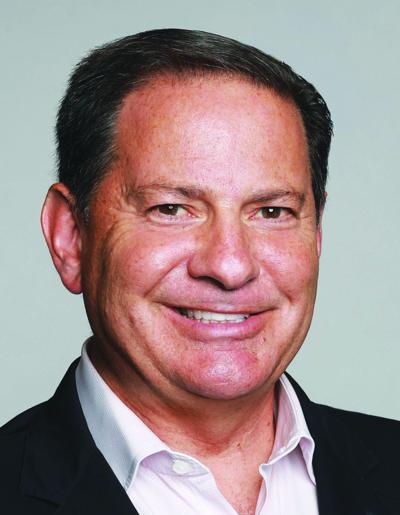
Mark Halperin is editor-in-chief of 2WAY and host of Next Up, where this commentary first aired as a reported monologue. Read more of his reporting and join his daily conversations at 2way.tv.


(0) comments
Welcome to the discussion.
Log In
Keep it Clean. Please avoid obscene, vulgar, lewd, racist or sexually-oriented language.
PLEASE TURN OFF YOUR CAPS LOCK.
Don't Threaten. Threats of harming another person will not be tolerated.
Be Truthful. Don't knowingly lie about anyone or anything.
Be Nice. No racism, sexism or any sort of -ism that is degrading to another person.
Be Proactive. Use the 'Report' link on each comment to let us know of abusive posts.
Share with Us. We'd love to hear eyewitness accounts, the history behind an article.