


TILTON — Patients who have experienced long wait times, scheduling conflicts and other unsavory conditions at area hospitals spoke out at a forum on Wednesday, giving food for thought to Concord Hospital leaders to make improvements.
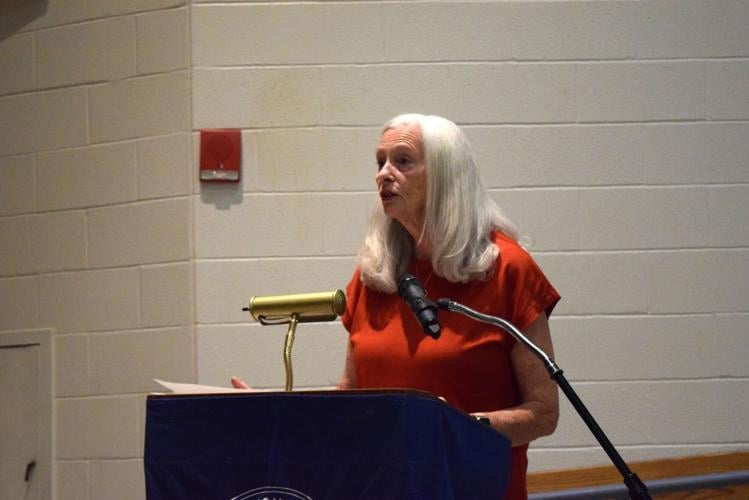
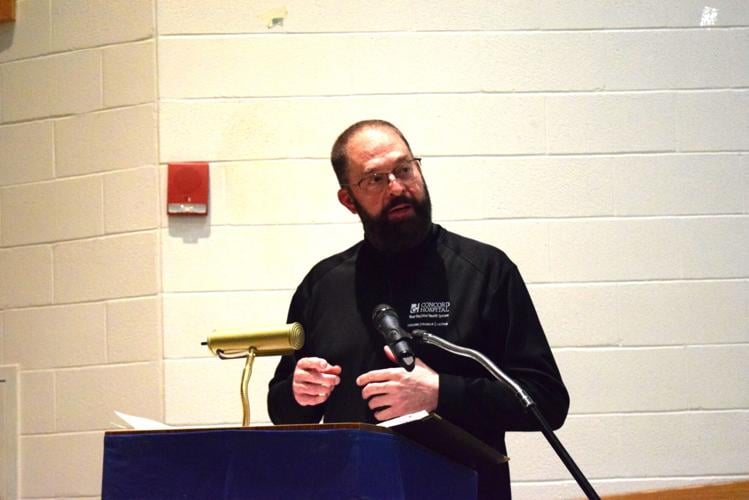
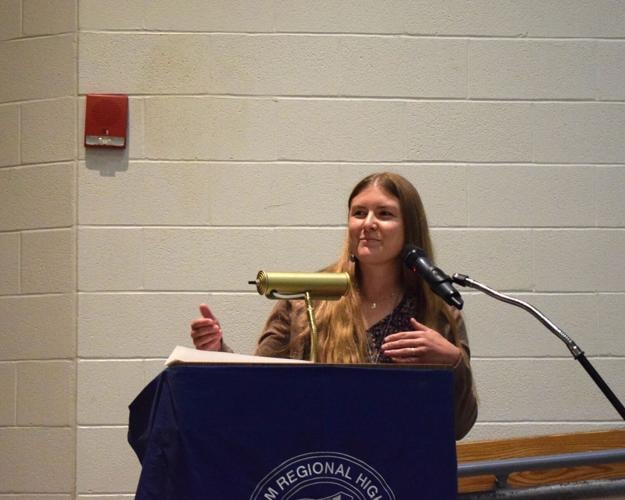
About 50 people gathered at Winnisquam Regional High School on Wednesday, for a forum hosted by the state Health Care Consumer Protection Advisory Commission. Both patients and healthcare workers shared their experiences. Many were negative, and most positive comments came from healthcare personnel.
Concord Hospital President and Chief Executive Officer Robert Steigmeyer listened intently to patient testimonies about care after the acquisition of Franklin and Lakes Region General Hospital five years ago. After the meeting, he said hearing first-hand will only help him alleviate concerns.
“These conversations help me directly,” Steigmeyer said.
The commission consists of Senior Assistant Attorney General Brandon Garod; Insurance Commission designee Jason Aziz; attorney Jason Cole; Dr. Mitchell Cohen, of St. Joseph Hospital, in Nashua; and Melissa St. Cyr, chief legal officer for the state Department of Health and Human Services.
Each member introduced themselves, spoke about their roles, and asked several questions. Most of the meeting revolved around patient and healthcare worker comments.
Dr. Paul Clark works in the internal medicine department at Concord Hospital, and has been there 25 years. He thinks primary care is the backbone of the healthcare system.
Clark said there are great providers in the region, but not nearly enough to service the patients they had. Practices have been closed to new patients, which he finds unacceptable, as well as long wait times to get routine care.
“It’s not because people aren’t working hard, it’s just more patients than providers,” Clark said.
Clark said recruitment efforts for employees have been successful. He said every practice in the region is accepting new patients, and they are able to care for 35,000 patients regionally. Clark said 2,000 new patients per year are being added.
Not everyone had such a positive outlook. Sandwich resident Siobhan Connelly disagreed with Clark’s assessment of success, saying things have worsened since the acquisition.
“I have experienced a marked difference in my ability to access our provider since the acquisition,” Connelly said.
Connelly has unknowingly been calling what she thought was her doctor’s office, not realizing she was talking to someone from a completely different facility, who doesn’t know her. She found this out when she called the doctor on the day of her son’s high school graduation, and was offered two options: go to urgent care and pay out of pocket, or drive an hour to Franklin to see a new provider.
“I didn’t learn until the follow-up appointment, days later, that my provider was actually not offered the chance to see me or my son, and would have seen me that day,” Connelly said.
Connelly was able to speak directly with her provider or her team when her children were young, but now must find new ways to communicate.
Another issue, she said, is the portal. Connelly admits she isn’t good with technology, but she said it isn't efficient. She was unable to set up a portal account for a child over 12 years old. She made an account for herself, and was chastised for making an appointment for someone else. This was later smoothed over by someone who recognized her name.
“That’s not good access,” Connelly said.
Connelly also spoke about scheduling issues. She always makes an appointment a year in advance, and said she has never had to reschedule more than she has since the acquisition.
“It drives me nuts.”
Connelly said there seems to be a disconnect in the system, and it's getting in the way of honoring relationships she held previously. She said the Laconia and Franklin communities have experienced quite a bit of adversity, and the relationships patients have with providers and physicians are “incredibly important.”
Otolaryngologist Jason Mangiardi, of Gilford, works at Concord Hospital-Laconia as an ear, nose and throat surgeon, and is also a medical director for surgical services for the local network. He spoke from his experience as a surgeon in the Lakes Region for the past 16 years, including as immediate past president of medical staff at what was LRGH.
He also served on the board of LRGH and Franklin Regional Hospital as bankruptcy neared, and said it wasn't a fun place to be. Looking at the context of how healthcare is provided now, he said it is useful to remember the “profound uncertainty” that surrounded the middle of the COVID-19 pandemic.
Mangiardi said the merger, from his view, has been “better than I could have possibly dreamed.” He called it a bold — and fraught — decision.
“Concord Hospital stepped up and saved healthcare in the Lakes Region,” Mangiardi said.
Since the merger, Mangiardi said, millions of dollars have been invested in maintaining and expanding services. This included bringing in gastroenterology, radiology, infectious disease, rheumatology, and other specialist service uncommon for a community of this size. He also said investments were made in workforce development for training and schooling, all the while, keeping a focus on providing quality patient care.
Through the acquisition, despite some bumps in the road, he thinks there has a been a “mission-driven, strategic, compassionate system” to support local healthcare.
Crystal Hardy is vice president of clinical programming for the Taylor Community, in Laconia, and is also a registered nurse and licensed nursing home administrator. She said after being on social media and seeing some of the horror stories, she expected an angry mob. She understands people are frustrated, but also doesn’t think the hospital is trying to say everything is perfect.
“I think that they’re doing what they need to do in a health care crisis that we’re experiencing across the country,” Hardy said. “I think we feel it at Taylor. We have 450 to 500 seniors in the Laconia and Meredith locations. Seniors make up probably the biggest population that goes to the emergency room, or to the hospital. We have a lot of experience with Concord Hospital. What I can tell you is they listen, and things have improved.”
She also said people in the community need to take some accountability, as some are using the emergency department as primary care. She has seen complaints from people saying they are waiting hours on end, with broken bones and other ailments, and others will take precedent.
“I don’t know what the solution is to that,” Hardy said. “People have the right to go to the emergency room and not be turned away, but we send seniors to the emergency room several times a week for true emergencies. They do have to wait sometimes. If someone is having stroke that’s a bigger emergency than my patient’s altered mental state.”
She said the use of the emergency department could be due to finances, as people don’t need to immediately make a co-pay. Some don’t have good insurance, or any at all.
Michelle Hinton, of Franklin, was not happy about the merger, and thought while it may be true in any system, nurses needed a lesson in compassion. She talked about how, as a smoker, her assigned doctor suggested she get a screening. A nurse told her over the phone she may have lung cancer, and wasn’t going to see her doctor anymore.
“To say I flipped out would be an understatement,” Hinton said.
Hinton also said she doesn’t want to be restricted to only 15 minutes with a doctor who doesn’t even know her.
She was unhappy with providers from Concord Hospital in general, saying a breach of security caused her to be hacked, and patient portals are difficult to use, and not secure.
“Patients are not sheep, we are people,” Hinton said.
Helen McSheffrey was critical of the system, saying her husband has been ill with endocarditis, and has spent plenty of time in the emergency department. Sometimes the wait has been very long, peaking at 23 hours, but it averages eight to 12 hours when they go to Concord Hospital-Concord. Laconia waits are shorter, but typically will still be a six-hour wait.
After hearing from audience members, Steigmeyer offered his apologies. He appreciated the feedback, and was saddened to hear the stories in what is a challenging landscape to navigate through.
“I’m sorry,” Steigmeyer said. “We’re going to work hard to do better.”


(0) comments
Welcome to the discussion.
Log In
Keep it Clean. Please avoid obscene, vulgar, lewd, racist or sexually-oriented language.
PLEASE TURN OFF YOUR CAPS LOCK.
Don't Threaten. Threats of harming another person will not be tolerated.
Be Truthful. Don't knowingly lie about anyone or anything.
Be Nice. No racism, sexism or any sort of -ism that is degrading to another person.
Be Proactive. Use the 'Report' link on each comment to let us know of abusive posts.
Share with Us. We'd love to hear eyewitness accounts, the history behind an article.