


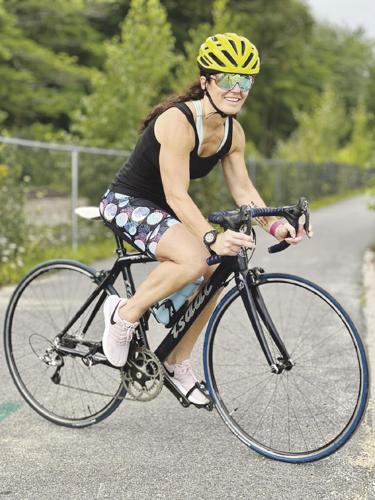
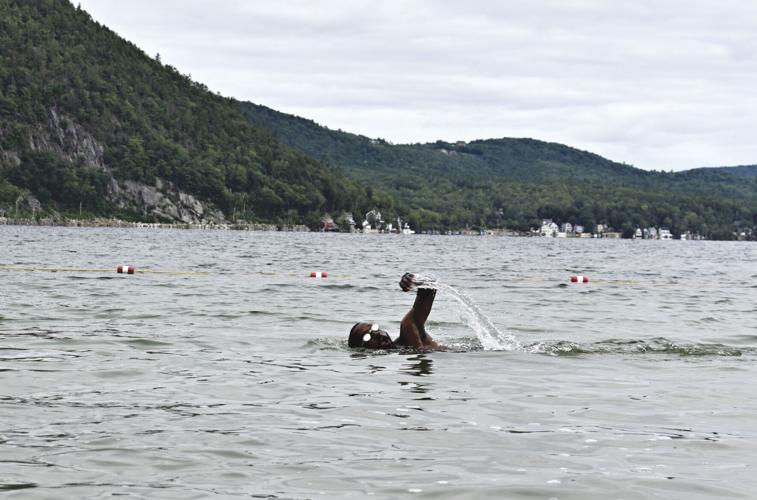
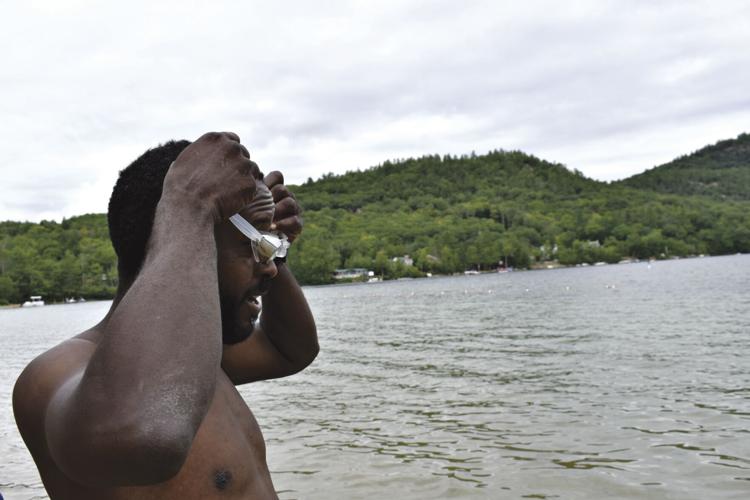
LACONIA — Mid-September might not seem like it’s just around the corner, but for the many athletes who have been training all year for the IRONMAN 70.3 Timberman, Sept. 18 feels very near.
The Timberman will be based in Laconia, with the swim in Lake Opechee, the bicycle portion touring Loudon and Gilmanton before finishing back at Opechee Park, and the run finishing on Main Street in downtown Laconia.
For the two members of the inaugural Laconia Daily Sun Rookie Academy — which takes two locals who have never completed a triathlon before and sets them up to tackle the Timberman — this final stretch is about continuing the physical training, and concentrating the mental focus, necessary to consecutively complete a 1.2-mile swim, 56-mile bicycle, and a 13.1-mile run.
That sort of event can be an odyssey of sorts, with moments of struggle and victory awaiting the athlete within each discipline.
The training necessary to get to the starting line can contain its own surprises, said Antonio Coates, one of the Daily Sun Rookies.
“I feel good,” he reported during a recent interview, but said he had to shift his focus from his training to something more fundamental after he said he was experiencing “brain drain” when his training schedule began to increase.
“I had to really settle down,” Coates said. “I put a lot more time toward my diet.”
He concluded that he needed to shift his intake to include more plants and less meat, and with a higher quality of food. He has incorporated his refreshed diet into a daily routine that includes prayer and intermittent fasting, and he said the result is a body that gets the nutrition it needs during the height of his activity, and the rest it needs at the end of the day.
Coates is discerning about the quality of what he consumes, as well as the environment he creates around himself.
“Eating slow, not just eating, but edifying and eating with friends, good fellowship. Having quality conversation while I'm having good food, listening to good music,” Coates said. “Whatever I put into my body is going to come out during the race.”
For Coates, the most challenging discipline of the triathlon training has been the swim, but he has found a pattern of freestyle, then breaststroke, and if necessary, treading water to settle his breathing, to get through the water stage.
Melissa Aupperle, the other Daily Sun Rookie, also finds the swim to be the most challenging. However, she has found that the greatest swim challenge has already been conquered, as her fear and tendency to panic while in the water has already gone away.
“It’s all in your head, right? Everything’s in your head,” Aupperle said. She wasn’t just talking about keeping calm in the water, either. Aupperle has noticed the dramatic effect that her mental state has on her physical capability on any given day. If she approaches a workout with a negative attitude, she won’t be able to accomplish as much as she has before.
“Maintaining a mindset that you can do it is really important,” Aupperle said.
Coates and Aupperle are being coached remotely by Colin Cook, of Peak Triathlon Coaching, who said he is training several athletes for the Timberman. Cook knows what he's talking about, having won the White Mountains Triathlon and placed second in the IRONMAN 70.3 Musselman earlier this year.
Cook said this point of the training, about a month and a half out from the event, is “crunch time.”
“For most people, we’re getting the larger loads of training, we’re doing the specific preparation, their training volume is increased and will be increased for the next few weeks until we start the taper and the de-load so they can do their best on race day,” Cook said.
How much volume is the right volume? That depends on each athlete, Cook said. With the distances in the 70.3, he said it’s possible to achieve the race distances, or even exceed them, during training sessions, without fear of necessitating a lengthy recovery time. In fact, doing longer distances can give athletes confidence that they’ll be prepared when the race comes.
On the other hand, if the athlete falls short of training goals, or finds those distances a struggle during training, they may feel intimidated instead of empowered.
“You’ve got to be careful to not overdo it,” Cook said. “Physical preparation is critical, you have to have that. [But] your mental confidence for the race is so important. I would rather have someone somewhat undertrained but mentally fit than someone that is physically trained but mentally doesn’t think that they’ll be able to do it.”
Getting to this point has already proven transformative for both rookies.
Coates said the training has been like rebirth through fire.
“The minute I made a decision to step into it, I was going into the fire. That old person was burning away,” Coates said. “It’s impossible to step into something like this and remain your old self.”
Aupperle said she feels healthy, strong and capable.
“There’s a level of mental success that comes with thinking that you are going to accomplish things that you’ve never done before,” Aupperle said. “As strange that it is that I’m doing it, I’m doing it.”


(0) comments
Welcome to the discussion.
Log In
Keep it Clean. Please avoid obscene, vulgar, lewd, racist or sexually-oriented language.
PLEASE TURN OFF YOUR CAPS LOCK.
Don't Threaten. Threats of harming another person will not be tolerated.
Be Truthful. Don't knowingly lie about anyone or anything.
Be Nice. No racism, sexism or any sort of -ism that is degrading to another person.
Be Proactive. Use the 'Report' link on each comment to let us know of abusive posts.
Share with Us. We'd love to hear eyewitness accounts, the history behind an article.