


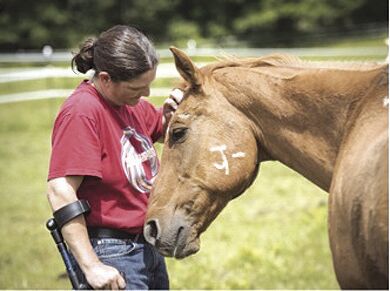
GILFORD — Post-tramatic stress disorder affects more than veterans and first responders, and occurs as the body’s and brain’s reaction to more than just combat or cataclysmic events, according to military experts and trauma counselors.
PTSD is “not a feeling of being betrayed by your government or peers,” said Louise Graham, a retired psychologist who counseled vets for 30 years the Veteran’s Administration Hospital in Brockton, Massachusetts. It’s a normal response to abnormal acts, which overwhelms service members and civilians who have “witnessed or experienced horrific actions by mankind,” she said.
And it creates a domino-effect of emotionally and mentally draining symptoms, including insomnia, nightmares, flashbacks, anger, depression, anxiety, hyper-vigilance and an exaggerated startle response – which combine to produce a debilitating condition that further sets PTSD sufferers away from others.
“We see people from any walk of life, age range, gender, or social-economic status,” said Katherine Williams, a trauma therapist at Lakes Region Mental Health Center, who is also trained in military counseling. PTSD can come from living through any traumatic event or threat to life, which can include severe car accidents. Some people have PTSD “just from learning about the accident,” she said.
Sufferers struggle with intrusive thoughts that pop in unprovoked. When triggered by sights, sounds, or smells that bring back disturbing events, they can feel that the world around them isn’t real, and have out-of-body experiences, Williams said. They often have trouble breathing and their hearts start racing.
For military veterans, the causes of PTSD is varied. Moral conflict and sexual violence while serving is a common reason vets seek help through targeted therapies and programs such as Camp Resilience, which runs retreats for vets who’ve suffered “moral injury,” or have been victims of sexual assault that results in depression and PTSD.
According to data from the Veteran’s Administration, one in four females have been sexually assaulted during military service, compared to one in five in the civilian population, and military sexual trauma is surprisingly common among males. Approximately one in a hundred male veterans in the VA healthcare system report experiencing military sexual trauma, which includes forced sexual encounters, inappropriate sexual jokes or lewd remarks and unwanted physical contact or repeated sexual advances. Generally, women are at greater risk, but nearly 40 percent of veterans who disclose military sexual trauma are male.
“Many men are very reluctant to go back to the incident. It can be months or years for vet to feel comfortable enough to reveal that” during therapy, said Margaret Laneri, a retired VA psychologist who now volunteers at Camp Resilience, leading workshops and assisting outdoor events. “They were hiding this trauma, living with it, and not dealing with it,” and living with circulating emotions that are destructive, just like the 25 percent of women in military service who have endured sexual harassment or assault.
Moral injury is also common, especially among leaders of troops and missions. “A lot of leaders struggles with decisions that go against their morals,” such as ordering the burning of a village or killing of civilians at My Lai, which gained notoriety during Vietnam. Others struggle with military casualties that cause them to grieve and perseverate. “You may lose men and women. It’s not your intent. You hope training will kick in” and subordinates will rely on it in the heat of the moment, and survive because of it, Laneri said.
“Despite all your best efforts, it doesn’t always yield the outcome a leader would desire,” said Laneri. “Sometimes, people die in the training exercises” during peace time.
Elite forces such as Army Rangers and Navy Seals are frequently deployed to crises and have to make snap, life-and-death decisions in rapidly-changing situations. “It creates stress you can’t imagine” that can live for years, taking a toll on daily life.
PTSD isn’t the only fallout. Victims of traumatic, unrelenting stress can also relationship and substance abuse problems, and entrenched, maladaptive coping skills such as hyper-vigilance and a super-heightened startle response.
“The military is a culture in and of itself. The culture has it’s own dress, morals, law, speech, behavior and values,” said Graham, a volunteer at Camp Resilience and workshop leader. “You obey your superior. You don’t question your superior. If you disobey an order, even if it’s wrong, you can be punished. This puts people in a position which violates their own code of values. And it presents a violent contradiction” that continues to affect emotional life.
Military sexual trauma, which includes rape, assault and harassment, is a “huge moral injury,” said Graham. Typically, a superior is the perpetrator and victims fail to report because they fear retaliation. “If someone does report, the investigation gets passed over or minimized by superiors or they’ll expedite a discharge or transfer, which is a further betrayal,” Graham said.
And sexual trauma is a big problem in the armed forces. Between 2016-18, sexual assaults in the military jumped by 50 percent, Graham said, citing VA data. In 2018, 13,000 women and 7,500 men in the military reported being raped. Forty percent of homeless females have military sexual trauma, which goes under-reported by both sexes.
Even the military’s rules of engagement can feel like a betrayal, designed to protect the enemy, causing guilt or feelings of betrayal, Graham said. Veterans and active service members can think. ‘You ask me to do a job. You put me in harm’s way with my hands tied” by rigid rules that require incremental warnings to the enemy and carefully prescribed, escalating uses of force. In the short and long run, military personnel and veterans can wind up feeling betrayed by bureaucracy and by civilians who are critical, and have never been in their position.
Graham said people with moral injury live with the grief, regret, shame and alienation that comes from betrayal, and often remain distant and mistrustful of people. “They’ll lose spiritual aspects of their lives, and think, ‘Why is God punishing me?’” she said. “Crowds cause difficulties because you can’t watch everyone and everything.”
A feeling of skepticism and judgement from outsiders only increases isolation. “Civilians look at them and wonder ‘What’s the matter with you? Get over it,’” said Graham, who is not a veteran. After 30 years of listening to vets, “In my head I understand. But in my gut, I can’t get it because I haven’t lived it.”
Camp Resilience furnishes a safe space, Graham said, an opportunity for people to drop their guard. “There’s a unity and a 'we-ness,' a mutual understanding that you don’t get with someone who hasn’t been in the military, that you get when veterans are together,” Graham said. They’ll start to share, and inevitably say, ‘Oh, you thought that, too? You acted that way, too?’ and think, ‘You mean I’m not this freak?’ It brings about the realization that ‘I’m not crazy.’”


(0) comments
Welcome to the discussion.
Log In
Keep it Clean. Please avoid obscene, vulgar, lewd, racist or sexually-oriented language.
PLEASE TURN OFF YOUR CAPS LOCK.
Don't Threaten. Threats of harming another person will not be tolerated.
Be Truthful. Don't knowingly lie about anyone or anything.
Be Nice. No racism, sexism or any sort of -ism that is degrading to another person.
Be Proactive. Use the 'Report' link on each comment to let us know of abusive posts.
Share with Us. We'd love to hear eyewitness accounts, the history behind an article.