


BRISTOL — On an island on Newfound Lake, a social services program brings New Hampshire boys from disadvantaged backgrounds together, offering respite, support and guidance.
The Mayhew Program has roots going back to the late 19th century, when an independent boarding school in Groton, Massachusetts, started up a summer camp for underprivileged boys at Squam Lake. In 1920, the Groton School Camp was moved to Mayhew Island on Newfound Lake, where the modern-day Mayhew Program resides today.
In 1975, the Mayhew Program was formally incorporated with the oversight of a board of trustees.
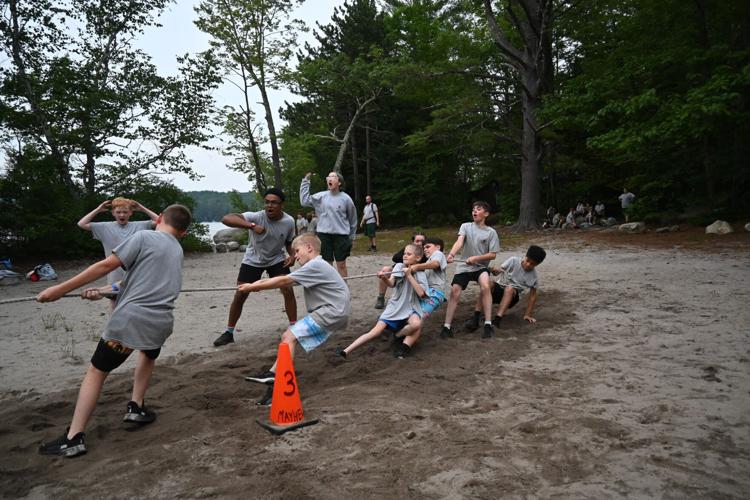
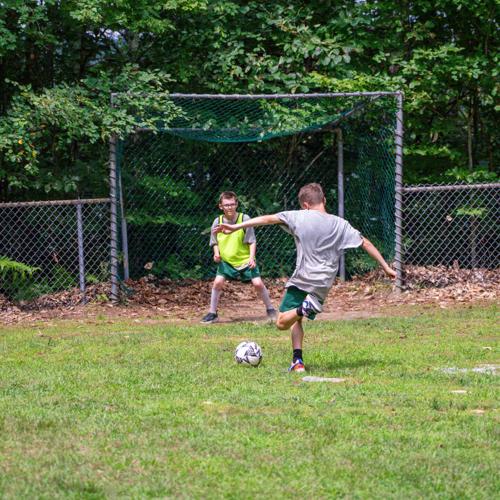
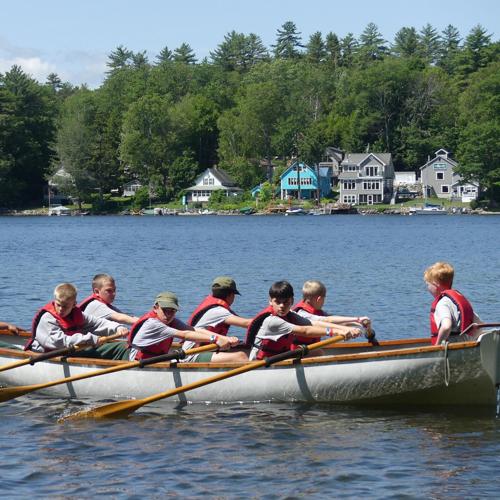
Today, boys from around New Hampshire come to Mayhew Island in the summer, where they learn to be resilient and enjoy summer activities like swimming, camp fires and general cabin camaraderie. It’s the only all-boys program statewide which combines mentoring during the school year and a tuition-free residential camp in the summertime.
Mayhew Program participants receive regular mentoring visits in their hometowns from professional outreach staff in both one-on-one and group settings. Their goal: help those boys apply the program's ideals like respect, responsibility and community.
When a new participant enters the Mayhew Program, ages 10-12, they’ll spend their first two summers in a rigorous, 22-day long program on the island. They work together in small groups and confront physical, social and emotional challenges.
Beginning in their third summer and going until their sixth with the program, the boys participate in five days of adventure-based activities like canoeing, backpacking and biking, and receive training in nature and wilderness skills. When they're 14 or older, they’re able to work for Mayhew, earning both a wage and a dollar-for-dollar matched scholarship for education.
In the final two years of the program, participants receive assistance and guidance in graduating from high school, establishing future goals and navigating whatever barriers they may face, individually.
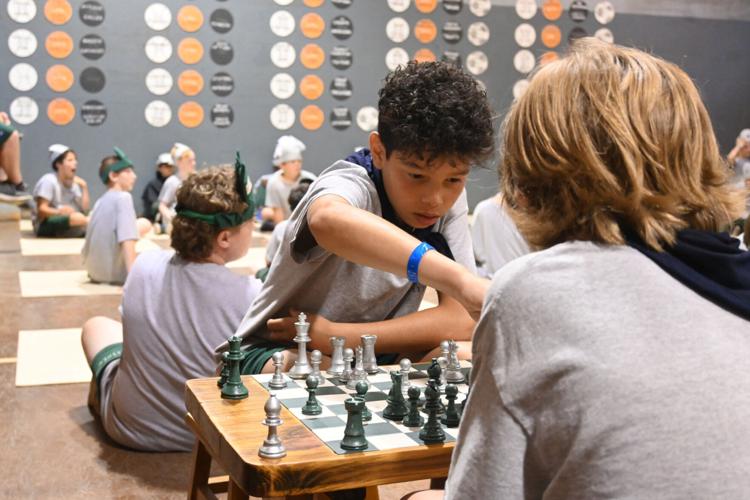
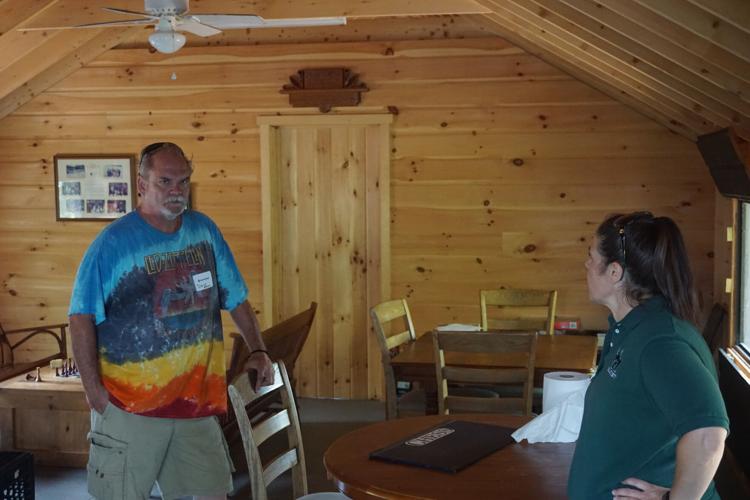
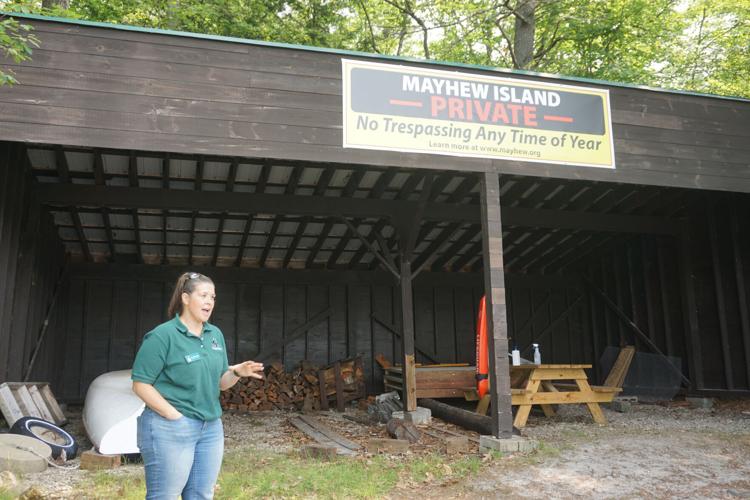
On Aug. 7, The Laconia Daily Sun joined a tour of Mayhew Island near the end of the 22-day camp experience which included about 40 boys. Laura Brusseau, engagement manager for the program, met a group of community members and alumni in a parking lot in Bristol, showing off an impressive bunkhouse fit for nine boys and three councilors which featured chess — a popular game among program participants — pool tables, a kitchen, guitars and a rock wall.
“We definitely are a community space,” Brusseau said.
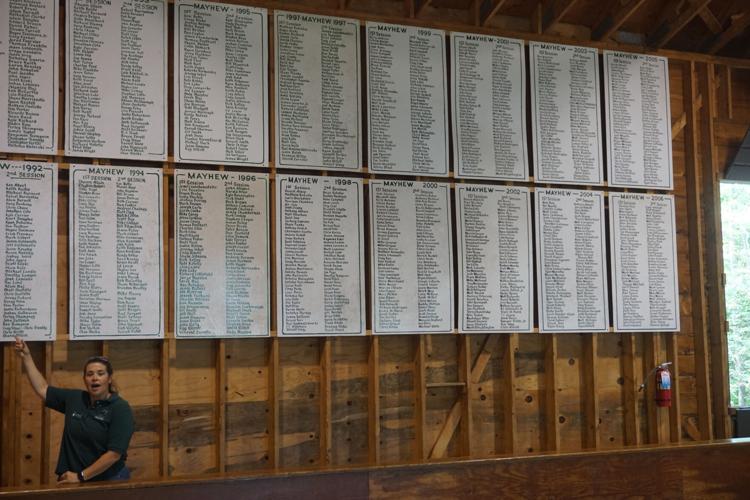
They’ve served 2,400 boys since 1969. About 85% of donations come from individuals.
“It’s been community focused and community driven,” she said.
Walking across the street to a boat launch, they’ve got a large shorefront cottage which serves as housing for outreach staff.
“We want to take care of our staff, because they’re doing such important work,” Brusseau said.
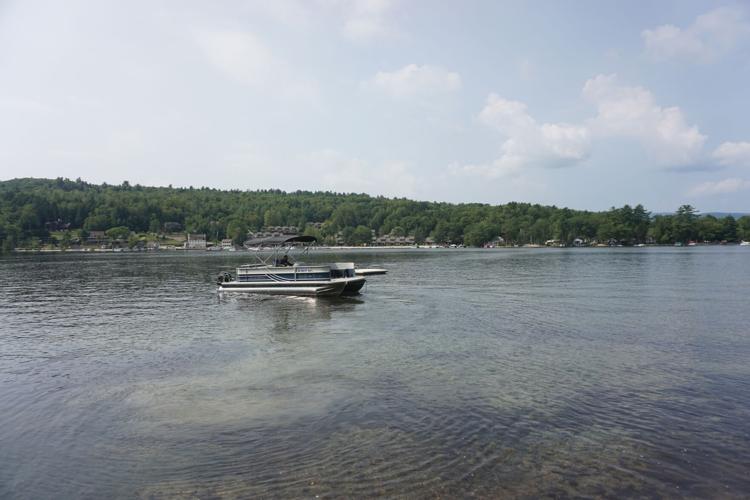
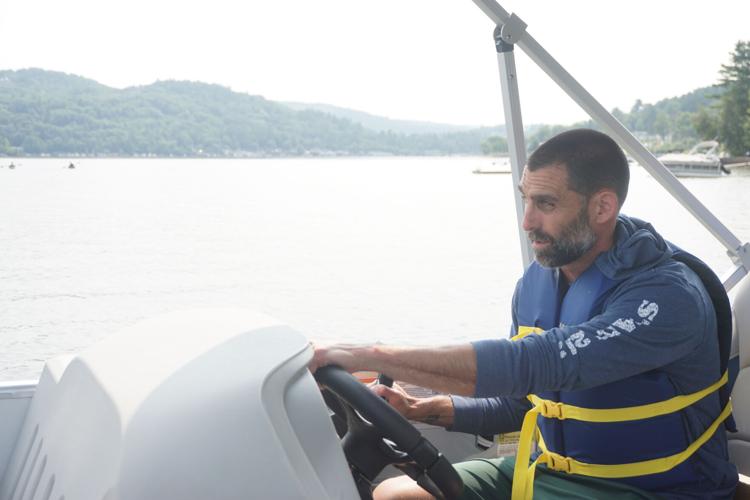
Boarding a pontoon boat named Belle, visitors were greeted by Program Director Greg Stoutzenberger, who was serving as captain.
“We’re one of the only programs in the country that operates that way,” he said, in reference to the combination of a summer camp experience plus mentorship throughout the year.
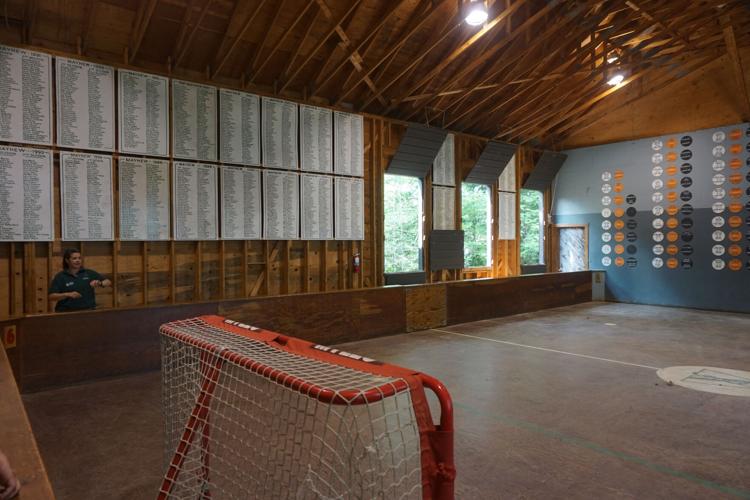
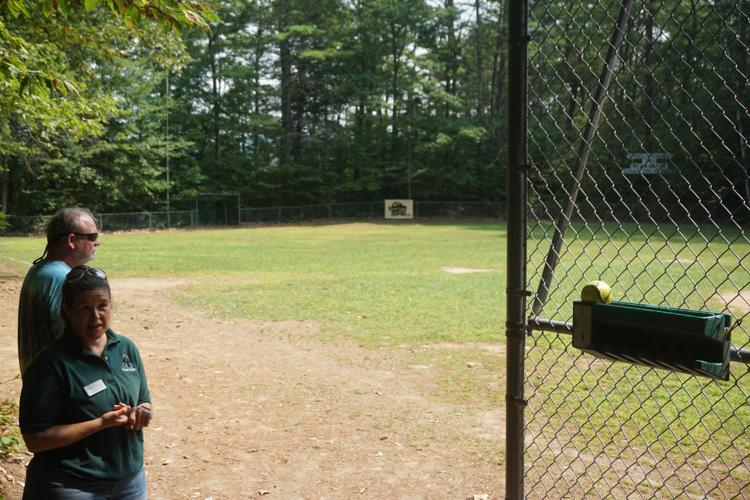
Upon stepping foot on Mayhew Island, a visitor is transported back in time about 50 years — there’s no technology, and the laughs and chatter of program participants is audible in the background.
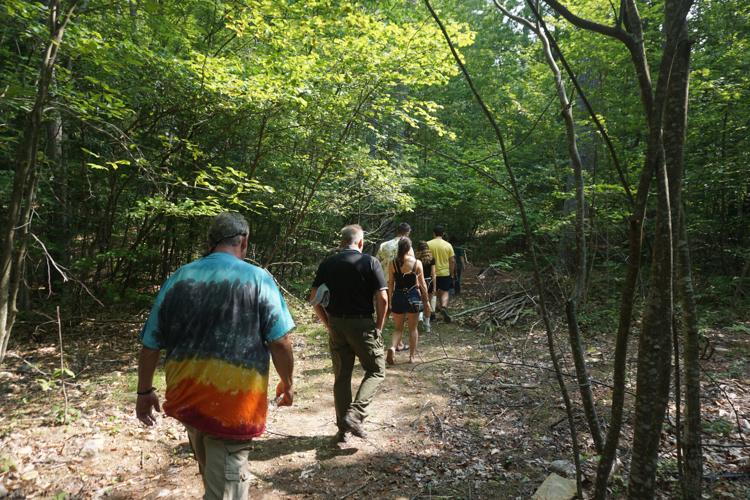
“When you’re walking around the island you don’t realize how big it is,” said Ben Archibald, a community member who participated in the tour.
“A lot of the boys remain lifelong friends, forever,” Brusseau said.
That appeared to be true — also on the tour were alumni Daryl Wilcox and Rob Kowalczyk, who participated in the program in the 1970s. They’re good friends today.
“It’s new,” Wilcox said. “It’s been 50 years since I’ve been here.”
“Mostly it was the opportunity to get out of the city and it provided the structure you needed,” Kowalczyk said when asked what impact the program had on him as a child. “It definitely had an effect in some way, I’m glad it’s still here because it just gives somebody else an opportunity.”
For Stoutzenberger, that impact is the entire ballgame.
“That sense of belonging is really impactful,” he said. “We make an intentionally, really challenging environment.
“You’ve got to envision it like planting seeds.”


(0) comments
Welcome to the discussion.
Log In
Keep it Clean. Please avoid obscene, vulgar, lewd, racist or sexually-oriented language.
PLEASE TURN OFF YOUR CAPS LOCK.
Don't Threaten. Threats of harming another person will not be tolerated.
Be Truthful. Don't knowingly lie about anyone or anything.
Be Nice. No racism, sexism or any sort of -ism that is degrading to another person.
Be Proactive. Use the 'Report' link on each comment to let us know of abusive posts.
Share with Us. We'd love to hear eyewitness accounts, the history behind an article.