


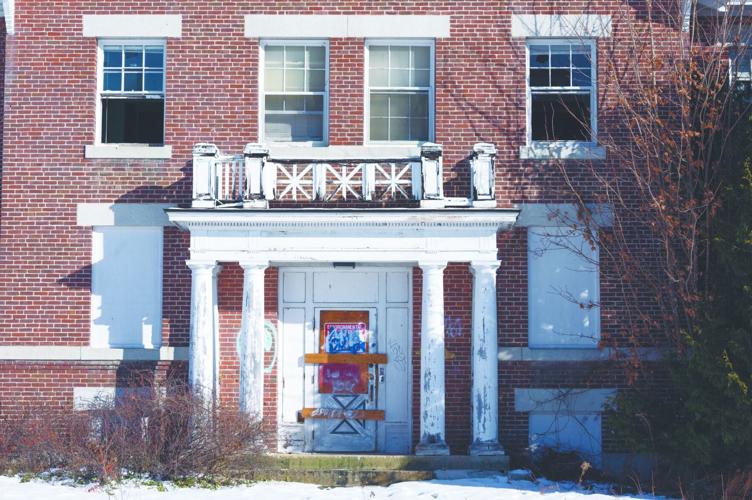
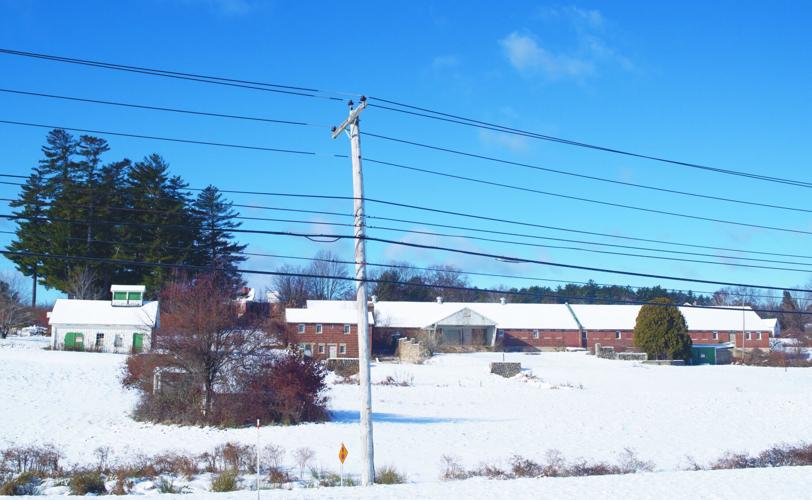
LACONIA — The anticipated development of the State School property by Pillsbury Realty Development represents just one more notch in the site’s long belt of history.
A 2022 letter, penned by Quinn Stuart, director of cultural resources at Vanasse Hangen Brustlin, and addressed to the Lakeshore Redevelopment Planning Commission, surveyed the property off Parade Road, and the ways it changed, year over year.
In 2013, the New Hampshire Division of Historical Resources determined the former Laconia State School — known to modern peoples as the Lakes Region Facility — was eligible to be listed in the National Register of Places.
Under criterion A, the site is historically significant in the areas of medicine, education and state government. Under criterion C, the site is historically significant in the area of architecture.
The school is not currently on the national register.
Pillsbury plans to build a residential development in several phases over about a decade, in a new village design to include space for retail as well as municipal amenities. The sale of the property has not yet closed, and Pillsbury is currently performing due diligence.
The school officially opened more than a century ago, in 1903, and remained in use variously until 2009.
In 1901, the New Hampshire Federation of Women’s Clubs petitioned the NH House of Representatives to establish a school and home for the “feeble-minded.” The site of a former farm was purchased, including a farmhouse and a barn, neither of which exists today. In 1903, the first purpose-built institutional buildings were constructed, and The New Hampshire School for the Feeble-Minded — later known as the Laconia State School — was inaugurated. In the period between 1903 and 1919, a boiler house, three dorms, a dining hall, laundry facilities and a school building were built.
An additional 238 acres were acquired by the school to stop trespassing and to enable the campus to expand its agricultural and husbandry activities in 1920. Barns and other outbuildings were expanded or constructed and, during the 1920s and 1930s, conditions within the site deteriorated because of various circumstances, including overcrowding.
During the Great Depression, demand for services offered at the site increased, as economic conditions made caring for family members at home increasingly difficult. The period of economic depression also marked an evolution at the site, away from training and educational services, and toward general custodial care, particularly following World War I and into the 1950s. Several new facilities were built, including an infirmary, dorms and another building for administration.
In 1953, Richard Hungerford was appointed superintendent of the school, and faced overcrowded dorms, shortages in staffing, and deferred maintenance. While there was little by way of occupational training or education afforded to residents, some still worked on the farm or around the facility to support its daily operations. Hungerford, as new superintendent, implemented a policy which emphasized the education of residents, and encouraged family visits and engagement. A number of “cottage-style" dorms were constructed to create home-like conditions.
In 1960, Hungerford resigned and was succeeded by Arthur Toll, who worked to change the school from custodial care to therapeutic integration. He planned to create programs for residents classified as “trainable” or “educable” — about 60% of them — and thought training and educating residents would enable them to leave the property.
By the 1960s and '70s, medicating children with developmental disabilities became a generally accepted practice. This complicated Toll’s plan for expanding training and education by decreasing a focus on work training programs. The resulting erosion of institutional self-sufficiency contributed to the dissolution of the farm program in 1968, and residents who were capable of functioning in broader society were placed in the local community, as the number of facility residents and the demand for its services increased in kind.
To meet increased demand, four more dorms were constructed, along with a new administration building and a training and education center.
Michael Dillon, a superintendent from the Central Connecticut Regional Center, a similar campus to Laconia's, was invited to the school to make recommendations for improvements to treatment programs in 1975. Dillon conducted an inspection, which resulted in changes to state law regarding the care of residents. Three years later, a class action lawsuit was filed by parents of the school’s residents, and demanded improved conditions on the campus, alleging the state wasn’t following its own laws. A court order reduced the size of the school, which forced many residents into community placements.
Through the 1980s and into the '90s, a community support system was created, and residents were moved out of the facility. On Jan. 31, 1991, the school shuttered its doors.
By the end of that year, portions of the campus were converted into a medium-security state prison — the Lakes Region Facility — which housed about 500 inmates. The prison remained in operation until 2009, when, by legislative act, the New Hampshire General Court directed the closure of its correctional facilities. Custody of the property was transferred from the New Hampshire Department of Corrections to the New Hampshire Department of Administrative Services, effective July 1, 2009.
At the time of the prison closure, a majority of the facility remained in use, according to state records. The majority of the campus hasn’t been in use since the prison closed, but agencies have used some buildings across the campus.
The Department of Health and Human Services used three, and, until 2009, one was used for a “multiple offender program” for individuals convicted more than once for driving while intoxicated or otherwise impaired. The physician’s cottage and the former superintendent’s house on the north end of the campus were used for a residential treatment program, or “designated receiving facility,” which was founded in 1994, and operated until 2021.
The Dube building was occupied by the Lakes Region Community Services Council and the Adaptive Technologies Equipment Council for a while, but is now vacant. Most prominently, the Dwinnell building is used by E-911 and Lakes Region Mutual Fire Aid. Other buildings on the campus remain unused, owing to their poor conditions.
Did you or someone you know live or work at the property? Email us at news@laconiadailysun.com.


(0) comments
Welcome to the discussion.
Log In
Keep it Clean. Please avoid obscene, vulgar, lewd, racist or sexually-oriented language.
PLEASE TURN OFF YOUR CAPS LOCK.
Don't Threaten. Threats of harming another person will not be tolerated.
Be Truthful. Don't knowingly lie about anyone or anything.
Be Nice. No racism, sexism or any sort of -ism that is degrading to another person.
Be Proactive. Use the 'Report' link on each comment to let us know of abusive posts.
Share with Us. We'd love to hear eyewitness accounts, the history behind an article.