



How ADHD can affect your sleep
If you have trouble sleeping, you belong to a very large club. Tens of millions of people in the United States have difficulty falling asleep, staying asleep, and waking up, according to the 2020 National Health Interview Survey. Ongoing sleep issues are especially common in people with ADHD, Understood reports.
ADHD can affect your sleep patterns and the quality of your sleep. You might feel a burst of energy at bedtime or struggle to wake up in the morning. Maybe you have a hard time staying awake during the day or find yourself sleeping at unusual times.
Scientists and doctors are looking into why this happens. Research shows a possible link between ADHD and melatonin production. Melatonin is a hormone that the brain produces in response to darkness. It helps you feel tired and ready for sleep.
Brain chemicals called neurotransmitters may also play a role. Two of these chemicals — norepinephrine and dopamine — help with alertness and attention, which are related to both ADHD and sleep.
ADHD and sleep difficulties are intertwined in many ways. For one, while ADHD can cause sleep problems, not getting enough sleep can cause ADHD-like symptoms or make ADHD symptoms worse.
It’s normal to have a bad night of sleep every once in a while. But over time, sleep deprivation can make it harder to react quickly and to focus, which is already a challenge with ADHD.
Lack of sleep can worsen other ADHD symptoms, like trouble with working memory or difficulty managing emotions. It can affect driving and completing tasks for school or work. Sleep deprivation can also take a toll on mental health and may increase the risk of depression if you have ADHD. And it can cause friction in your relationships.
Key Takeaways
- ADHD can make it hard to fall asleep, stay asleep, or keep a normal sleep schedule. It affects brain chemicals and the body’s internal clock.
- People with ADHD often have sleep disorders like insomnia, restless legs syndrome, and sleep apnea. These problems can shorten sleep time and cause daytime tiredness.
- Poor sleep can increase ADHD symptoms, like trouble focusing or finishing tasks. If sleep is a problem, talk to a health care provider to get help and support.
Sleep chronotypes and ADHD
Are you an early bird or a night owl? These are examples of sleep chronotypes, which describe your preferred sleep time. If your preference is to stay up late, it may impact your circadian rhythm — the internal clock that helps you feel sleepy at night and awake during the day.
Circadian rhythm usually follows sunrise and sunset. Imagine if there were no alarms to wake people up or artificial lights to keep them awake. Many people would naturally wake up with the sunrise and feel sleepy after the sun sets.
Researchers think that this rhythm might work differently in people with ADHD, who tend to have an evening chronotype. Early research suggests there may be some hormonal reasons for this: ADHD brains may release more melatonin during the daytime and less during the night than neurotypical people. Meanwhile, cortisol — a hormone that helps us feel alert — can be blunted in ADHD brains, especially in the mornings. There could also be a genetic component.
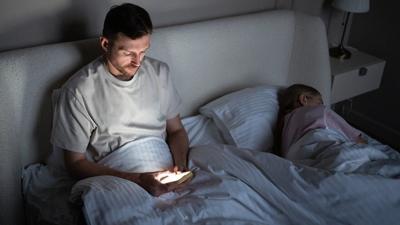
Delaying your sleep time (with or without ADHD) has an effect on how you function during the day. Using phones and other devices before bed sets you up for problems because it keeps your brain aroused. It also exposes you to “blue light” from the screens, which may interfere with how much melatonin you produce when it’s dark out.
But simply unplugging can be hard if you have ADHD. Symptoms like impulsivity, hyperactivity, and hyperfocus can all keep you binge-watching TV until 2 a.m., even though you know you’ll be sleepy and scattered all day.
Hyperfocus — getting totally absorbed in an activity — is a common symptom of ADHD. Trouble managing your focus can make it hard to switch from one activity to another. You might have a really hard time putting down a good book or stopping yourself from scrolling on social media.
Hyperactivity can also play a role in your trouble getting to sleep. This ADHD symptom often shows up as inner restlessness in adults. It can be hard for your body to physically relax and be still.
Also, ADHD can make it hard to turn off thoughts and worries and regulate your emotions. You may tend to fixate on a subject, going over and over it in your mind.
ADHD, sleep disorders, and sleep problems
Diagnosable sleep disorders like insomnia and circadian rhythm disorders often co-occur with ADHD. In fact, some studies suggest there’s a genetic link between insomnia and ADHD. These conditions disrupt normal sleep patterns. They can also affect your everyday functioning and mental health. About 60% of the adults with ADHD screened positive for any sleep disorder.
You can have a problem with sleep that isn’t a disorder. For example, a stressful situation can keep you from falling asleep and staying asleep. These types of sleep problems are often temporary. Also, mental health issues that often co-occur with ADHD can contribute to sleep problems. These include depression and anxiety. A 2022 study examining 353 adults with ADHD found that nearly half also had an anxiety disorder.


Insomnia
This sleep disorder is very common in people with ADHD. One research study published in 2020 found that about 67% of adults with ADHD also had insomnia, compared to about 30% of adults without ADHD. People with insomnia may take more than 30 minutes to fall asleep or have trouble staying asleep throughout the night.
Restless legs syndrome (RLS)
People with this disorder feel the urge to move their legs while resting and sleeping because they have an uncomfortable feeling in their legs. They can have random leg movements during sleep. RLS is more common in women than in men and affects less than 10% of people without ADHD. People with ADHD are more likely to have RLS. One 2023 study estimated that 20% to 33% of adults with ADHD have RLS.
Narcolepsy
Narcolepsy is a sleep disorder where people have trouble staying awake or feel very sleepy during the day. People with narcolepsy may fall asleep suddenly, such as while driving or at work. One study published in 2024 found that nearly 30% of people with narcolepsy also have ADHD. “Microsleep,” where people might doze off while driving, can be a result of sleep deprivation.
Circadian rhythm disorders
These conditions are sometimes called sleep-wake cycle disorders. They happen when your internal clock, which tells you when to sleep and when to wake up, doesn’t match up with the environment. Between 73% and 78% of children and adults with ADHD have what’s called a delayed circadian rhythm phase, according to a 2018 journal article.
Sleep-disordered breathing
The Sleep Foundation reports that up to one-third of people with ADHD have sleep-disordered breathing (SDB), which includes snoring and sleep apnea. SDB interrupts sleep and makes you sleepy during the day. And it often causes ADHD-like symptoms, like irritability and lack of focus. If you have sleep-related breathing problems, you should talk to your health care provider.
Poor sleep efficiency
If you toss and turn throughout the night or sleep for shorter amounts of time, there’s actually a name for it: poor sleep efficiency. This means that you spend less time sleeping compared to how long you’re in bed.
Difficulty falling asleep and staying asleep
Having trouble falling asleep is sometimes called delayed sleep onset latency. It’s more common in adults with ADHD. People with ADHD may also have trouble staying asleep. If the problem continues, it may be diagnosed as insomnia.
Sleep tips for people with ADHD
If you have trouble sleeping with ADHD, there are some steps you can take to get a better night’s sleep. They may not all work for you, or they may take a while to be successful. That’s OK.
A great first step is practicing better sleep hygiene, or good habits that help you sleep better. Some things to try:
- Limit screen time (phones, tablets, TV, and computers), starting at 15 minutes before bedtime and working up to 30 minutes.
- Have an “unwind” time before bed where you read a book or take a bath.
- Go to bed and wake up around the same time each day.
- Keep your bedroom at a cooler temperature.
- Avoid caffeine later in the day.
- Avoid napping during the day.
- Get regular exercise.
These are effective ways to promote healthy sleep habits in general. But can they help people with ADHD? A study about sleep hygiene and kids with ADHD showed that improving sleep hygiene improved their quality of life and ADHD symptoms with regular practice.
If you take stimulant medication for ADHD and you feel it might be causing sleep problems, talk to your prescriber. This isn’t a universal problem for people with ADHD. Some people find that their sleep actually improves after they start stimulant treatment for ADHD.
If you have trouble sleeping, your primary care provider can provide additional resources. They may recommend using tools like bright light therapy and melatonin supplements to help you restructure your sleep schedule. They may also refer you to a sleep specialist, psychiatrist, or mental health professional for extra support.
This story was produced by Understood and reviewed and distributed by Stacker.


(0) comments
Welcome to the discussion.
Log In
Keep it Clean. Please avoid obscene, vulgar, lewd, racist or sexually-oriented language.
PLEASE TURN OFF YOUR CAPS LOCK.
Don't Threaten. Threats of harming another person will not be tolerated.
Be Truthful. Don't knowingly lie about anyone or anything.
Be Nice. No racism, sexism or any sort of -ism that is degrading to another person.
Be Proactive. Use the 'Report' link on each comment to let us know of abusive posts.
Share with Us. We'd love to hear eyewitness accounts, the history behind an article.