


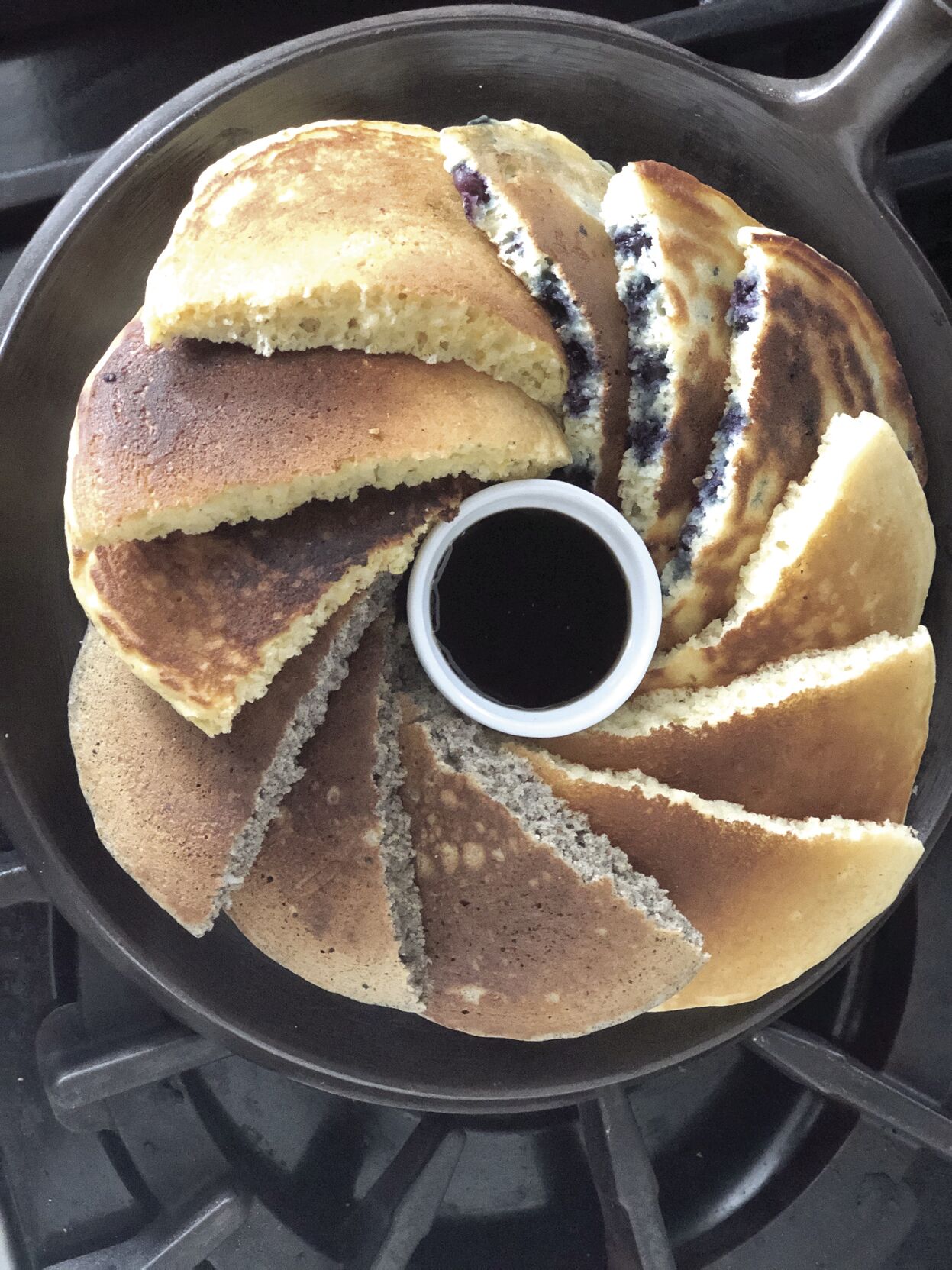
Making a good pancake recipe from scratch is only one more step way from using a mix. Scratch is far superior because the result is better flavor and texture, since you are controlling the quality of the ingredients and using fresh eggs and butter. This recipe is easily made with a wire whisk, hand-held or stand mixers. Plus, why waste our beautiful New Hampshire maple syrup on a bland and mix that's often filled with artificial flavorings?
Cultured buttermilk, like yogurt, is the fermentation of milk with lactic-acid-producing bacteria. This gives buttermilk its tangy flavor, which adds complexity and depth to baked goods.
This is a good base recipe; for a variation, substitute 1/2 cup cake flour with buckwheat flour or medium grind whole grain cornmeal. I like the medium grind cornmeal to which I add diced ripe apricots. The buckwheat makes a thicker, gooey batter since it’s finely milled and therefore absorbs more liquid, it’s wonderful with fresh ripe McIntosh apples, diced. No need to add salt, the buttermilk enhances the flavors and baking soda and powder contain enough sodium.
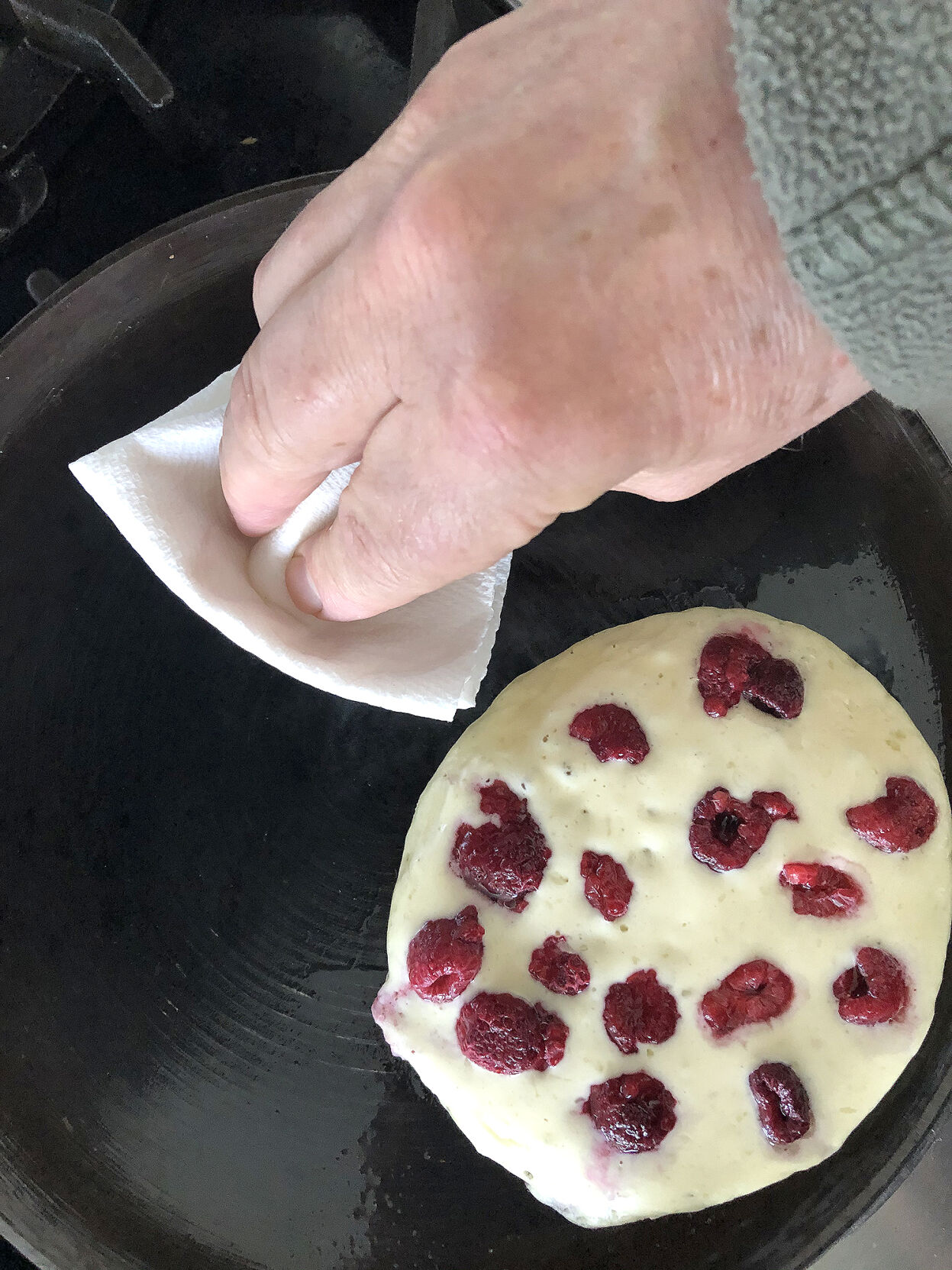
Pancakes are another great use for frozen berries. When selecting frozen berries at the market, choose those IQF (individually quick frozen). These berries are picked when fully ripe and quickly frozen, they are full of flavor. When you handle the bag of frozen berries it should feel like a bag of loose marbles. If instead it's mostly one solid mass, then the fruit has been allowed to defrost, releasing the juices from the berries and then refrozen, forming a solid brick. Avoid using frozen strawberries which are high in water, but frozen sliced peaches are great. Rather than folding the fruit into the batter, I add them to the top of each pancake once I have ladled it on the griddle. This allows me to offer a variety of fruits to my family and guests.
The finest hotel kitchen use clarified butter for cooking on griddles and sautéing, because it doesn't burn as easily or spatter since the water and milk solids have been removed from the butter. The milk proteins cause the butter to smoke; since clarified butter no longer contains those, it can be cooked at hotter temperatures. Ordinary butter will start to smoke at around 350˚F, while clarified butter can be heated to at least 450˚F before it reaches its smoke point.
Buttermilk Pancakes
2 cups unbleached cake flour
1/4 cup sugar
2 teaspoons aluminum free baking powder
1/2 teaspoon baking soda
1 1/2 cups cultured buttermilk
3 tablespoons unsalted butter (melted)
2 extra large eggs, beaten
4 tablespoons clarified butter, for the griddle (see recipe below)
Measure the flour into a large mixing bowl. Then add the sugar, baking powder, and baking soda. Blend with a hand whisk until all the ingredients are evenly incorporated. Add the beaten egg, buttermilk, and melted butter. Continue whisking until smooth and mostly free of lumps. Cover and set aside while the griddle warms to temperature. For large batches, preheat the oven to 175˚F to keep finished pancakes warm while you cook the rest of the batter. Take frozen fruit out and space in a bowl to defrost slightly, you want them still frozen which makes them easier to handle.
Heat the griddle to 375˚F, once heated add about 2-3 teaspoons of clarified butter and spread across the griddle with a paper towel folded repeatedly into a thick square about 4 inches wide.
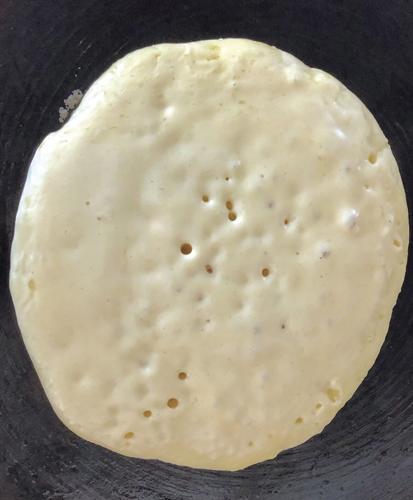
For each pancake, ladle 1/4 cup of batter onto the griddle, use the bottom of the ladle to spread the batter into about a 4-5 inch circle. If you are adding fruit, immediately add them to the top so it settles into the still fluid batter. After a minute or so, bubbles will form on the surface. Once the bubbles in the middle burst and the edges are set, carefully flip with a thin spatula. Continue cooking until light brown on the bottom, 1 to two minutes more.
Clean the griddle if needed between batches, especially if you have added fruit to the pancakes. Dip the folded 4 inch paper towel into the clarified butter and work it back and forth across the griddle where needed.
Clarified Butter
4 ounces unsalted butter
Melt butter in a heavy-bottomed saucepan over low heat. As the butter melts a layer of foam will to the surface.
As the butter continues to simmer, use a ladle to skim the foam and milk proteins from the surface of the liquefied butter. In a few minutes, most of the milk solids will have been skimmed off, leaving the pure, golden butterfat, you have some lighter liquid on the bottom, depending on the brand of butter you use. Pour the golden liquid into a jar, cover and refrigerate until ready to use.


(0) comments
Welcome to the discussion.
Log In
Keep it Clean. Please avoid obscene, vulgar, lewd, racist or sexually-oriented language.
PLEASE TURN OFF YOUR CAPS LOCK.
Don't Threaten. Threats of harming another person will not be tolerated.
Be Truthful. Don't knowingly lie about anyone or anything.
Be Nice. No racism, sexism or any sort of -ism that is degrading to another person.
Be Proactive. Use the 'Report' link on each comment to let us know of abusive posts.
Share with Us. We'd love to hear eyewitness accounts, the history behind an article.