



(Photo by Polina Tankilevitch via Pexels)
By Stephen Beech
Social media offers little substitute for real-life emotional support, according to new research.
Online connections can’t make up for the compassionate assistance people receive from in-person relationships, suggest the findings.
The timing of social media use may also matter when it comes to mental health, say scientists.
The findings come from two new papers by researchers at Oregon State University (OSU).
The first study, published in the Journal of General Internal Medicine, examined the relationship between social-media-based emotional support, real-life emotional support and loneliness.
The second, published in the Journal of Prevention, examined whether social media use soon after waking was associated with depression.
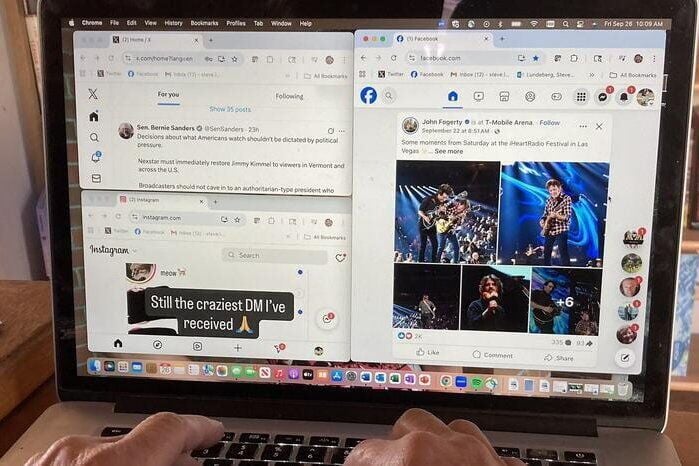
Two new papers by Oregon State University scientists suggest that social media may do little to substitute for the emotional support people receive from in-person relationships, and that the timing of social media use may matter for a person’s mental health. (Oregon State University via SWNS)
Previous research has shown that loneliness is associated with several health issues including heart disease, cancer and stroke.
Both new studies used the same nationally representative sample of 1,512 American adults ages 30 to 70 who participated in a questionnaire in July and August 2023.
OSU professor Brian Primack said: “While these findings don’t mean that social media is inherently harmful, they do suggest that we should think carefully about how we use it, both personally and as a society.”
Dr. Primack, who studies public health implications of media and technology, noted that study participants with the lowest levels of real-life emotional support had more than eight times the odds of loneliness compared with those with the highest levels of real-life emotional support.

(Photo by Gustavo Fring via Pexels)
Lower levels of social-media-based emotional support were also associated with loneliness, but the relationship was much weaker.


But when both types of emotional support were included in the same statistical model, only real-life emotional support remained significantly associated with loneliness.
Study leader Dr. Geethika Koneru said: “When it comes to emotional support, our findings suggest that social media is not a substitute for the support we receive through our real-life relationships.
“When the two types of emotional support were directly compared, emotional support from social media was dwarfed by emotional support from real life.”

(Photo by Sanket Mishra via Pexels)
In the second study, researchers focused on how soon after waking people began using social media.
The scientists found that social media use within 30 minutes of waking was strongly associated with depression — even after accounting for total social media use and demographic characteristics.
Study leader Hyosin “Dawn” Kim, a research assistant professor at OSU, said: “There’s a strong link between using social media within the first 30 minutes after waking and depression.
“But we don’t know whether using social media soon after waking contributes to depression, whether depression leads people to use social media when they wake up, or both.”
The two studies are part of a broader research project by Dr. Primack and his colleagues examining how different patterns of social media use relate to social connection and mental health.
Dr. Primack said: “One important feature of both studies is that we’re looking at adults, a population that has received less attention in this area than adolescents and young adults.

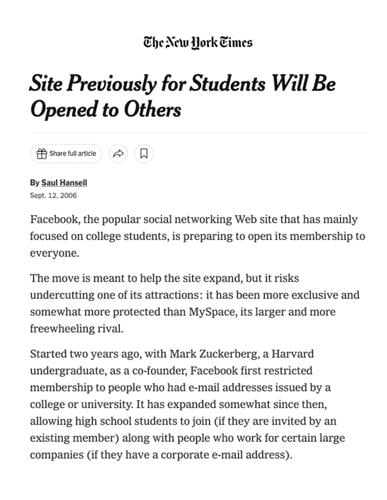
New York Times article
“That gap matters because adults are substantial users of social media, while loneliness and depression remain important public health concerns throughout adulthood.”
He added: “We need a better understanding of how social media fits into that picture.”
The findings come during a milestone year for social media as July 15 was the 20th anniversary of the public launch of Twitter.
Sept. 26 was the 20th anniversary of Facebook being open to anyone age 13 or older with an email account.


(0) comments
Welcome to the discussion.
Log In
Keep it Clean. Please avoid obscene, vulgar, lewd, racist or sexually-oriented language.
PLEASE TURN OFF YOUR CAPS LOCK.
Don't Threaten. Threats of harming another person will not be tolerated.
Be Truthful. Don't knowingly lie about anyone or anything.
Be Nice. No racism, sexism or any sort of -ism that is degrading to another person.
Be Proactive. Use the 'Report' link on each comment to let us know of abusive posts.
Share with Us. We'd love to hear eyewitness accounts, the history behind an article.