




Does your organization need scalable grant management software?
Managing grants can become increasingly demanding over time. What may begin as a straightforward process with a few applications and limited reporting requirements can quickly grow into a complex system involving multiple funding programs, review stages, compliance checks and stakeholders.
Management software is often introduced as a way to bring more structure and visibility to that work. However, simply having software is not always enough. Organizations that manage grants also need systems that can grow with them as funding programs expand, application volume increases and reporting requirements evolve.
This is where scalability becomes especially important. Learn more in IGX Solutions’ guide on grant management software, including why scalability matters for organizations managing grants and the signs that may indicate your current systems are struggling to keep up.
What Is Grant Management Software?
Grant management software helps organizations manage the full life cycle of a grant program in a structured and organized way. Instead of relying on spreadsheets, emails and disconnected tools, agencies can use a centralized system to track applications, review submissions, manage approvals, monitor funding and generate reports.
What Are the Core Functions of Grant Management Software?
Grant management software typically supports the following key functions to help agencies administer funding programs more efficiently:
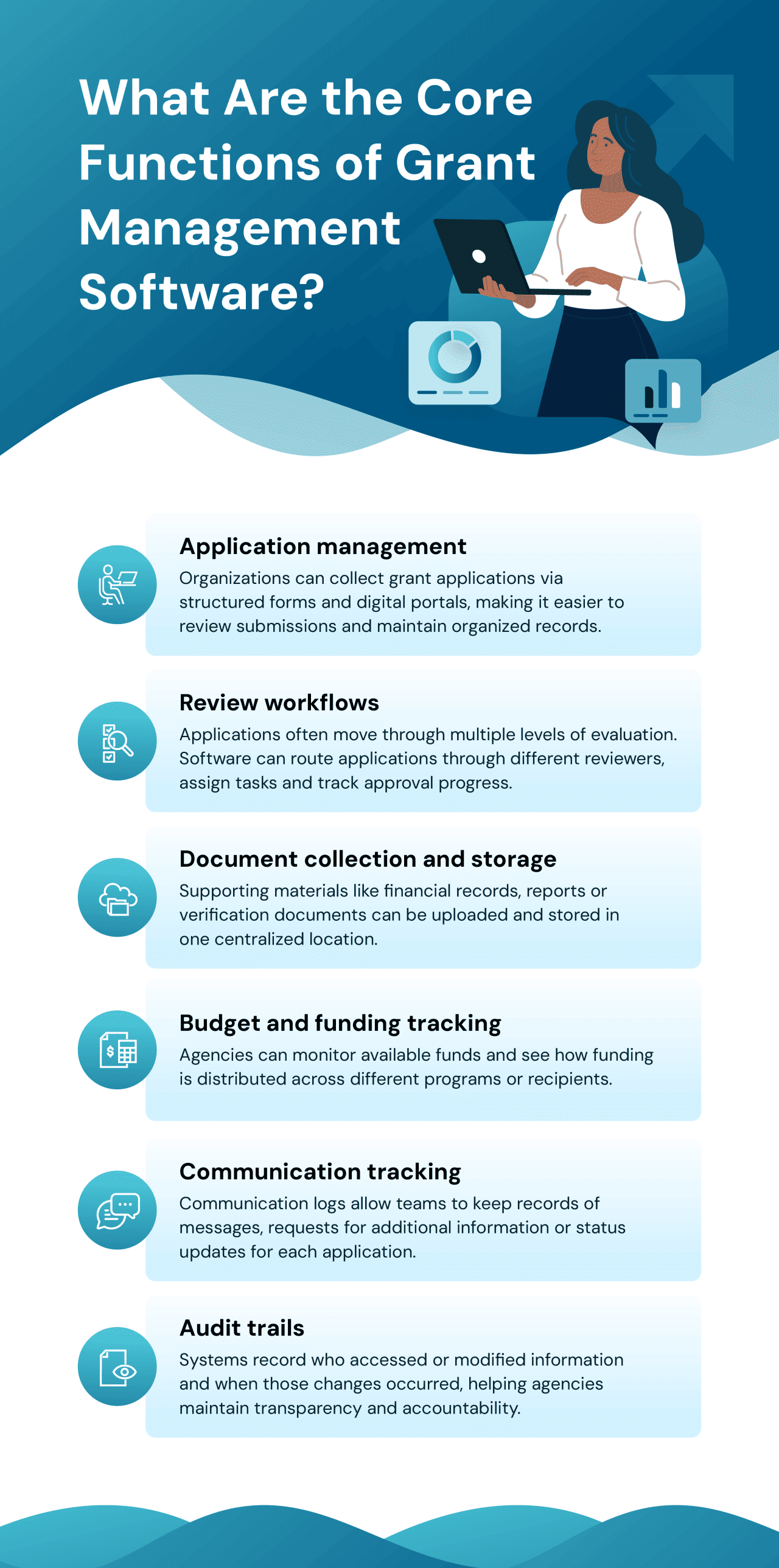
- Application management: Organizations can collect grant applications via structured forms and digital portals, making it easier to review submissions and maintain organized records.
- Review workflows: Applications often move through multiple levels of evaluation. Software can route applications through different reviewers, assign tasks and track approval progress.
- Document collection and storage: Supporting materials like financial records, reports or verification documents can be uploaded and stored in one centralized location.
- Budget and funding tracking: Agencies can monitor available funds and see how funding is distributed across different programs or recipients.
- Communication tracking: Communication logs allow teams to keep records of messages, requests for additional information or status updates for each application.
- Audit trails: Systems record who accessed or modified information and when those changes occurred, helping agencies maintain transparency and accountability.
What Kind of Programs Can Grant Management Software Track?
Grant management software can support a wide range of funding programs across different sectors. The system’s structure enables organizations to manage complex workflows while maintaining consistent documentation and oversight.
Examples of programs that can be managed through grant systems include:
- Government funding programs, which are distributed to municipalities, nonprofits or contractors.
- Education grants for schools, universities and workforce initiatives.
- Nonprofit grantmaking programs that support community organizations.
- Public safety or transportation funding programs.
- Disaster recovery or community development initiatives.
Beyond traditional grants, many organizations use these systems to manage structured approval processes like inspections, loan programs, tax credit programs or other funding-related initiatives. Any process that involves applications, reviews, approvals, documentation and reporting can benefit from a structured workflow system.
Why Is Scalable Software Important?
Organizations that manage grants often experience changes in the size and complexity of their programs. Scalable grant management software offers many benefits, enabling organizations to adjust processes without completely rebuilding their systems.
Supporting Growth in Grant Applications and Funding Programs
Scalable grant management software allows organizations to process larger volumes of applications without overwhelming staff or disrupting existing workflows. For example, an agency responsible for distributing public infrastructure funding may initially review a small number of applications each year. As additional funding programs are introduced, the number of applications may grow. A scalable system allows the agency to manage this growth while maintaining clear processes for submission, review and approval.
Managing More Complex Grant Review and Approval Workflows
As programs expand, the review process often becomes more detailed. Applications may require evaluation by multiple departments, financial reviews, compliance checks or program-specific approval stages.
Scalable systems allow organizations to build workflows that reflect these evolving requirements. Instead of forcing teams to manage approvals through email threads and separate documents, software can route applications through defined review stages and track decisions along the way.
Maintaining Visibility Across the Entire Grant Life Cycle
Grant management involves several stages, including application submission, evaluation, award decisions, monitoring and reporting. As programs grow, maintaining visibility across all these stages becomes more challenging.
Scalable grant management software helps centralize this information in a single system. Program managers can track application status, monitor funding allocations and review program data without switching between multiple platforms or files.
Preventing Operational Bottlenecks as Programs Expand
When systems can’t scale effectively, organizations often rely on manual workarounds to keep their programs running. Over time, these workarounds can create operational bottlenecks that slow down program administration.
Common challenges include maintaining multiple spreadsheets, manually reconciling data between systems and spending additional time compiling reports. As grant programs grow, these tasks can place increasing pressure on staff responsible for managing applications and reporting requirements.
Scalable grant management software helps reduce these bottlenecks by supporting automated workflows, centralized data management and consistent documentation practices. As a result, organizations can maintain efficiency even as their funding programs expand.
What Features of Grant Management Software Support Scalability?
Scalable grant management software usually combines several capabilities that support efficiency, visibility and accuracy. These features allow organizations to manage complex programs without increasing administrative workload.
Workflow Automation
Workflow automation reduces repetitive tasks and ensures work moves through the appropriate review stages. This feature:
- Automatically assigns applications to reviewers.
- Triggers reminders for upcoming deadlines.
- Updates status fields as tasks are completed.
- Routes approvals through defined workflows.
Centralized Data Management
Centralized data management ensures all grant information is stored in a single, consistent system, leading to:
- Easier application status tracking.
- Improved visibility into funding allocations.
- Reduced record duplication.
- More reliable reporting data.
Compliance and Reporting Tools
Compliance tools, such as activity logs and document history tracking, help organizations maintain accurate records and demonstrate accountability during audits or reporting reviews. Reporting tools allow organizations to analyze program activity and monitor funding distribution. Examples include export options for sharing information with stakeholders or real-time dashboards that show program activity.
Role-Based Security
Grant programs often involve sensitive information about applicants, funding decisions or financial records. Role-based security ensures users can only access the information necessary for their roles. This structure helps protect sensitive data while allowing teams to collaborate effectively.
Integration With Other Systems
Many agencies rely on multiple systems to manage financial records, applicant information or compliance documentation. Integration capabilities allow grant management systems to connect with these tools, so information can move between systems more efficiently and accurately.
Organizations That Can Benefit From Scalable Grant Management Software
When funding programs expand or reporting expectations increase, scalable systems help organizations maintain efficiency without overburdening staff.


Government Agencies Managing Public Funding Programs
Government agencies frequently manage large funding programs that involve multiple applicants, reviewers and oversight requirements. These programs often require structured documentation and strong accountability practices.
The following factors make scalability particularly important for government agencies:
- High application volume: Funding opportunities may attract a large number of applicants, especially when programs support public infrastructure, education or community development.
- Multiple approval layers: Applications may require review from several departments or specialists before funding decisions are made.
- Public accountability: Agencies must maintain transparency regarding how public funds are distributed.
- Compliance requirements: Programs funded by federal or state sources often require detailed reporting and documentation.
Education Agencies Managing Research, Workforce and Institutional Grants
Organizations outside government agencies also manage complex funding programs that can benefit from structured systems. For example, educational institutions may manage research grants, scholarship programs or workforce funding initiatives. In addition, nonprofit organizations may distribute grants to community programs or partner organizations.
As these organizations grow or receive additional funding streams, scalable systems help ensure application reviews, documentation and reporting remain organized and consistent.
Other Programs That Use Structured Application and Approval Workflows
In many cases, organizations discover that the same workflow tools used for grant management can support additional programs that require structured oversight and reporting. These platforms can support other structured workflows that involve applications and approvals, such as:
- Disaster recovery assistance programs.
- Inspection or compliance tracking programs.
- Business enterprise or vendor programs.
- Loan or tax credit applications.
- Regulatory approval processes.
Signs Your Organization Needs Scalable Grant Management Software
Organizations managing grants may gradually notice operational pressure building in the form of administrative workload, reporting challenges or system limitations. Recognizing these signs early can help agencies evaluate whether their current processes still meet their needs.
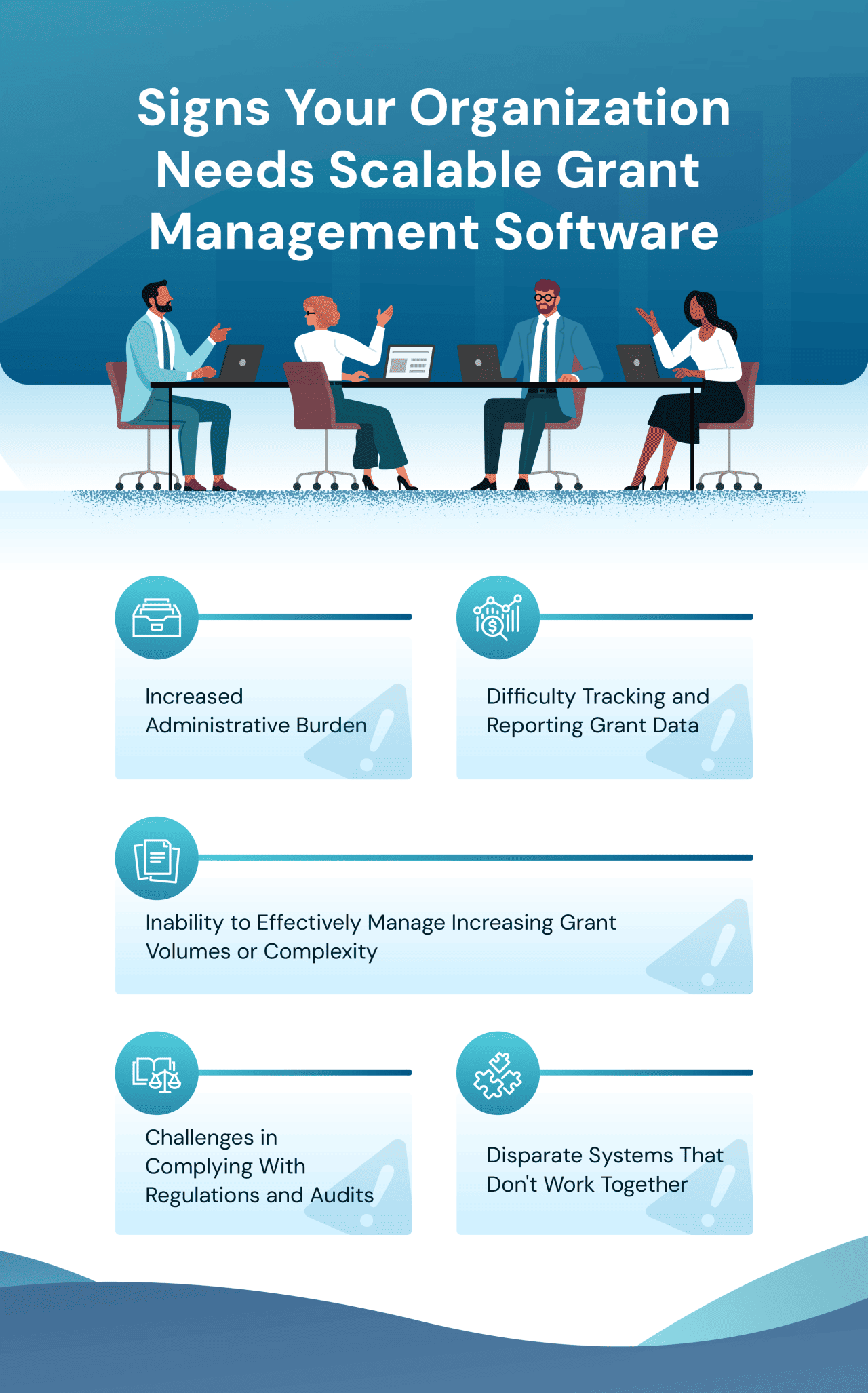
1. Increased Administrative Burden
When grant programs rely heavily on manual processes, administrative work can quickly become overwhelming. Over time, these processes can reduce productivity and increase the likelihood of errors.
- Paper-based documentation: Staff must handle physical forms, attachments and approvals across multiple stages of review.
- Spreadsheet tracking: Application information is stored across multiple spreadsheets that require constant updates.
- Manual communication: Teams must send individual emails or reminders to applicants and reviewers.
- Time spent on routine tasks: Staff spend large portions of their day tracking status updates rather than managing programs.
2. Difficulty Tracking and Reporting Grant Data
Grant programs generate significant amounts of data related to applications, funding decisions, reimbursements and reporting requirements. When that information is spread across multiple systems, it becomes difficult to maintain a clear view of program activity.
- Data silos: Information is stored in different locations, making it harder to compile a complete record.
- Limited visibility: Staff may not know where an application stands within the review process.
- Reporting delays: Generating reports requires gathering information from multiple sources.
- Inconsistent records: Different versions of the same data may exist across files or systems.
Centralized systems help address these challenges by keeping grant information organized in one place.
3. Challenges in Complying With Regulations and Audits
Organizations responsible for distributing funds must maintain accurate records to demonstrate accountability and compliance with program requirements. Without structured systems, audit preparation can become time-consuming and stressful. Structured systems can help maintain documentation and provide the audit trails needed for oversight and reporting.
- Incomplete documentation: Important records may be difficult to locate if they’re stored across multiple platforms.
- Limited audit trails: Teams may not have clear records showing who approved or modified information.
- Manual verification processes: Staff must cross-check information across systems to ensure accuracy.
4. Inability to Effectively Manage Increasing Grant Volumes or Complexity
Growth in funding programs often brings additional layers of complexity. Organizations may need to manage multiple funding streams, review committees and reporting timelines at the same time. Systems designed to support scalable workflows allow agencies to adjust processes without disrupting existing programs.
5. Disparate Systems That Don’t Work Together
Many organizations rely on several systems to manage different aspects of grant administration. When these systems don’t communicate effectively, staff must manually reconcile information across platforms.
Common indicators that an organization’s systems aren’t working well together are:
- Duplicate data entry.
- Inconsistent information between systems.
- Communication gaps between teams.
- Delays caused by reconciling data across platforms.
Integrated systems help reduce these challenges by allowing information to move more smoothly between processes.
How Can You Implement Scalable Grant Management Software?
Implementing grant management software typically involves more than installing a new system. Organizations must also consider how the software will support existing workflows and reporting requirements.
Evaluate Before Implementation
Before adopting a new system, agencies often review several operational factors, such as:
- Current grant review workflows.
- Approval structures.
- User roles and permissions.
- Reporting needs.
- Existing data sources.
Understanding these factors helps organizations choose systems that support their operational needs.
Common Implementation Approaches
Implementation strategies may vary depending on program size and organizational needs.
- Full implementation across all programs.
- Phased rollouts that introduce features gradually.
- Pilot programs that test workflows before full adoption.
- Training and support programs to help staff adapt to new systems.
Careful implementation planning helps ensure systems support long-term program management.
Scalable Grant Management Software Is a Strategic Priority
Organizations responsible for distributing grants often face increasing operational demands as funding programs expand. Application volume, reporting requirements, compliance expectations and stakeholder involvement can all grow over time.
Scalable grant management software helps agencies manage these responsibilities in a structured and organized way. By supporting automated workflows, centralized data management, reporting tools and integrated systems, scalable platforms allow organizations to maintain visibility and consistency across the grant life cycle.
For government agencies, education institutions, nonprofits and other organizations that manage funding programs, scalable systems can provide the flexibility needed to support both current operations and future program growth.
This story was produced by IGX Solutions and reviewed and distributed by Stacker.


(0) comments
Welcome to the discussion.
Log In
Keep it Clean. Please avoid obscene, vulgar, lewd, racist or sexually-oriented language.
PLEASE TURN OFF YOUR CAPS LOCK.
Don't Threaten. Threats of harming another person will not be tolerated.
Be Truthful. Don't knowingly lie about anyone or anything.
Be Nice. No racism, sexism or any sort of -ism that is degrading to another person.
Be Proactive. Use the 'Report' link on each comment to let us know of abusive posts.
Share with Us. We'd love to hear eyewitness accounts, the history behind an article.