


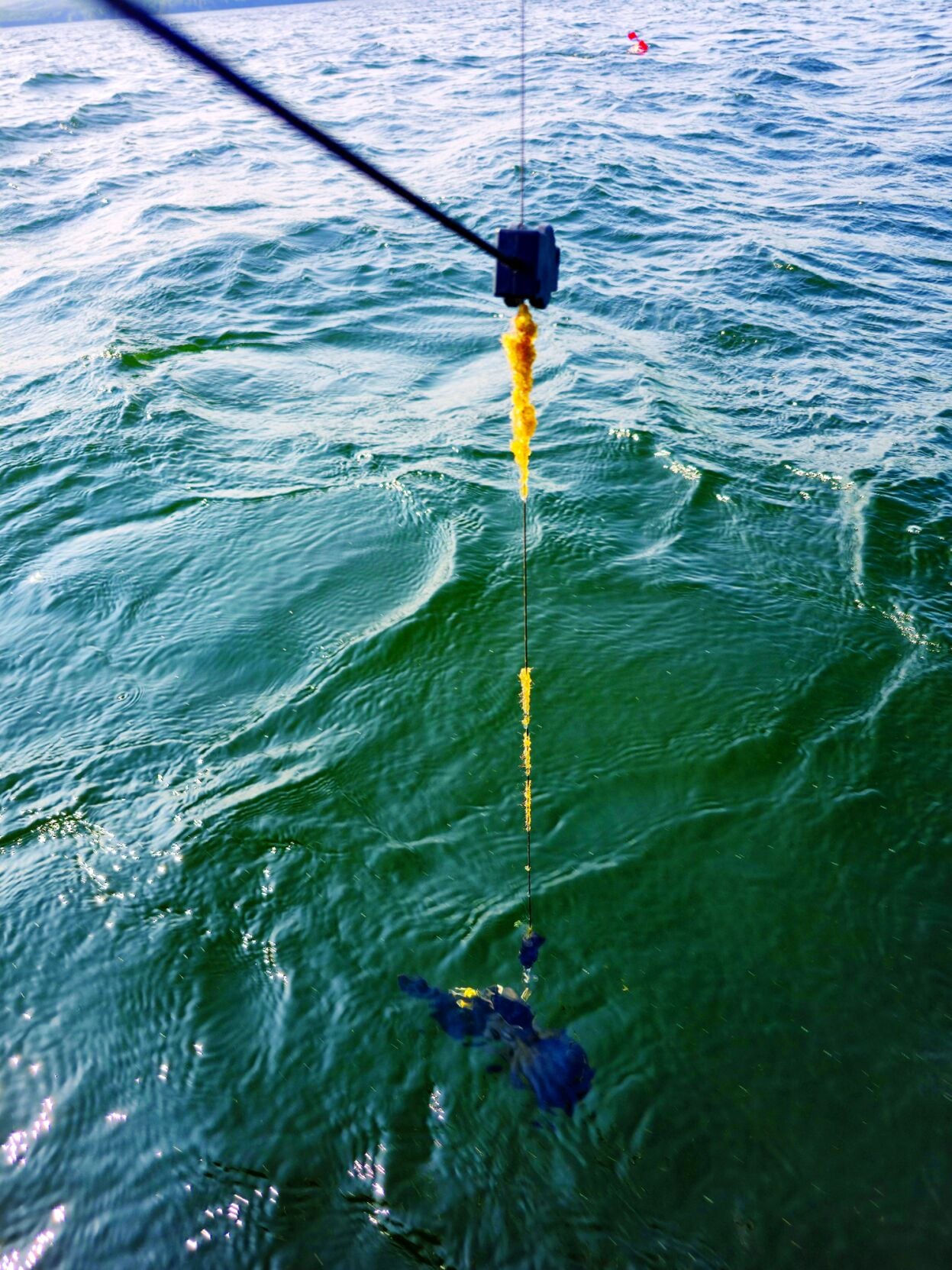
HEBRON — Community members filled the Grey Rocks Conservation Center on July 7 for the Newfound Lake Region Association's latest Ask the Experts program, "Spiny Water Flea & New Hampshire Lakes." The evening brought together state, university, and local experts to discuss one of the most significant emerging threats facing New Hampshire's lakes and the collaborative efforts underway to better understand and slow its spread.
Featured speakers included Dr. Amanda McQuaid, University of New Hampshire Associate Extension state specialist, professor of Water Quality and Ecotoxicology, and director of the Lakes Lay Monitoring Program; Kirsten Hugger, Watershed Data manager and aquatic ecologist with the New Hampshire Department of Environmental Services; and Paul Pellissier, conservation program manager at the NLRA.
Although only about a half-inch long, the invasive spiny water flea can have outsized impacts on lake ecosystems. Native to Eurasia, this predatory zooplankton feeds on smaller native plankton that serve as a critical food source for young fish, potentially altering aquatic food webs and affecting fisheries over time. Its distinctive barbed tail also creates challenges for anglers by accumulating on fishing lines and gear.
During the program, Dr. McQuaid explained the important role zooplankton play in healthy lake ecosystems and how the introduction of a new predator can trigger cascading ecological effects. Understanding these microscopic organisms, she noted, is essential to understanding the health of the entire lake.
Hugger shared findings from nearly a decade of monitoring in Lake Winnipesaukee, where spiny water flea was first detected in 2023. While population densities remain relatively low compared to heavily infested lakes elsewhere in North America, monitoring has already documented significant declines in native cladoceran zooplankton, suggesting that ecological changes are beginning to occur. Continued monitoring will help scientists better understand the long-term impacts on New Hampshire lakes.
The program also highlighted NLRA's expanding monitoring efforts on Newfound Lake.
Following the first confirmed detection of spiny water flea, the organization has partnered with researchers and state agencies to establish long-term monitoring that includes plankton sampling and environmental DNA (eDNA) analysis.
These efforts will help track changes in native plankton communities, evaluate potential impacts to water quality and fisheries, and contribute valuable data to statewide research.
"Protecting New Hampshire's lakes requires collaboration," said Rebecca Hanson, executive director of the Newfound Lake Region Association. "The partnerships between nonprofits, universities, state agencies, and volunteers are giving us the information we need to better understand this invasive species while empowering lake users to be part of the solution."
Throughout the evening, speakers emphasized that prevention remains the most effective tool for limiting the spread of spiny water flea to additional waterbodies.
Because the species can easily hitchhike on boats, trailers, anchors, fishing lines, downriggers, and other recreational equipment, boaters and anglers were encouraged to Clean, Drain, Dry all equipment before leaving or entering a waterbody.
Community members were also encouraged to report suspected sightings to the New Hampshire Department of Environmental Services and the Newfound Lake Region Association, as many early detections come from observant anglers and lake users.
For more information about spiny water flea, reporting observations, or NLRA's ongoing monitoring efforts, visit NewfoundLake.org/stop-spiny.


(0) comments
Welcome to the discussion.
Log In
Keep it Clean. Please avoid obscene, vulgar, lewd, racist or sexually-oriented language.
PLEASE TURN OFF YOUR CAPS LOCK.
Don't Threaten. Threats of harming another person will not be tolerated.
Be Truthful. Don't knowingly lie about anyone or anything.
Be Nice. No racism, sexism or any sort of -ism that is degrading to another person.
Be Proactive. Use the 'Report' link on each comment to let us know of abusive posts.
Share with Us. We'd love to hear eyewitness accounts, the history behind an article.