


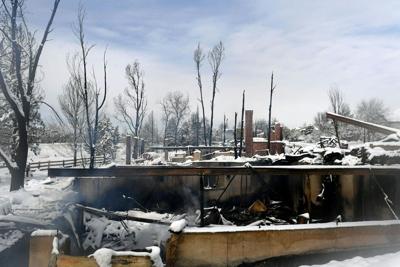
Climate change is causing billions of dollars’ worth of damage every year from floods, fires, droughts and other consequences of a rapidly warming planet.
Dozens of states, cities, counties and tribes have sued major oil companies. The lawsuits demand reimbursements for the costs of recovery efforts, reconstruction and work to protect people and property from climate-related damage.
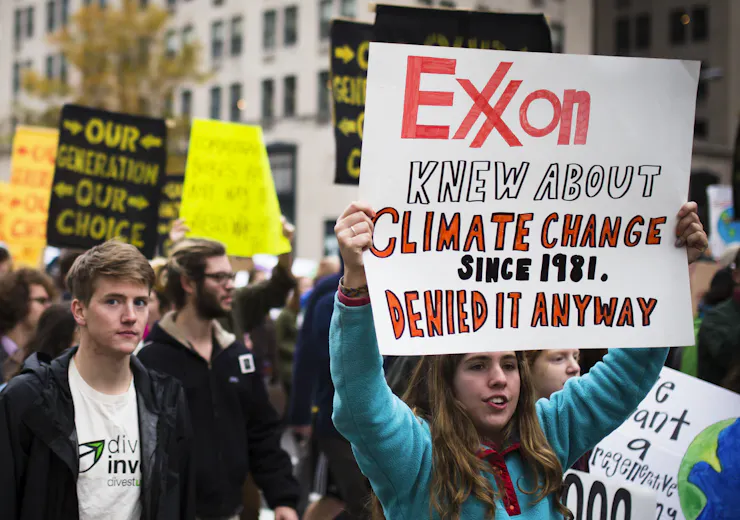
The crux of their argument is an allegation of fraud, a claim that the companies knew they were contributing to climate change but did not tell the public the truth about how burning fossil fuels warms the climate. It has been well established that company scientists at Exxon and other fossil fuel companies accurately predicted global temperature increases and warned that sharply curtailing fossil fuels was the only way to avoid severe warming. Rather than alerting the public, however, the companies funded climate-denial front groups and promoted false narratives to delay transitions away from fossil fuels.
In general, the companies have responded by saying federal laws and the U.S. Constitution preclude any claims for recovery of the costs taxpayers have borne.
The U.S. Supreme Court will hear arguments on Oct. 5, 2026, in Suncor Energy v. County Commissioners of Boulder County, a case that specifically considers the question of whether federal law prohibits these cost-recovery efforts. The outcome of this decision will have enormous consequences for communities already saddled with funding the massive costs of adapting to a changing climate.
Potentially complicating an already complex situation, recent moves by the Trump administration may undercut the companies’ arguments.
The Suncor case
In 2018, Boulder County sued Suncor and Exxon in Colorado state court, seeking payment for past and expected future damage it blames on the companies’ fossil fuel businesses.
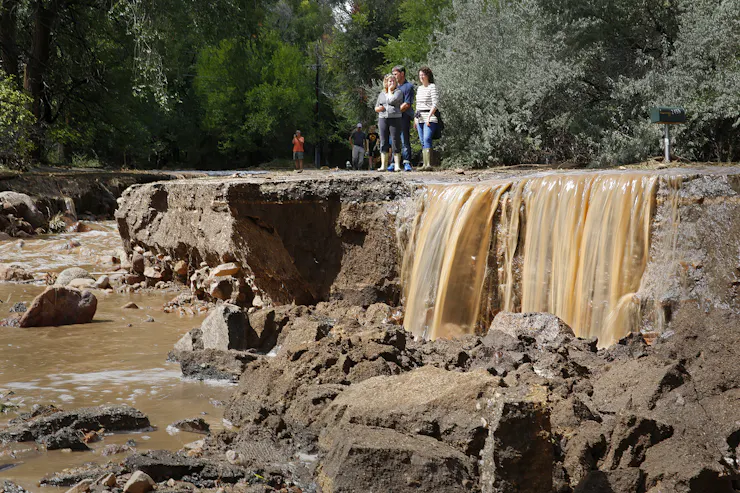
Boulder says it has spent millions of dollars – and expects to spend even more in the future – on measures to protect the community against climate-related disasters such as wildfires and flooding.
The companies responded that federal law, specifically the Clean Air Act, prevents them from being held responsible under state law.
In 2025, the Colorado Supreme Court rejected the companies’ argument, holding that the lawsuit is a valid legal challenge regarding public deception and local costs, rather than an impermissible attempt to regulate federal emissions. The Colorado Supreme Court sent the case back to the lower court for trial.
The justices agreed to hear arguments about the state Supreme Court’s decision, but there is a potential catch. Federal law says that the U.S. Supreme Court can review only final judgments or decrees issued by the highest court of a state. The Colorado Supreme Court ruling is not a final judgment on the entire case, so the U.S. Supreme Court could decide that it is too soon to intervene.
Another wrinkle appeared a week before the oral arguments: On Sept. 28, 2026, the court announced that Justice Samuel Alito would no longer participate in hearings and deliberations in the Suncor case. No reason was given, but Alito has been under pressure to recuse himself based on his financial holdings in several oil companies. His decision raises the prospect of a split 4-4 decision, which would be a victory for Boulder and leave the Colorado Supreme Court decision in place.
The law of preemption
In 1947, the Supreme Court ruled that federal laws should not be presumed to override state law, “unless that was the clear and manifest purpose of Congress” when it passed the laws.
But in a 1992 ruling, the Supreme Court declared that “any state law … which interferes with or is contrary to federal law, must yield.”
There are basically two kinds of preemption: express and implied.
An example of express preemption is the Supreme Court’s June 2026 ruling in Monsanto v. Durnell that the Federal Insecticide, Fungicide, and Rodenticide Act did expressly preempt a state law that required warnings on potentially harmful pesticides. Under that state law, a jury had required chemical giant Monsanto to pay more than $1 million in compensation to a person who had been harmed by exposure to glyphosate, a pesticide sold under the commercial name Roundup. The Supreme Court found that Congress had intended the federal law to supersede any inconsistent state laws.
Implied preemption is more complicated. A state law can be preempted where it conflicts with a federal law, such as conflicts over voter registration, or where it creates an obstacle to accomplishing a federal objective, such as where a state law requiring air bags would frustrate more flexible federal rules on passive restraints in cars. A state law can also be superseded by a federal law where Congress has created a comprehensive regulatory regime that totally occupies an area of law, as with registration of foreign nationals in the U.S.


Assessing the preemption arguments
Based on the existing law, the companies have a steep hill to climb.
First, the Clean Air Act has contained a specific provision since 1970 that explicitly says the federal law does not overrule state laws providing additional remedies for air pollution. The Supreme Court in 2011 acknowledged that provision left the door open for states and cities to seek compensation for climate change impacts under state law.
Second, there is no conflict between the state law and the Clean Air Act: It is possible for a company to comply with both. The federal law regulates air pollution from sources such as automobiles and power plants. It does not regulate consumer fraud, which is the principal basis for Boulder’s lawsuit.
Third, the Clean Air Act does not occupy the entire field of air pollution regulation. In addition to the provision that it doesn’t overrule state laws, the act also declares that states have the authority to set more stringent pollution control standards.
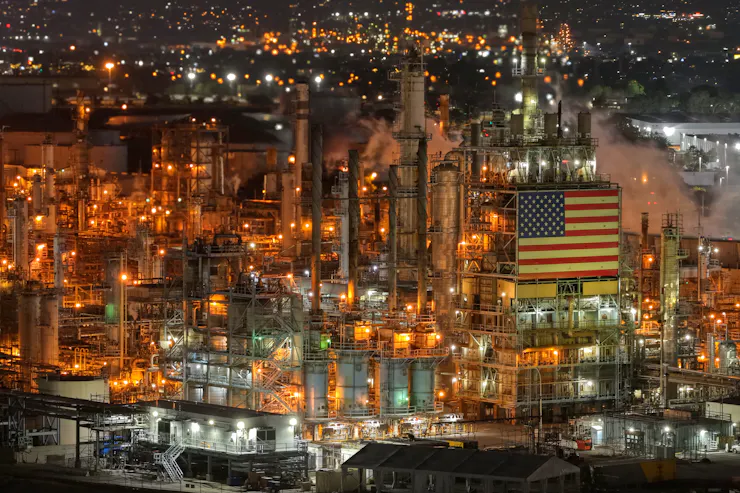
And fourth, when writing and passing the Clean Air Act, Congress specifically chose to preempt state regulations on emissions from new motor vehicles. But it did not block states from regulating industrial sources such as power plants and oil refineries. The choice to block some, but not all, state regulation is powerful evidence that Congress did not intend that federal law should completely eviscerate state law.
Constitutional arguments
The companies have claimed states lack authority to address interstate and international sources of pollution unless Congress specifically authorizes it.
But that claim runs up against the 10th Amendment to the U.S. Constitution, which establishes the concept of dual sovereignty: Powers not expressly delegated to Congress are reserved to the states. The Constitution is clear that states have inherent authority to protect their citizens from corporate malfeasance and don’t need Congress’ permission to exercise that power.
The companies also argue that these lawsuits infringe on the federal government’s exclusive authority over foreign affairs.
The Supreme Court has considered this type of preemption in very few cases and recognized it only where a state law was deemed to interfere with a specific foreign policy. For instance, in 2000 the court overturned a Massachusetts law that barred state agencies from doing business with the country of Burma. After that law was passed, Congress passed a federal law regulating U.S. trade with Burma, which the court said superseded the state law.
Extending this type of preemption to air pollution would be a dramatic and unlimited expansion of the principle of foreign policy preemption.
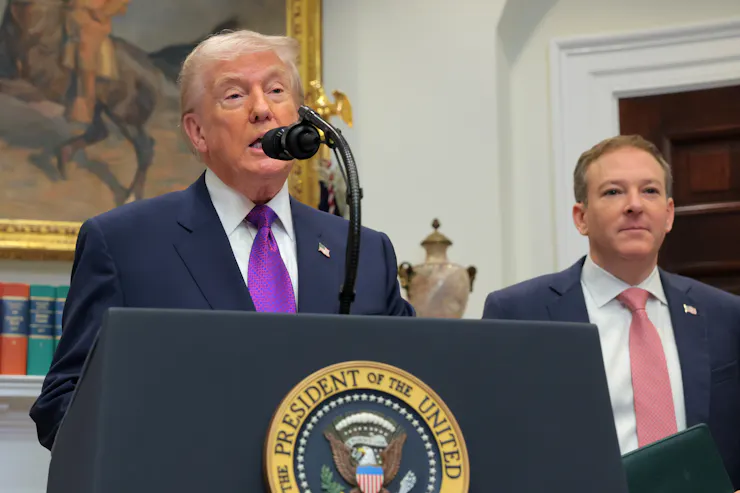
Trump administration undercuts preemption claims
Since President Donald Trump took office for his second term, the Environmental Protection Agency has shifted the position on climate change that previous administrations had taken. In general, the agency’s current position is that the Clean Air Act does not authorize the federal government to regulate greenhouse gas emissions at all.
Those various decisions face court challenges that are still pending. But the Trump administration’s position would nullify the preemption argument: If a federal law can’t and doesn’t regulate greenhouse gas emissions, then it also can’t supersede state laws that seek to do so.
What the Supreme Court will do with this case is hard to predict, but the stakes for climate accountability and corporate liability are massive. A broad ruling in favor of Suncor could effectively kill dozens of similar climate-deception lawsuits filed by cities, counties and states nationwide. That would leave the public on the hook for billions of dollars to cope with the escalating impacts of climate change.
This article is republished from The Conversation, a nonprofit, independent news organization bringing you facts and trustworthy analysis to help you make sense of our complex world. It was written by: Patrick Parenteau, Vermont Law & Graduate School
Read more:
- EPA says repealing power plant emissions rules will save billions – but its estimate leaves out health and climate costs
- The US Constitution and laws do not protect oil companies from being sued over the harm they cause to the climate
- Loss and damage: Who is responsible when climate change harms the world’s poorest countries?
Patrick Parenteau does not work for, consult, own shares in or receive funding from any company or organization that would benefit from this article, and has disclosed no relevant affiliations beyond their academic appointment.


.jpg)
(0) comments
Welcome to the discussion.
Log In
Keep it Clean. Please avoid obscene, vulgar, lewd, racist or sexually-oriented language.
PLEASE TURN OFF YOUR CAPS LOCK.
Don't Threaten. Threats of harming another person will not be tolerated.
Be Truthful. Don't knowingly lie about anyone or anything.
Be Nice. No racism, sexism or any sort of -ism that is degrading to another person.
Be Proactive. Use the 'Report' link on each comment to let us know of abusive posts.
Share with Us. We'd love to hear eyewitness accounts, the history behind an article.