


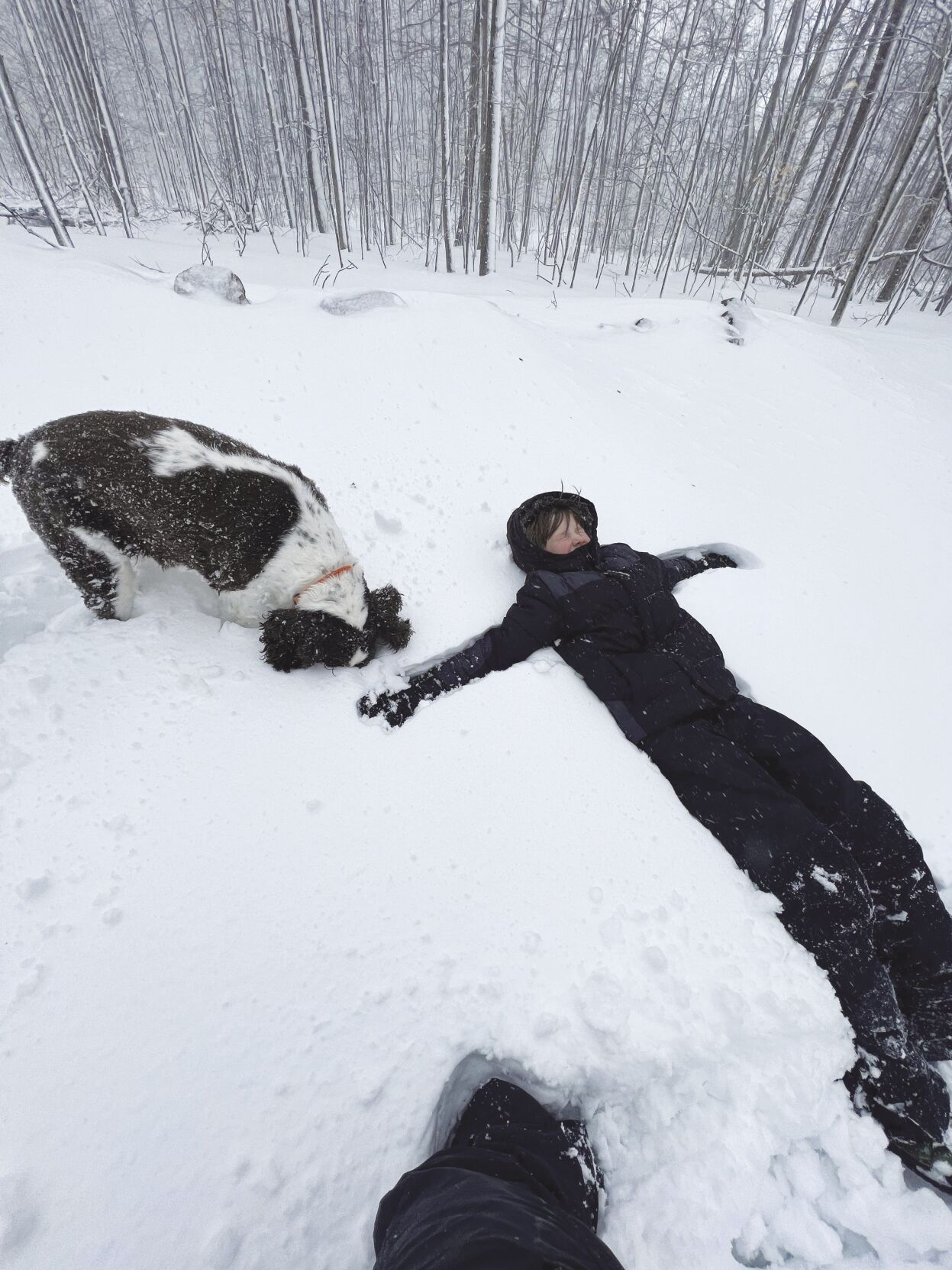


After weeks and weeks of nothing but rain and eerily warm temperatures, we finally have snow. The land around is at last frozen and white. All sounds are muffled. Life in our village feels peaceful, and there is joy in my heart.
Snow joy is a unique and special thing, endemic to the ever shrinking number of places on Earth where humans live in cold climates. Laconia Citizen correspondent Laurose Wilkens captured it beautifully in 1950 when she wrote of the fun that erupted in Gilmanton in winter. She spoke of skating on Varney Pond, where “the ice is very good and safe. Light snow bothers the youngsters not at all,” she said, and the sledding was superb. “A toboggan is the thing,” she said. “Start at the top of the hayfield, and a whizzing ride will follow.”
Laurose was saying: We do crazy things in the snow. We get a bit giddy. And reading her long-ago column, I feel wistful. In this almost non-existent winter, we’ve missed out on the sweet reprieve that a huge snowstorm can give us from the relentless march of everyday life — from emails, from deadlines, from having to be rational and adult-like at every moment.
Since Laurose Wilkens’ day, a new kind of snow has become increasingly popular. We’ve got artificial, human made snow now. All the local ski areas rely on it to survive, and I myself have become deeply familiar with its curious durability, with the way it compacts tightly and survives the nastiest rainstorms. I’m a cross-country ski racer, a graying one, and in recent weeks, I’ve regularly been traveling 35 minutes up to Holderness School, near Plymouth, to ski a thin 1.2 km artificial snow loop wriggling over the brown earth.
Skiing laps on manmade snow is ... training. It’s not skiing, exactly. It’s a rote activity disconnected from nature and from the heedless pleasures of real snow. In all the laps I’ve done at Holderness, I have never once seen anybody throwing a snowball or building a snowman.
There is something about fake snow that deadens the soul, and I worry that there’s already a spiritual deadness — well, at least a lack of fun — about the way we approach winter sports now. We’ve become so serious. Every high school ski racer has six or eight pairs of boards these days. Playing hockey is astronomically expensive, for peewees and high schoolers alike, and even sledding has become professionalized. What Gilmanton youngster wants to trifle with tobogganing down a hayfield in 2024, when Gunstock, an easy 20 minute drive from town, beckons with its exquisitely groomed tubing lanes?
Call me old, but whenever it snows, I remember the delight I felt as a kid when the radio announcer declared that my school would be closed for a snow day. I worry that, as the world warms and as childhood becomes ever more serious and constrained, we may come to a point where no kid ever feels that delight again.
It’s my belief that all of us, young and old, benefit from chasing after such delight. So, with this post, I honor the vaunted and, sadly, fading Gilmanton tradition of playing in the snow — without structure, without rules, in a town without snow grooming or ski lifts.
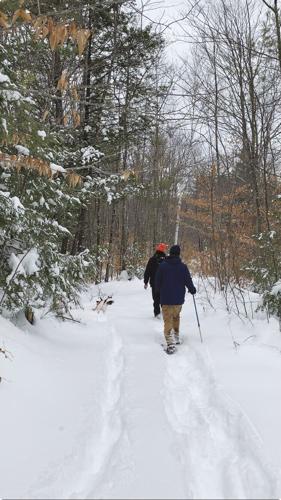
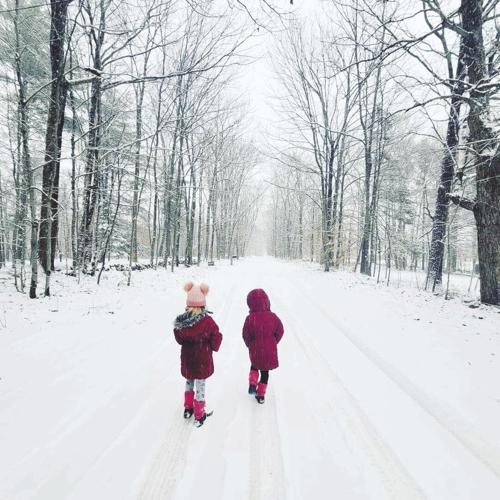
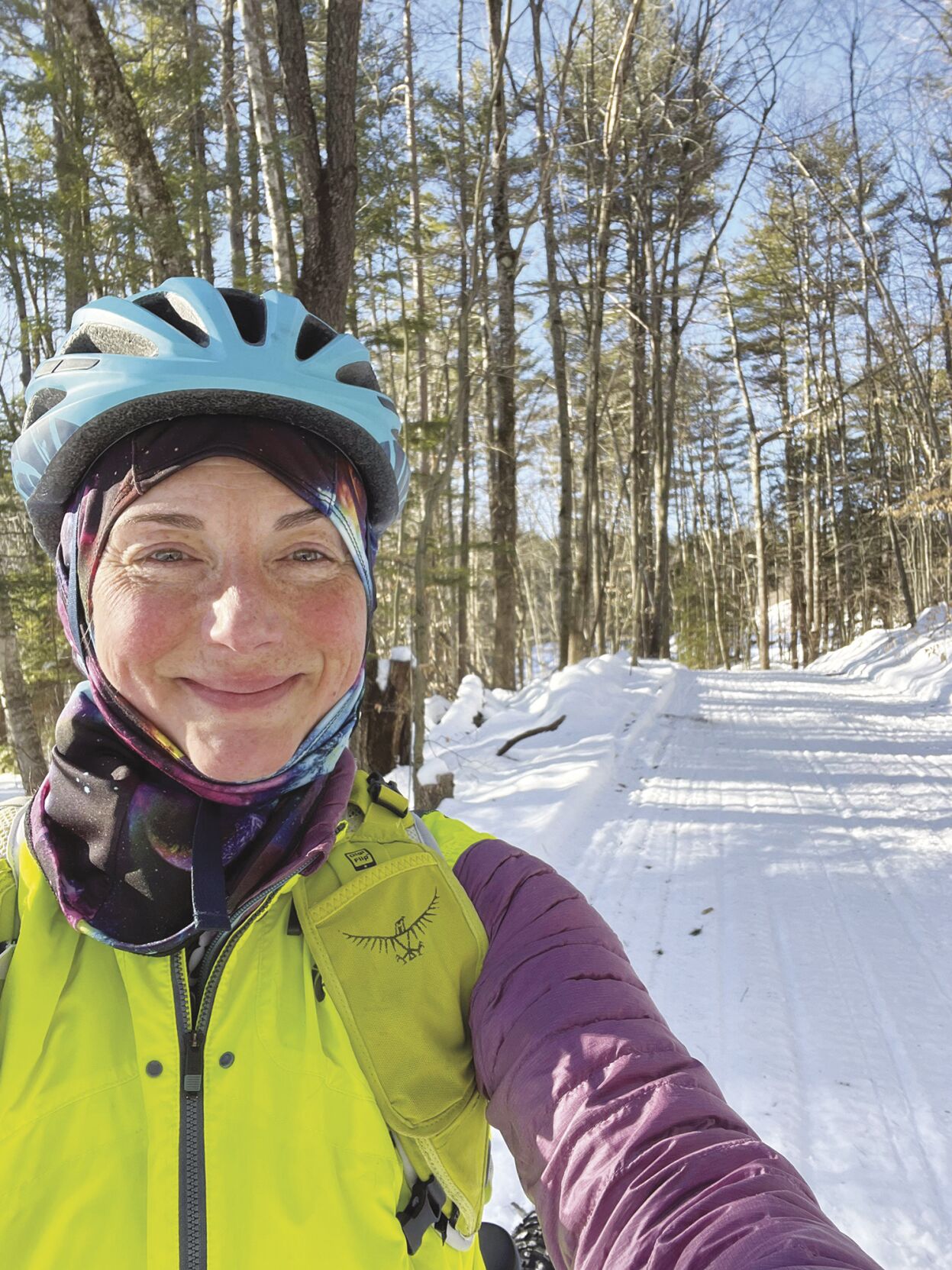
Accompanying this story are images that see people savoring winter in Gilmanton. Enjoy these pictures and then, if you can, get outside. Take a walk. Watch your dog roll in the snow. Open your mouth and catch a falling snowflake on your tongue. You will be happy.
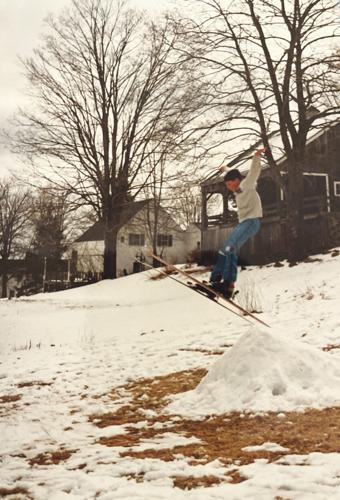
“Our neighbors were summer people, and in winter we had free use of their hill,” said Jon Dickey. “My brother and I would build a jump at the bottom. The landing was completely flat–and harsh on the body. Looking at this picture now, it’s pretty obvious to me why I needed back surgery last year!
“When we were teenagers, we used to car ski. On snowy mornings, we would attach a rope to the back of our friend’s Isuzu Trooper. Then, before the town plows had a chance to clear the roads, we’d tow behind the car and use the snow banks at the end of driveways as jumps. We’d try to gap-jump the driveways. It didn’t always end well.”
“What I love about snowshoeing,” said Graham Wilson, “is you can go anywhere, cross frozen ponds, bushwhack off the trails and listen to the silence of the woods.”
•••
Bill Donahue has written for Outside, Harper's, The Atlantic and The Washington Post Magazine. He lives in Gilmanton, and his book, "Unbound: Unforgettable True Stories From The World of Endurance Sports," will be published by Rowman & Littlefield in June. This column is adapted from his online newsletter Up The Creek.


(0) comments
Welcome to the discussion.
Log In
Keep it Clean. Please avoid obscene, vulgar, lewd, racist or sexually-oriented language.
PLEASE TURN OFF YOUR CAPS LOCK.
Don't Threaten. Threats of harming another person will not be tolerated.
Be Truthful. Don't knowingly lie about anyone or anything.
Be Nice. No racism, sexism or any sort of -ism that is degrading to another person.
Be Proactive. Use the 'Report' link on each comment to let us know of abusive posts.
Share with Us. We'd love to hear eyewitness accounts, the history behind an article.