


LACONIA — New Hampshire’s lodging industry is facing a summer of uncertainty about state restrictions, customer demand and availability of workers.
Motels, hotels and other overnight venues are now closed to guests who are not on essential business under an emergency order Gov. Chris Sununu put in place to limit the spread of COVID-19.
Uncertainty abounds regarding when this order might be revised, the availability of workers for the lodging industry as well as customer demand as the coronavirus pandemic continues.
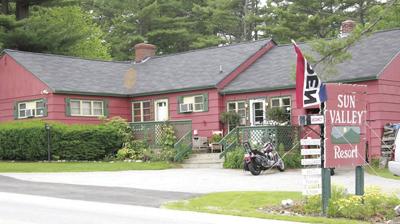
Ava Doyle, who has owned Sun Valley Cottages on Endicott Street North in The Weirs for 28 years, said this is the strangest season she has seen.
She rented to a person who was an essential worker, but has had to turn down others who just wanted to vacation.
“It’s one of those things, you see these people who want to rent and you have to say no to them when you have no money coming in,” she said. “Even though you can use the funds, you have to say no.”
She also wants to make sure she is following the best advice for limiting spread of the disease.
“I am in my 60s. I have survived cancer twice. I’ve had radiation and chemo and I don't know if that makes me more at risk.”
Cynthia Makris, whose family owns the Naswa resort, said she’s always been focused on business planning, but that’s hard to do this year.
“This is our 85th year in hospitality,” she said. “My mother is 95 and this is not how she thought she’d be starting her 85th year in business.
“We had lots of celebrations planned and wanted to open up with a bang.”
Normally, the resort opens for the season in April, serving the many fishermen who like to come to the lake as soon as the ice melts. This year, the popular annual Winni Derby angling event was cancelled. The resort remains closed.
There was a flurry of customer calls when the City Council rescheduled Motorcycle Week for late August, but there have been fewer people than normal inquiring about reservations.
“Every, once in a while someone makes a reservation, and we’re all like ‘Wow there’s a really hopeful person,’” Makris said.
Workers are another question mark. Some of the Naswa’s employees who spend the winter in Florida have returned. They have to spend two weeks in quarantine upon arrival.
International employees may have a particularly hard time reaching New Hampshire this year, including travel restrictions in their own countries.
One idea Makris has had is turning the resort’s NazBar and Grill into a to-go venue. While restaurant dining rooms have been ordered closed, takeout is continuing.
“You could pull up by boat and we could deliver food and drink to the end of the dock,” she said.
“We’ve seen a lot of boats out there. It’s kind of eerie, there’s no activity on the property but there are a lot of boats.”
Mike Somers, president and chief executive officer of NH Lodging and Restaurants Association, has suggested that some outdoor dining might be the first restaurant activity to be allowed.
In terms of lodging, the first thing to be allowed might be cottage or motel rooms, where visitors do not have to come into close contact with staff.
In a presentation to a governor’s task force on reopening the economy, he said that when lodging is allowed again, staff members could have their temperature taken upon arrival to work. Masks would be available for staff.
There would be hand sanitizer stations for customers and staff as well as regular sanitizing of door handles, faucet handles and all other customer touch points in common areas. Pools and exercise facilities would be closed.
“We’re hoping for the best and preparing for something less than that,” he said. “People need to get back to work and make legitimate money. If this goes on much longer, frankly, many businesses will fail and there will be lost revenue to the state.
“Let’s face it, our busiest season as a state and as an industry is the summer season. Lodging is a piece of it. There are elaborate and large weddings, reunions and retreats.”
New Hampshire prides itself on its many small tourism businesses, but these are the ones that could be hardest hit in an economic disruption as they don’t have the reserves or borrowing capacity to hang on, Somers said.
Even if the businesses are allowed to open, will customers come?
“We don't know the consumer’s level of comfort with staying in a hotel property or going out to eat,” Somers said. “That’s also reflected in the workforce. People could have concerns about returning to their old jobs and facing potential exposure.”


(0) comments
Welcome to the discussion.
Log In
Keep it Clean. Please avoid obscene, vulgar, lewd, racist or sexually-oriented language.
PLEASE TURN OFF YOUR CAPS LOCK.
Don't Threaten. Threats of harming another person will not be tolerated.
Be Truthful. Don't knowingly lie about anyone or anything.
Be Nice. No racism, sexism or any sort of -ism that is degrading to another person.
Be Proactive. Use the 'Report' link on each comment to let us know of abusive posts.
Share with Us. We'd love to hear eyewitness accounts, the history behind an article.