


MOULTONBOROUGH — Kale Poland spent months preparing, took several weeks away from the business that he co-owned, and he even had friends flying down to New Orleans to help him complete the first-ever deca triathlon held on U.S. soil. So imagine his disappointment when he thought he was going to have to drop out of the event after having barely started.
A relatively new ultra-endurance event, a deca triathlon offers a challenge meant to intimidate even the world’s most elite athletes: run, swim and bicycle the equivalent of 10 Ironman triathlons. The distances are staggering: 24 miles of swimming, 1,120 miles of cycling, and 262 miles of running.
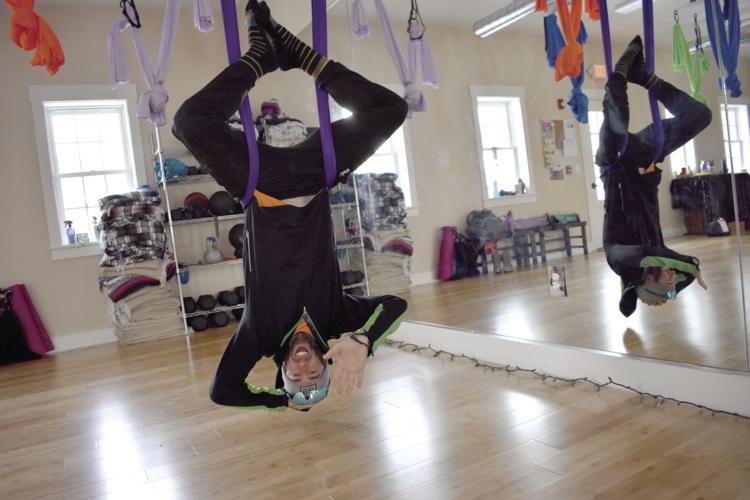
Poland was no stranger to the event; he had completed a Deca in Mexico in 2012. Since then, he found a new pursuit — yoga — and found himself organizing more races than he participated in. He also became co-owner of a business, Yoga Jaya, in Moultonborough.
He broke his neck in a cycling accident, and his recovery from that injury was concluding with just enough time for him to try and get into shape for the Decaman in New Orleans last month.
There are two formats available to those athletes eager to suffer so greatly. The “Classic” is organized as one monster triathlon — the athletes do all of their swimming, then all of their cycling, and all of their running. They stop only to sleep.
That was what Poland signed up for. He wanted to explore how his own levels of suffering — his “pain preferences,” as he said — had changed since he competed in 2012. Since then, he had won a 500-mile foot race and had strengthened himself mentally and physically through his yoga training.
The Classic Deca started on Nov. 6, and things started to go badly for Poland several hours into the swim.
Poland knew that swimming would be the weakest of his three events, but it wasn’t the speed that was his problem. It was nausea, caused by hours of constant weightlessness. He was sick several times, and the depletion of his body hurt his form. Toward the end of the first day, he started to do the math, each time coming to the terrible conclusion that he wasn’t going to make the cut-off time to end the swim and get on the bike.
“During it, I was a wreck,” he said — especially thinking of the sacrifices others in his life, such as his wife, Nicole, had made, and his friend who was at that moment boarding a plane to come help as his crew.
“I was so pissed at myself, really frustrated,” he said.
Coincidentally, his lane-mate was in a similar boat, and suggested that maybe they could switch to the other format, which was set to start in a little more than 24 hours. The race organizer agreed.
So, early on the morning of Nov. 8, Kale joined 15 others for the start of the “1 X 10” — the challenge of completing one Ironman-length triathlon each day, for 10 straight days.
Statistics show the 1 X 10 is harder: More athletes drop out of that format than they do the Classic because athletes have to finish their running and be in the pool at a specific time each morning. If they start to slow, they might have to run through the night and try to begin the next triathlon with no rest, which tends to yield a yet slower time.
In Poland’s event, only half of those who started the 1 X 10 crossed the final finish line.
But to Poland, the Classic is the harder event because it pushes the athletes to go longer, to push for yet one more mile between breaks, to chew up miles in favor of sleep, and when they do stop, to sleep for the bare minimum before rising and getting back on the track.
In the 1 X 10, Poland said, he was able to get regular sleep, as much as seven hours, on most nights.*
“It’s easier because you can sleep,” he said.
No, sleep wasn’t his problem. He was nearly disqualified several times, though, because of his weight.
Every morning there was a mandatory weigh-in, supervised by a medical doctor. If an athlete were to lose more than 10 percent of what he or she weighed at the start of the event, it would mean an automatic DQ for safety reasons. Very quickly, Poland was right on the line, and he began to eat as much as he could, of anything he could, just to stay in the race. At one point, he had his helper order a cheese pizza, put a scoop of bean chili on it, then cover it with grated cheese and cheese balls.
It’s the kind of meal that would put most people into a coma, but Poland’s body is tuned to turn those calories into speed.
His experience in the Deca was like an athletic Groundhog’s Day. Every day, he started the race in the back of the back, as his swim was slower than usual because his shoulders suffered from his initial, ill-fated, time in the water.
Then he would get on his bike, where he is robotically consistent, and he would start to reel in his competitors. And on the marathon-distance run, he would fly, passing the same people every day and finishing in third place.
“The run was the most relaxing part of the day, every day. It just felt better,” Poland said.
Had he spent more time training, or had he not almost DQ’d entirely, he might have felt a greater urge to push himself further. Instead, he was satisfied to still be putting results on the leader board, and was motivated only by the thought of his bed waiting for him.
“It was kind of fun going into the 1 by 10 with no pressure,” he said. “You’re racing to get to bed. That’s all you can think about.”
There was one part that was not fun, though: the weather. Organizers picked New Orleans for its near-tropical temperatures. What Poland found, though, was the worst of both worlds between New Hampshire and Louisiana: cold and humid, and very rainy.
Poland had planned to sleep in a tent, but the campground had turned into a swamp, so he spent the first few nights bouncing around between spare cots in the bunkhouse until there were enough drop-outs that he found a quiet one worth keeping.
Waking hours weren’t any more comfortable. The temperatures dipped into the 30s, which would have been fine for the New England-bred Poland had it not been for the humidity and the fact that people didn’t pack gear for those kinds of conditions. The clothing they did have quickly got soaked, and never dried out.
“It wasn’t supposed to be that way. The weather had a lot of impacts on the race,” Poland said.
The swim portion was especially problematic. The swims were planned to take place in Lake Pontchartrain, which by day three had dropped to 58 degrees — so cold that athletes couldn’t manipulate their fingers when they got out. Each day afterward, organizers scrambled to find an indoor pool to do the swimming, sometimes traveling for an hour to get there.
“Every single day, we didn’t know where we were starting,” said Poland. “They did a [huge] load of work to make sure the Deca actually happened."
On the 10th day, halfway through his 10th marathon, Poland started to realize what he was about to accomplish.
“They say there’s no finish line like a Deca finish line,” he said.
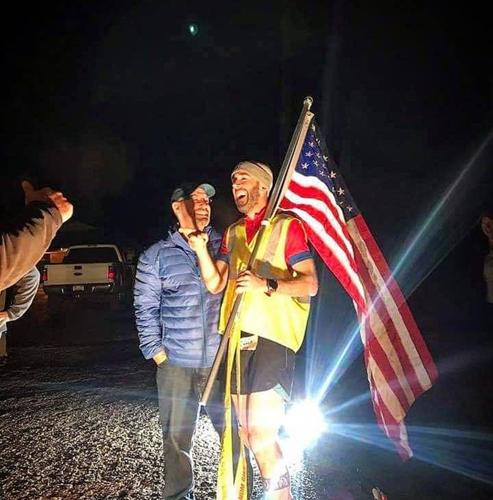
It’s an unusual scene for such an elite event. Because there can be hours between when finishers cross the line, there isn’t a huge crowd waiting to greet them. Instead, it’s an intimate bunch — people who have been on the scene together for more than a week, organizers and volunteers, fellow racers, who have come to form bonds that are equal parts admiration, respect and competition.
Poland thought about those people, and about those who were thinking of him back at home. Early on, he made a promise to himself that he wouldn’t walk any of the route. He stuck to that pledge, and now he was ready to really open the throttle.
“All of a sudden, the last 10 miles, I’m pretty fast. I kind of booked it. It’s always emotional: You just spent a week and a half banging your head against the wall. You start thinking of all the things people did to get you there. … All of those things start coming back.”
Poland was the third to cross the finish line, and the first American.
He said he’ll chase a finish line again sometime. He’ll do another ultra-triathlon, he said, but he's not sure when he’ll sign up for his next event.
“Athletically, I’m not sure yet. It’s too soon,” he said.
He took time away from his family interests in favor of training, and he wants to bring things back into balance. He has a business now.
“I want to put some time and energy into this place and get ready for summer,” he said, speaking in his Moultonborough studio.
“I’ll do an ultra-tri some point next year,” he added. “It kind of hooked me again.”


(0) comments
Welcome to the discussion.
Log In
Keep it Clean. Please avoid obscene, vulgar, lewd, racist or sexually-oriented language.
PLEASE TURN OFF YOUR CAPS LOCK.
Don't Threaten. Threats of harming another person will not be tolerated.
Be Truthful. Don't knowingly lie about anyone or anything.
Be Nice. No racism, sexism or any sort of -ism that is degrading to another person.
Be Proactive. Use the 'Report' link on each comment to let us know of abusive posts.
Share with Us. We'd love to hear eyewitness accounts, the history behind an article.