


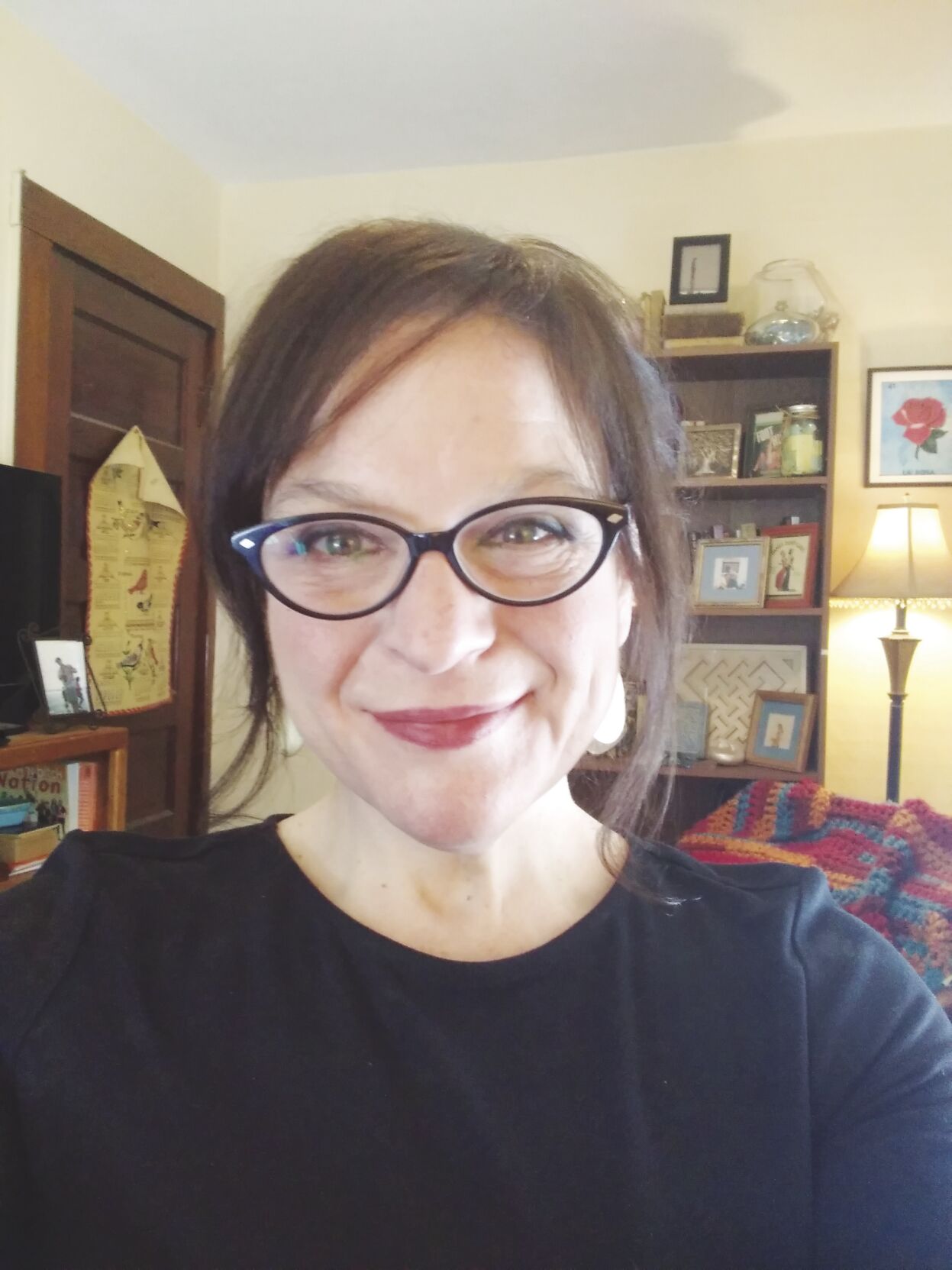
On this episode of The Granite Beat, hosts Adam Drapcho and Julie Hirshan Hart speak with Granite State News Collaborative Executive Director Melanie Plenda. Melanie worked as a staff reporter and freelancer for newspapers in Michigan, New York, New Hampshire and Alaska before taking over at GSNC in 2018 to lead one of the most important recent developments in local journalism.
This transcript has been edited lightly for length and clarity.
Adam Drapcho: What's the elevator pitch for the collaborative? How do you explain it to people who are unfamiliar?
Melanie Plenda: I always hope for a really long elevator ride, because it can be a little complicated. Essentially, it's a collaboration of local news, media, educational, and nonpartisan civic organizations who have all agreed to work together to get more news to more people who need it. That's basically it. There's a variety of fun ways we do that. We share news stories and issues that impact Granite Staters the most. We co-produce projects together, which means co-reporting and working together. We coordinate on big things like elections so that we avoid duplication. And the collaborative itself has a team of really great freelance investigative reporters who work on larger, more time- and resource-intensive projects that local news outlets have the desire but often not the staffing or resources to be able to do – we can fill that gap for them, and give them these really great reporters for short periods to work on these projects that are really important to communities and the state as a whole. So that's us in a nutshell. There's a lot to it, but that's the basic pitch.
Adam Drapcho: How big is the collaborative, both in terms of its memberships, and its staff? How is it funded?
Melanie Plenda: In terms of membership, we have more than 20 local news organizations including some of the non-traditional news organizations like community groups such as Citizens Count, which is nonpartisan but produces really great articles on legislation. But we have 20 all across the state stretching all the way up to Berlin and all the way down to the Monadanock region and the Seacoast. We have New Hampshire Public Radio, New Hampshire Public Television, traditional legacy media, non-traditional – you name it, it's in there. I am the only staff member officially, but our reporters, we usually work with about 10 freelancers who regularly produce for us. And we are entirely funded by philanthropy and the kind hearts in New Hampshire of individual donors. So we've been really fortunate that a growing number of philanthropic organizations around the state have really seen the value in supporting local journalism and how important it is to our communities to our democracy. So we've been very fortunate in that sense, as everything we do is only done because of the generosity of people who believe in this work. Our budget usually hovers around $200,000. Something I'm particularly proud of is that the vast, vast, vast majority of that goes right into reporting – it’s the money that we're paying to reporters, to photographers, to editors – and that help is then going directly into our partner newsrooms. Like I said, we only have one staff person and minimal overhead, so we stay kind of lean and the vast majority goes directly into journalism.
Adam Drapcho: How did the collaborative get started? What's its origin story?
Melanie Plenda: It was a handful of journalists who basically said, Wouldn't it be cool if we could all help each other? The founding members included Carol Robidoux who publishes Manchester Ink Link, Dawn DeAngelis who is the Chief Operating Officer at New Hampshire PBS, Kristen Nevious who is the director of the Marlin Fitzwater Center, and a couple others who helped get it started. They started meeting and kind of like, well, how would this work? How would we work together? Collaboration is always really good on paper, but then when you actually get into the nitty gritty there's a lot of stuff you have to figure out. They saw this grant from Solutions Journalism Network and were able to get it, so we were more project based at the beginning. We looked at behavioral health in the beginning and worked on that with the grant. I was hired as a part-time project manager in Fall 2018 under a very different job description than I have now, and then went full-time in 2019. So really how it started was we started with this behavioral health project for about a year, but that first year was about getting our sea legs and learning how to work together. How do a group of individual businesses and organizations with their own needs and their own ways of functioning start to trust each other and work together to find that sweet spot in the middle where it works not only for the outlets in their communities, but for everyone at the same time. That was part of my job, working through that and working with our partners to come up with that formula. When the pandemic hit, that was the thing that really focused us. It gave us an opportunity to really help each other through a time when all of our communities desperately needed us and we knew we needed to step up to the challenge. And our partners did without hesitation. They shared stories with each other, they shared tips with each other, and this was something that had not happened in the entire year that we had been already working together – I just saw all of our partners come together in a way that still gives me goosebumps to be honest. It was just a true commitment to the service of journalism, and I was so proud of it. We were able to put together a working structure and a model for sharing and communicating with each other. Then out of that, we were able to start working together on our major initiative, which is our race and equity initiative that takes a look at seven different pillars of everyday life – economic opportunity, health equity, educational equity, police and criminal justice reform – all through the lens of race and equity. We've been working on that since 2020. We definitely built this thing as we flew it, there literally was no instruction for how to do it because collaboratives were still a new concept and we were one of the earliest ones. I'm not a Pollyanna, it was really hard. But honestly, the partners rose to the challenge to make it possible at all.
Adam Drapcho: That’s one thing about the collaborative that's so fascinating to me, that it's a network of news organizations who are intensely competitive with each other – as much as there is collegiality when you all show up at the same event, at the end of the day we are in competition with one another. You mentioned service to Journalism with a capital J, do you have any other insight on the secret sauce for getting everyone to play nice?
Melanie Plenda: I think it's a couple different things. I think every newsroom has been hit in one way or another by cuts, which are hard for so many reasons but mainly because there's so much that you need to get out to people that’s important to cover, and you just can't because you don't have the people or resources. On a very basic level, we had to build a trust that no one colleague was a special snowflake – other colleagues were doing really great work. And the more we could put that work in front of our local news outlets, they could see it’s actually really great work and that, by using it, their reporter doesn't have to cover that thing and can instead be put on a hyperlocal story. So now you're getting that really important story and the hyperlocal story. Plus it's all done by journalists you now know and respect and can trust. If you're getting more information out to people and you're able to do it with the same amount of resources, and can redeploy resources to another really important thing, you're getting more to people. I also think it helps different outlets for different reasons. When they're able to have their work spotlighted in Keene but it's happening somewhere else, that raises everyone's awareness of those outlets. There's a lot of good reasons for it, but, like I said, it took a lot to get there. I think they saw that the competition in this case wasn't going to get as good of an effect as working together – you actually got a better result than if you had stayed in competition with the other regional paper. While the competition may have existed 20 years ago, I don't know that it still exists today because there are fewer outlets that cover specific regions. Lastly, I would point to the fact that there still is the competition that exists – outlets can still get a scoop or a breaking news story. They don't share every single thing in their paper, it's only a handful of topics. So the cost-benefit analysis is good because you still have your own stories and you have all this additional content to deliver to people and additional resources when you have a project you lack the resources to do otherwise.
Adam Drapcho: When I step back and think about it, it's rather wild. It's almost like a restaurant going to the restaurant next door, going into their kitchen, grabbing a little bit of what's on the stove, bringing it into their own restaurant, and selling it to their patrons. Essentially that's sort of what's happening here with the collaborative, only it's not a two- way street, it's a 20-way street.
Melanie Plenda: Right, because each partner, I would hope, is getting as much as they're giving. So in your restaurant analogy, it's more like, Yes I'm borrowing this dish right now, but I'm gonna send the next ten people who want dessert over to your restaurant, or I'm giving them a coupon to your restaurant. The food is plentiful all around, so everyone's everyone's giving and getting, which is good.
Adam Drapcho: So what's next for the collaborative? What have you got cooking?
Melanie Plenda: We’ll keep on keeping on with those data-driven projects and our race and equity initiative. Then our next big thing is having our steering committee look at how we might create a community news fund. The idea there is, how do we lift all boats in a journalism ecosystem; ultimately if we can lift all boats, everyone in the ecosystem does better and our communities do better. So I think we're all working in earnest to see if that's something we can make happen and make work. Aside from that, it's always the challenge of making sure we have enough funding to continue the work that we're doing, helping our local partners as best we can, amplifying the voices that aren't being heard, and uncovering those stories that need to be told. So, more of the same, but even better I hope.
•••
This article is part of The Granite Beat, a project by The Laconia Daily Sun and The Granite State News Collaborative, of which Laconia is a partner. Each week Adam Drapcho and Julie Hirshan Hart, will explore with local reporters how they got some of the most impactful stories in our state and why they matter. This project is being shared with partners in The Granite State News Collaborative.


(0) comments
Welcome to the discussion.
Log In
Keep it Clean. Please avoid obscene, vulgar, lewd, racist or sexually-oriented language.
PLEASE TURN OFF YOUR CAPS LOCK.
Don't Threaten. Threats of harming another person will not be tolerated.
Be Truthful. Don't knowingly lie about anyone or anything.
Be Nice. No racism, sexism or any sort of -ism that is degrading to another person.
Be Proactive. Use the 'Report' link on each comment to let us know of abusive posts.
Share with Us. We'd love to hear eyewitness accounts, the history behind an article.