


LACONIA — Fitness and behavioral health professionals are quietly coordinating a novel program to support people in recovery, and they're already well on their way.
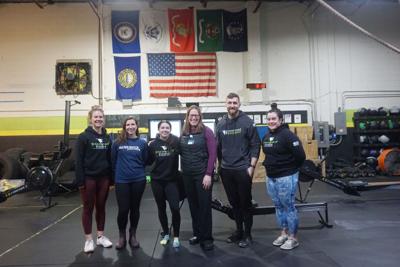
At Juggernaut Fitness on Lexington Drive, staff are working with representatives of Concord Hospital and Navigating Recovery to offer Unstoppable Sobriety, a fitness class offered for free to assist people working toward the recovery.
Matt Terry, co-owner of Juggernaut Fitness with wife Anna Terry, said Wednesday they were excited to collaborate for the program, because it aligns well with the mission of their business — to educate and empower people to live healthy, fulfilling lives.
And this program certainly fits the bill.
“It aligns with our mission,” Matt Terry said. “It just sounded like the perfect opportunity to help people in the Lakes Region.”
Recovery is tricky, and complicated, too. But building mental fortitude and resilience, growing personal confidence and finding community are all keys to success. For Corey Gately, director of substance use services at the Recovery Clinic and Laconia Doorway for Concord Hospital-Laconia and -Franklin, Unstoppable Sobriety helps people with all of those.
She’s involved in the program intimately — she’s also the instructor of the course. The functional fitness program is held once a week at 6 p.m. at Juggernaut Fitness, and typically begins with a brief lesson or talk about how fitness can help people in recovery stay on track and achieve their goals.
Staff from Navigating Recovery attend the course to lend their expertise and assistance.
“Sometimes, exercise evokes emotions that we don’t expect,” Gately said.
“This was born from Corey’s dream,” Terry said.
Gately has worked her entire career in the recovery field, and coached at Juggernaut Fitness for about four years. She’s hoped to create such a program for years, and, after making a successful pitch, now has funding through Concord Hospital to do it. The hospital was looking to support a community-based health program, and Gately’s suggestion fit it to a T.
“The opposite of addiction is connection,” Gately said. “Here, we provide an avenue for that connection.”
They anticipate Concord Hospital will fund a year of the program, and organizers hope to securing future financial support — likely through grants — to continue on.
“There are places in the country where people in recovery can go to work out for free,” Gately said about the inspiration for the program.
Since November, almost 60 people have benefitted from the class, and their feedback is overwhelmingly positive, Terry said. All participants who responded to a survey told Gately and Terry they’ve found community there, and 90% said they feel more confident in their own bodies.
“To have 56 visits in that time is awesome,” Terry said.
“We started quietly,” Gately said — they invited area agencies working with people in recovery to send clients interested in the program, and spread word through other social service organizations. Now, they’ve got a strong group each session, 6 p.m. on Monday nights. Gately and Terry encourage newcomers, and ask they arrive 15 minutes early to sign a waiver and receive a brief introduction.
“Our staff is phenomenal, our coaches,” Terry said. “We’re really lucky.”
Each session is an hour long, and open to people of any physical ability. They gear workouts to fitness and skill level, ensuring accessibility for all, and classes are paired with a recovery-based lesson. Then, participants are led in warm-ups by a coach before jumping to the workout program, often involving strength training or cardio.
“Whatever it is, we’re able to modify it,” Terry said.
And pairing all aspects together can make a big difference. For people experiencing active addiction, Gately said, “it’s sort of like living life on the edge.” In the program, the music is blaring, energy and atmosphere are kinetic.
“It’s exciting, there’s that piece that’s sort of filling that void,” she said.
And exercise can be a big benefit for emotional regulation.
“We know so much about recovery being something that goes well when they engage in community activities, when they engage together,” Gately said.
“It’s huge, exercise is huge,” Gately said. “There’s so much to be said about exercise.”


(0) comments
Welcome to the discussion.
Log In
Keep it Clean. Please avoid obscene, vulgar, lewd, racist or sexually-oriented language.
PLEASE TURN OFF YOUR CAPS LOCK.
Don't Threaten. Threats of harming another person will not be tolerated.
Be Truthful. Don't knowingly lie about anyone or anything.
Be Nice. No racism, sexism or any sort of -ism that is degrading to another person.
Be Proactive. Use the 'Report' link on each comment to let us know of abusive posts.
Share with Us. We'd love to hear eyewitness accounts, the history behind an article.