


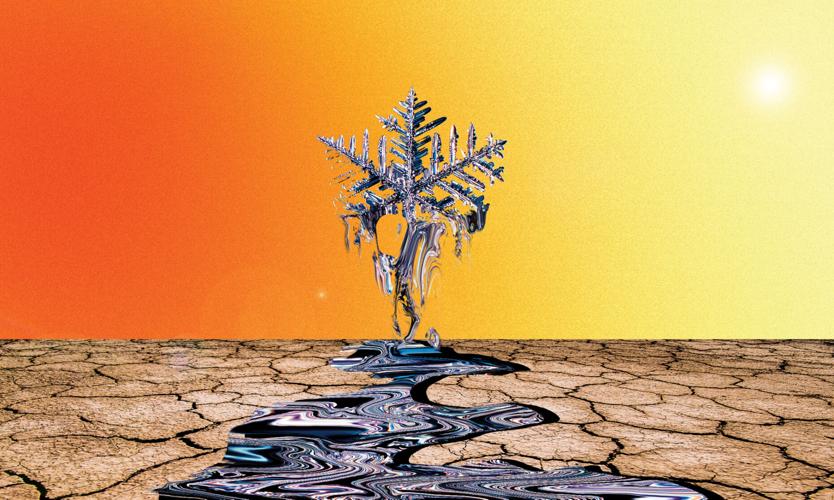
Erratic and warm temperatures are throwing wrenches into all sorts of gears in the Lakes Region this winter. Snowmobilers have had to delay their recreational season, and the still-thawed Lake Winnipesaukee is jeopardizing plans for major winter events like the Ice Fishing Derby and Pond Hockey Classic.
For farmers in Belknap County, increasingly unpredictable weather patterns and warmer temperatures are forcing more and more adaptation, and strain, on their already difficult profession.
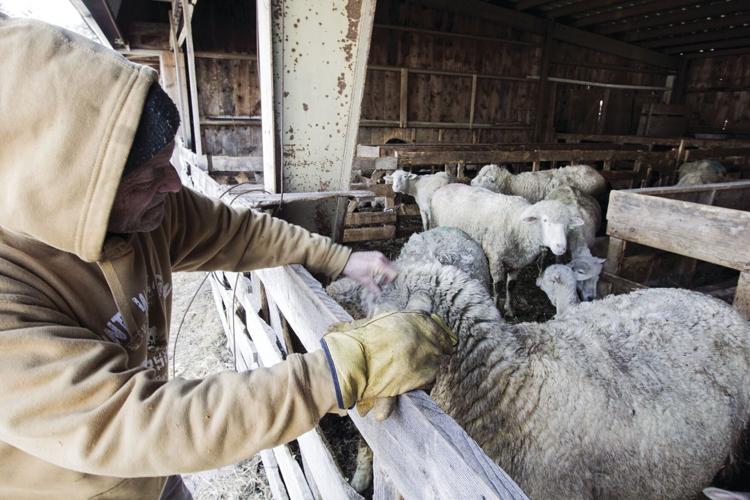
“That seasonal consistency we used to have just isn't there,” said Jeff Keyser, shepherd of Ramblin' Vewe Farm in Gilford. “The new normal is that there is no normal.”
While the lack of consistency is particularly difficult for vegetable and fruit producers, livestock farmers like Keyser are not spared.
“The inconsistency does affect the health of the animals,” Keyser explained. "This going from 50 degrees down to 10 or 20, it affects them. It affects how they eat, their ability to fight off infection, that kind of thing. It just puts a stress on them that generally isn't there.”
During the winter months, a strong blanket of snow helps cover dormant crops and keeps the ground a consistent temperature, keeping things in place, and more importantly, alive.
“Without the snow cover, the cold can penetrate into the ground a lot farther, basically frost death,” explained Keyser, citing the importance of temperature consistency.
"If you're raising alfalfa, and you're getting these warm stretches, two or three days of warm, everything thaws out and then it freezes out. What it does is it's just like your frost heaves on a road. The field will go up and down to a certain extent.”
These heaves can displace dormant crops, and in some cases even kill the taproot, slaying the plant for good.
Combine the inconsistent weather with hot, dry summers, and you have a recipe for lower and lower yields. On the other side, warmer and shorter winters do bring some advantages, whether or not they outweigh the problems caused by climate changes depends on the type of farm.
“On the other side we like getting our animals out a little earlier and taking 'em out a little late. There's an advantage there 'cause you're not feeding them stored feed,” Keyser said.
“Warmer winters, I lamb in February. Sure, I don't mind not having to lamb in zero (degrees), so that's not a bad thing. There's some pluses there.”
For John Moulton of Moulton Farm, adaption is a keystone of the farming profession.
“We have noticed the past decade, even the last 15 years, we don't tend to have the frost problem in May that we did 15 years ago, but the springs never warm up well,” Moulton said. “But on the other hand, as of recently, we've had wonderful falls. It allows us to grow more and harvest longer.”
Those colder springs, though, have pushed Moulton Farm to change tactics, equipment and technique.
“We have row covers or plastics we can warm the soils up quicker,” Moulton said. “As we're facing weather issues, whether it be due to climate change, we come up with an adaption or a skill to try to overcome that.”
Moulton attributed excessive rain to the largest amount of damage to his business. Ten years ago, Moulton invested in a machine called a high rise bed. In 2021, that investment helped save his tomato crop during a heavy rainfall.
"We lost all of our July summer squash, lettuce, some of that stuff,” Moulton recalled. “Our tomato crop did very well, because it was on those very high beds.”
In addition to heavy rains, periods of drought have also become more common, forcing places like Moulton Farm to make more purchases and more adaptions.
“We're better irrigators than we have ever been, because we have developed micro irrigation,” Moulton said. “We install grip tape irrigation in these raised beds in the ground and we can irrigate now many more acres with much less water.”
Other adaptations by the farm include using plastics more often to regulate ground temperature, and even growing lettuce hydroponically after attending a conference in Arizona.
At that conference, Moulton recalled an alarming statistic.
“One of the comments that was made by the presenters in Arizona is that 85% of the lettuce we were consuming in this country was coming out of California” at that time, Moulton said. “That's pretty scary when you think about the fact we are depending upon one part of the country for that larger food supply.”
According to the California Department of Agriculture, the Golden State produces over a third of the country's vegetables and three-quarters of the country's fruits and nuts.
“I think for too many years we've relied on so much outsourcing of our food,” said Tim Duval, co-owner and operator of HT Farms in Belmont.
“I think people need to come together. I think it needs to be local. If everybody in local areas worked together more, I think we could strive better.”
Duval and his wife Heidi Loring raise beef, hay, and maple trees on their farm. Increasingly erratic weather has also hit them hard.
“We need a good freeze up [for maple syrup]. We need snow, we need the ground to freeze,” Duval said.
“In the spring we need cool nights and warmer days. We want it to be 35 to 40 during the day and cool down below freezing at night, and that's not really happening.”
The warm spells combined with heavy storms have taken a toll on the maples, downing some and affecting the sugar content and run time of their sap.
For Duval and Loring, diversification is key to keeping operations flowing.
“We're managing and selling cattle-handling equipment now. We've taken on that. Plus the cattle, plus the maple. It's a lot of work,” he said.
Fuel prices have also increased the operating costs for farmers like Duval and Loring, but they've been slow to pass on those costs directly to their customers.
“Luckily, our customers, they're understanding that we have to go up in our prices, but we do it slowly,” Duval said, adding that the cost to process their meat just doubled due to a price increase from the facility they use.
Of a potential renaissance in local food production and trade in response to the threat of climate change to centralized agriculture, Duval noted it was possible, but cited local over-development as a key threat to such a future.
“I think we could if they didn't overdevelop,” Duval said. “I think that's going to be a key. Progression is a thing in life, but if you progress too fast and too much and you take up all the resources, you're not going to have anywhere to grow.
“There's so much of a push on big city and big life, that people forget that they have to eat.”
“Or where their food comes from,” Loring added. “People think they can just run to the grocery store and grab whatever we want. But right now they're finding out that it's not that easy.”
While some local farms are managing to survive with adaptation and diversification, such changes often require more labor, more investment in new technologies, and more expenses.
“To adapt farming to New England growing is a more expensive proposal than trying to grow in a climate that is milder,” Moulton said. “But as we are recognizing, even these stable climate areas are not remaining stable anymore. So, I think the plus is, as we work our way through these gyrations, right now anyway, our gyrations do not seem to be as extreme as some of the primary food producing regions in the country.
“Still, what we can produce in this part of the world is a pretty darn small amount compared to what we're going to need nationally, or certainly globally, to feed populations."


(0) comments
Welcome to the discussion.
Log In
Keep it Clean. Please avoid obscene, vulgar, lewd, racist or sexually-oriented language.
PLEASE TURN OFF YOUR CAPS LOCK.
Don't Threaten. Threats of harming another person will not be tolerated.
Be Truthful. Don't knowingly lie about anyone or anything.
Be Nice. No racism, sexism or any sort of -ism that is degrading to another person.
Be Proactive. Use the 'Report' link on each comment to let us know of abusive posts.
Share with Us. We'd love to hear eyewitness accounts, the history behind an article.