


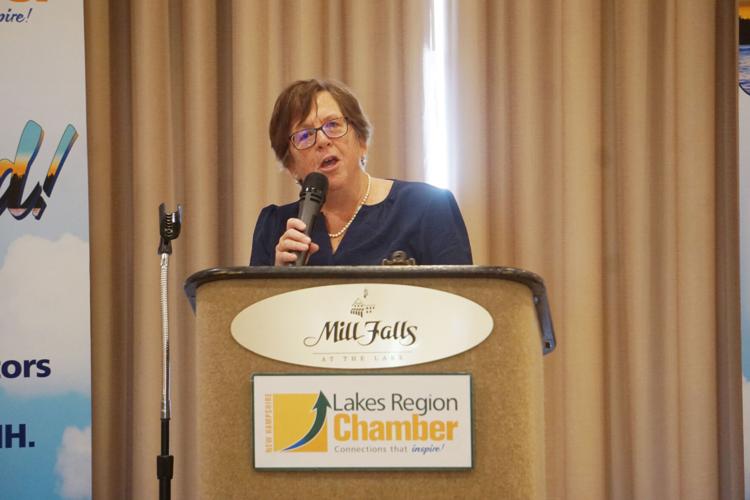
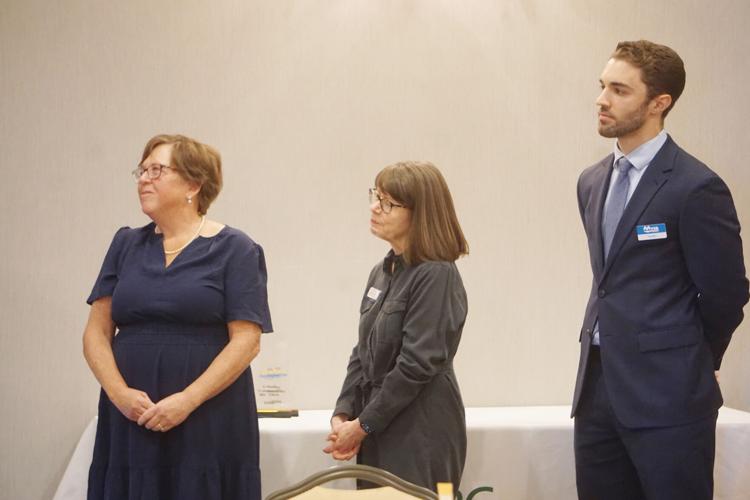

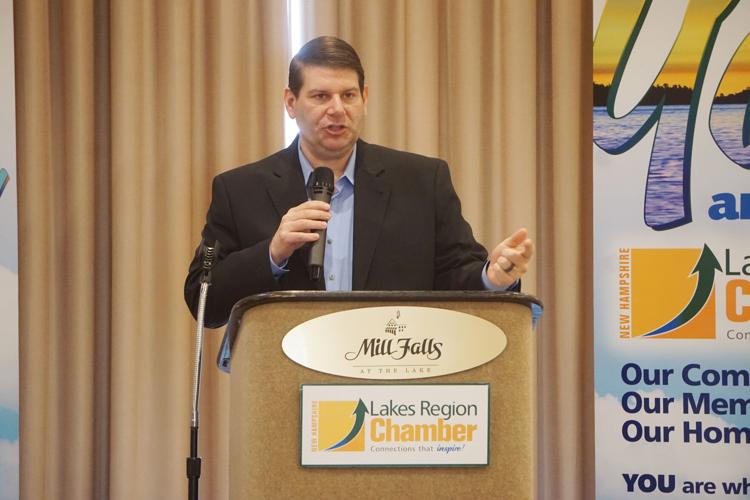
MEREDITH — Karmen Gifford, president of the Lakes Region Chamber of Commerce, will retire, members learned Wednesday at their annual meeting at Church Landing.
Grace McNamara, secretary of its board of directors, will become executive director for community engagement. McNamara and Gifford will work together over the coming months to create a transition plan, and Gifford intends to remain a resource for the chamber for years to come.
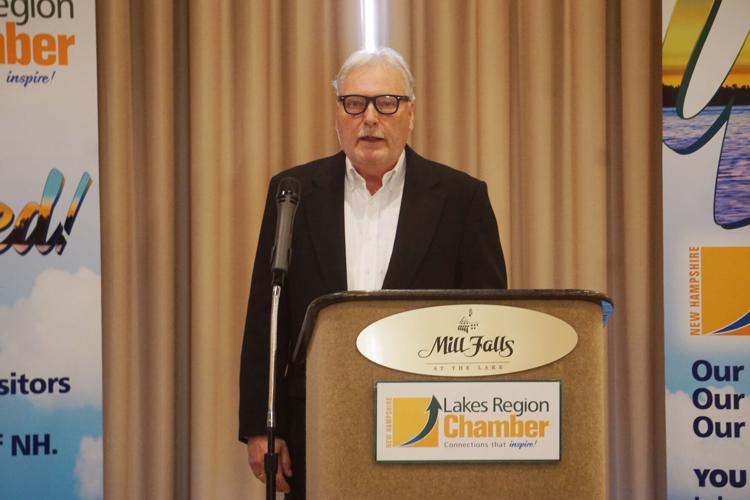
“I hope you have reconnected with others you haven’t seen recently, and leave with new connections,” Gifford said Wednesday morning. “Connections [are] one of the greatest opportunities the Lakes Region Chamber offers.”
Gifford’s led the chamber for more than 15 years, but now it’s time for her to set her sights on greener pastures: golfing.
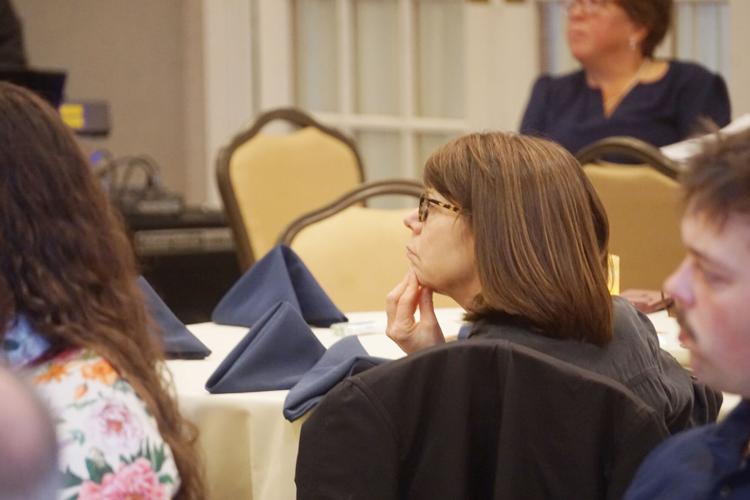
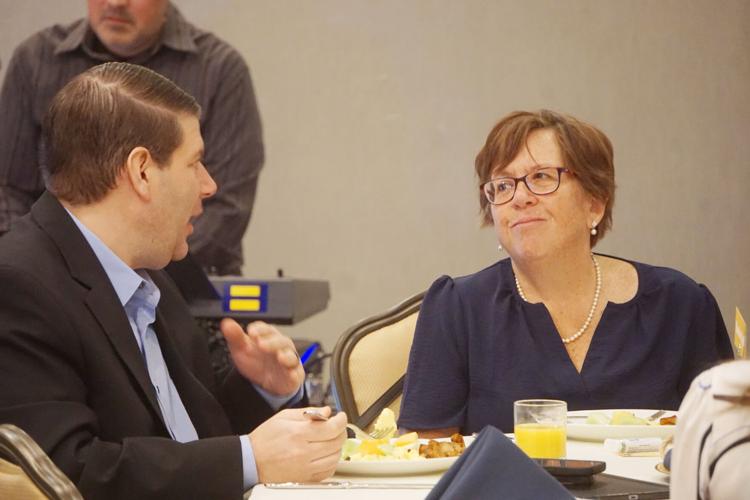
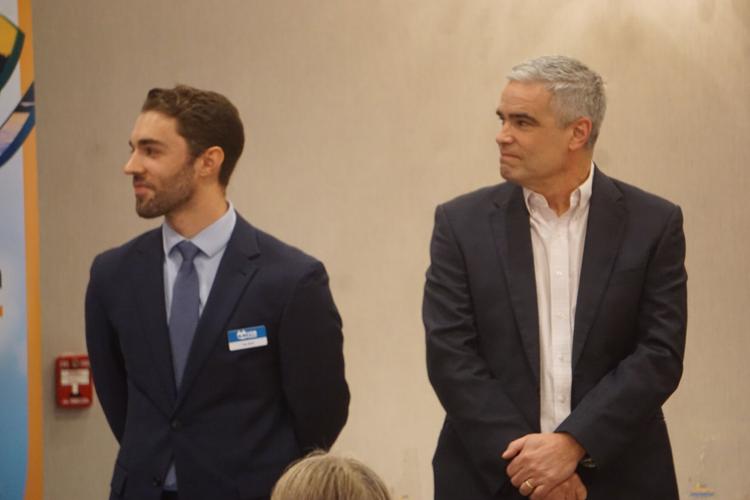
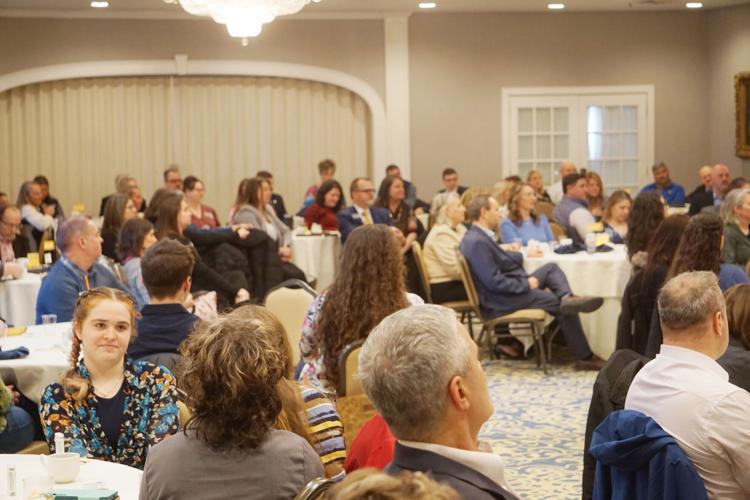
“As many of you know, Karmen has been at the helm of the Lakes Region Chamber since 2010, guiding the organization through tremendous growth and impact across our region,” incoming board Chair Tate Miller, commercial loan officer for Meredith Village Savings Bank, said to a crowd of more than 100 in the ballroom at the Inn at Mill Falls. “Some of you may also know that she recently purchased a home in South Carolina, beginning a new personal chapter.”
McNamara, who runs Lakes Region Public Access, will step off the chamber’s board of directors to take the new role.
“Over the next several months, Karmen and Grace will work closely together to map out a thoughtful transition as Grace prepares to assume Karmen’s leadership role,” he said. “Let me reassure everyone, Karmen is not going away. She will continue supporting the chamber in a background role, sharing her experience, knowledge and passion for our business community. We are incredibly excited about this transition and the leadership ahead.”
Miller said Gifford will remain an important resource moving forward.
“They say that the early bird catches the worm, but in the Lakes Region, we know that if you want to get anything actually done before 9 a.m., you call Karmen Gifford,” board member Don St. Gelais said. “We’re gathered here this morning to celebrate a woman who hasn’t just been director for 16 incredible years, Karmen has been the heartbeat of the high-octane engine of this chamber.”
And that’s not the only big change for the chamber in 2026 — they’re moving out of their office space in downtown Laconia for new digs in Tilton, because they don’t need so much room any longer.
“Effective this week, the Lakes Region Chamber offices have relocated to 322 West Main St. in downtown Tilton in the Riverfront Place building,” Miller said. “We’re looking forward to this next chapter, in a space that better fits our needs and positions us well for the future.”
Gifford’s time leading the chamber included periods of incredible uncertainty. When most of the world ground to a halt during the early days of the COVID pandemic, Gifford worked to help businesses navigate uncharted waters. More recently, businesses in the Lakes Region and across New Hampshire have been affected by another period of uncertainty, brought about by a cascading wave of tariffs on trade, slapped haphazardly upon industry — sometimes without warning.
“Since 2010, Karmen has steered this ship through economic shifts, a global pandemic, and a total evolution of our business community,” St. Gelais said.
“I grew up here, I lived my life here. Yes, I bought a house in South Carolina, but doing my job was easy, because it’s my community,” Gifford said. “So, thank you.”
Stephen McAllister, vice president for the East Region for the U.S. Chamber of Commerce, said tariff policy over the previous year and the associated chaos and uncertainty undoubtedly posed challenges which businesses in New Hampshire are forced to overcome.
“Trade has a massive impact on the New Hampshire economy. International trade — that’s your exports and imports of goods and services — supports over 180,000 jobs in New Hampshire. That’s about one-in-five total jobs in the state of New Hampshire have to do with trade,” McAllister said.
McAllister said norms of past tariff deals included negotiations and long periods of implementation. Now, it's the business community who's paying the price.
“I wanted to show that not only are you going to be paying for these tariffs as individuals and as businesses, but also all these jobs are at risk here in New Hampshire,” he said. “There’s so much uncertainty around these tariffs.”


(0) comments
Welcome to the discussion.
Log In
Keep it Clean. Please avoid obscene, vulgar, lewd, racist or sexually-oriented language.
PLEASE TURN OFF YOUR CAPS LOCK.
Don't Threaten. Threats of harming another person will not be tolerated.
Be Truthful. Don't knowingly lie about anyone or anything.
Be Nice. No racism, sexism or any sort of -ism that is degrading to another person.
Be Proactive. Use the 'Report' link on each comment to let us know of abusive posts.
Share with Us. We'd love to hear eyewitness accounts, the history behind an article.