




When is it time to consider respite care?
There is a growing recognition of the challenges faced by 53 million American family caregivers, with mental health issues being a top concern. Being a caregiver to a loved one is a rewarding but exhausting task. Respite care is one of the best resources that caregivers have for prioritizing their mental health, passions and relationships while still offering supportive care to individuals with disabilities, chronic conditions or age-related illness.
This guide from Village Caregiving will unpack what respite care is, its benefits and how to tell if you need it.
What Is Respite Care?
Respite care is temporary care that lasts from a few hours a day to a few weeks. It’s designed to offer relief to primary caregivers and provide additional support when a patient’s needs temporarily increase. It allows caregivers to take breaks for mental health, run errands or attend to other responsibilities, while having peace of mind that their loved one is receiving the support and care they need.
Respite care can take place in various settings, such as at home, an adult day care center or an assisted living facility. Home care is a popular option because it provides a familiar environment for the patient. Respite care services can include help with:
- Medication management.
- Household tasks like meal preparation and light cleaning.
- Transportation to and from medical appointments.
- Personal care tasks like dressing, toileting and bathing.
It’s important to note that professionally trained caregivers can perform basic tasks, such as monitoring vital signs, but they can’t offer complex medical care.
How Can Respite Care Benefit Family Caregivers?
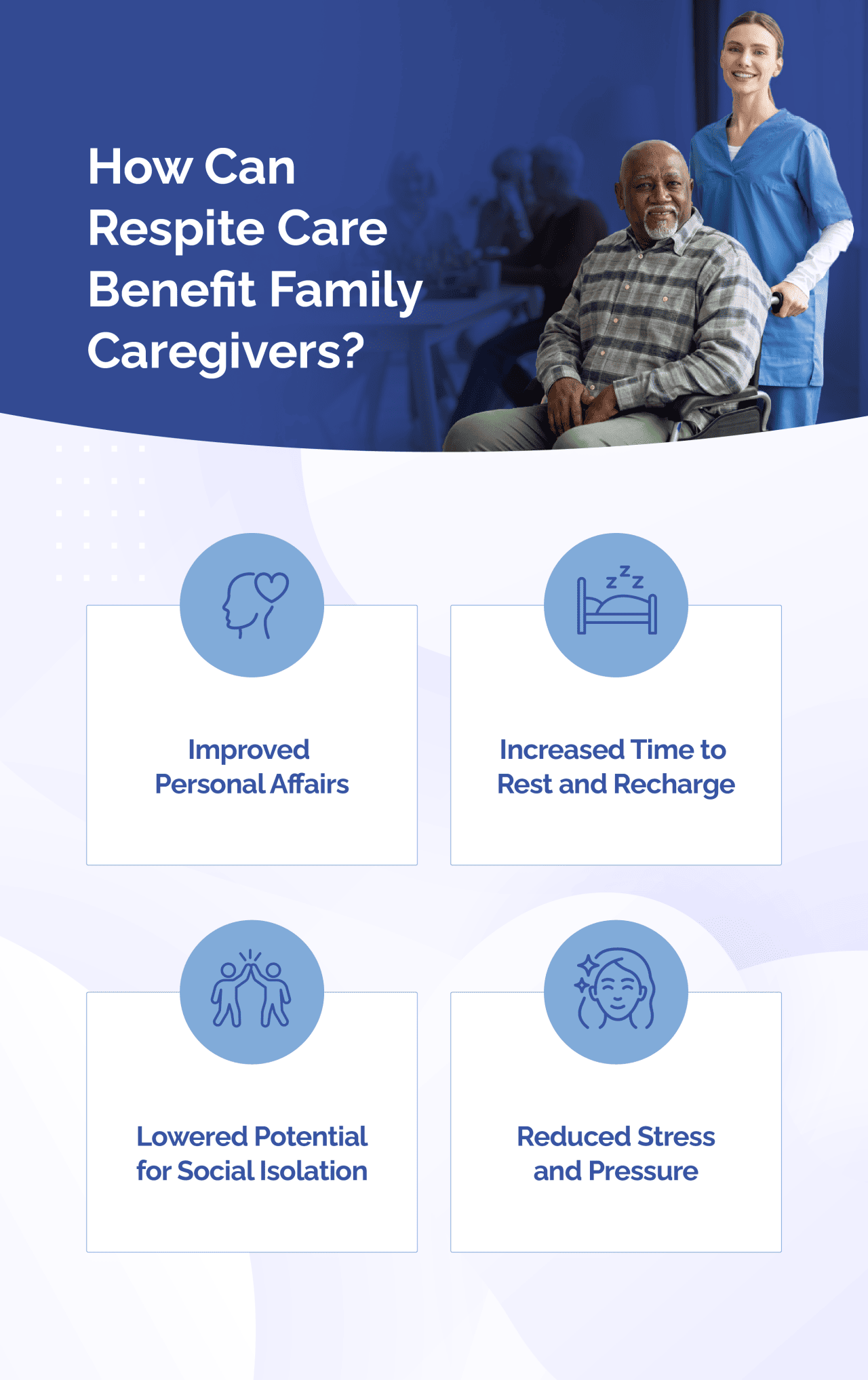
Respite care offers primary caregivers a helping hand when their patient requires more support or the opportunity to take a break when needed, knowing their patient is still being looked after. This assistance provides caregivers with benefits that help them perform their duties more effectively:
Improved Personal Affairs
It’s easy for family caregivers to neglect their own personal needs and relationships when taking on the responsibility of caring for someone else. That can lead to a decline in one’s well-being, feelings of loneliness and disappointment from loved ones.
Respite care allows primary caregivers the opportunity to let go of the reins a bit, knowing an experienced and trustworthy professional is taking over in their stead. It’s a crucial service that helps caregivers maintain some balance within their personal lives and not feel like they’re letting someone down by not being available.
Increased Time to Rest and Recharge
Family caregivers often reach a point where they need support in caring for their loved ones, as this can be a challenging and highly demanding responsibility. Respite care helps them avoid facing this task alone, offering a brief break essential to their well-being and mental health.
Giving a caregiver time to rest and recharge can mean:
- More quality time with friends and family.
- Lower stress levels for the family and the caregiver, increasing patience levels in turn.
- A better relationship between the person being cared for and the caregiver.
- Improvements to the caregiver’s personal well-being.
- Increased levels of energy, feeling supported and resilience.
Lowered Potential for Social Isolation
It can be easy for primary caregivers to feel isolated from their friends and family while juggling a career, family commitments and caring for a loved one, which often feels like a full-time job. It’s a common occurrence that can be managed with respite care, which gives caregivers the time they need to spend with loved ones. Taking this break supports mental well-being and reduces the likelihood of burnout or resentment toward their patient.
Reduced Stress and Pressure
Over time, stress and pressure can build up between the caregiver and the person being cared for, straining their relationship. The caregiver may struggle to find a balance between the new commitments of caring for their loved one and those of their personal life, while the individual in care may start to feel guilty or like they’ve lost their independence.
Respite care offers caregivers a chance to “recharge their batteries” and take a break from their caregiving responsibilities. This time away benefits both the caregiver and their patient, helping them provide the best possible care while improving their work-life balance.
How Can Respite Care Help the Patient?
The patient can experience similar issues to those of their caregiver, often feeling like they live in a bubble, interacting with the same person every day. Any negative feelings the caregiver may have, such as burnout or resentment, can directly affect the patient, making them feel guilty or altering the level of care they receive. Here are some ways respite care helps reduce these effects and benefits the patient:
- Provides new social interactions: Respite care offers the patient a chance to interact with someone new who might share their interests, encouraging them to participate in various activities and even make new friends. These opportunities boost the patient’s mood and help them combat isolation.
- Enhances routine and environment changes: Being stuck at home can start to feel boring, so a change of scenery often helps refresh the patient. It offers mental stimulation, adaptability, reduced stress or tension, the opportunity to try new things and a break from monotonous routines.
- Offers professional support and specialized care: Respite care providers are typically trained professionals with specialized expertise. They can provide specific therapies that the family caregiver may not be equipped to give, administer medications correctly and on time, and provide professional hygiene and grooming assistance that maintains dignity and comfort.
- Improves safety and well-being: Burnout and overwork can lead family caregivers to provide lower-quality care, increasing the risk of accidents and oversight. Respite care ensures patients receive continuous care and supervision, especially for those with complex needs like nutritional support, or safety concerns like cognitive impairment or being prone to falling or wandering off. Respite caregivers also encourage and guide patients through self-care activities.
Types of Respite Care
Here are some of the types of respite care:
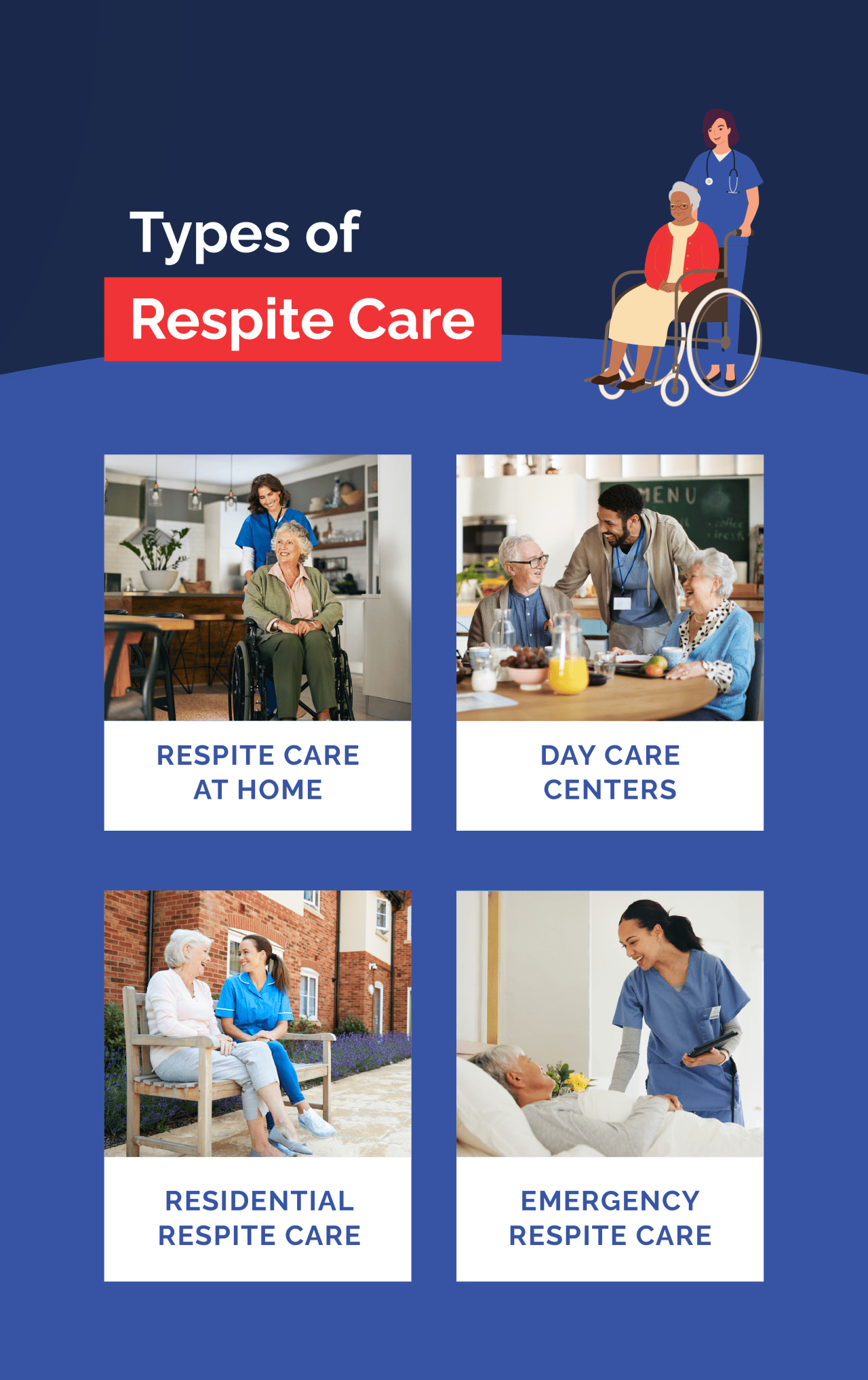
Respite Care at Home
In-home respite care provides patients with a professional yet familiar environment. It makes it easier for primary caregivers to care for their loved ones without transporting them elsewhere.


Respite care at home enables a more personalized experience where the patient can stick to their typical routine, which can be especially important for people living with dementia. Research shows that in-home care can improve the communication of patients with dementia, highlighting the importance of the environment.
Day Care Centers
Many adult day care centers offer respite care, typically for set hours in the day. Patients receive a structured environment and more social interaction. Typically, there are also activities, mealtime and therapeutic services included. These centers allow family caregivers to rest and recharge, knowing their loved one is in a safe environment.
Residential Respite Care
This type of care is provided in a residential environment, such as an assisted living community, a nursing home or a specialized group home. Residential respite care is a popular option for patients who require constant supervision and higher levels of care. It’s also a good choice for people who are relocating and want to temporarily move their loved one to a safer environment. However, residential respite care can be stressful for people with conditions like Alzheimer’s who don’t handle change well.
Emergency Respite Care
Emergency respite care is available to provide quick relief in urgent situations when family caregivers can’t care for their loved ones. The emergency respite caregiver can take over when the primary caregiver needs an immediate break. This service provides peace of mind during stressful times and is a crucial option for those who need fast, reliable care.
Who Is Respite Care Best Suited For?
Knowing when it’s time to consider respite care isn’t always easy. However, recognizing the signs of physical and emotional strain is vital for maintaining long-term caregiving capacity. If you feel constantly exhausted, overwhelmed or unable to manage stress, it may be time to consider respite care. Respite care is often best in the following scenarios:
Increased Difficulty With Activities of Daily Living
When a loved one is experiencing increased difficulty with activities of daily living (ADLs), it can be hard to handle the extra work. Respite care can help relieve you from some of the tasks and take the load off when you need help. Hiring a caregiver can also help you learn how to better assist your loved one with tasks like transferring them from a bed or chair.
Inability to Stay Alone
If the individual is a potential danger to themselves when left alone, you might want to look into respite care if you need to leave the house. Even if you don’t plan on being gone for long, a person with cognitive impairments is at risk of wandering and endangering their safety and the house.
A respite caregiver can give you peace of mind when no one is there to observe your loved one. Studies show that in-home respite caregiving services can help reduce security risk events for people living with dementia and improve caregivers’ quality of life.
Social Isolation
Both the caregiver and care recipient can become socially isolated if they spend most of their time together alone. Family caregivers can miss out on social events and spending quality time with other family and friends. Patients may not interact with individuals other than the caregiver, leading to loneliness and a lack of socialization.
Respite care can help patients socialize with another person in a safe environment, and primary caregivers can take a meaningful break to spend time with other people.
When to Consider Respite Care
Family caregivers should consider short-term care options when they start experiencing burnout, depression or a lack of motivation. While occasional fatigue is common, it can lead to severe burnout when it becomes a regular occurrence. One study found that 33.35% of primary caregivers experienced depression, anxiety (35.25%) and burden (49.26%).
These challenges are all influenced by a lack of support or time off. Juggling family responsibilities, friends, a full-time job and taking care of a loved one takes a toll on your mental health, making self-care all the more critical. Respite care provides that opportunity through temporary relief, giving family caregivers the chance to rejuvenate before they reach the point of depression, burnout, anxiety or burden.
Here are some key signs that reveal when to consider respite care:
- Increased burnout and stress: This occurs when caregivers feel overwhelmed by the demands of caring for a loved one, which leads to physical, mental and emotional exhaustion. When they neglect their needs, they can experience health problems, anxiety and depression. If this stress becomes prolonged, it can negatively affect their well-being and the quality of care they provide.
- Declining well-being: If your well-being is being affected by exhaustion, depression, chronic health conditions and anxiety, it could weaken your resilience, making providing effective care and managing daily responsibilities more challenging.
- Reduced ability to manage daily responsibilities: When your patient’s needs become overwhelming, you may feel exhausted or unprepared. Juggling tasks like managing household duties, administering medication and assisting with personal care becomes more difficult as this fatigue and stress build up. It can result in you feeling frustrated, making mistakes or missing appointments, which negatively impacts both your and your patient’s quality of life.
- Declining health: If you continue to go without sleep, experience stress and neglect your needs, your mental and physical health can take severe strain, ultimately leading to chronic health conditions. These can include high blood pressure, weakened immune function and depression or anxiety, which all make it difficult to care for your loved one effectively, creating a negative cycle for you both.
- Reduced family or work-life balance: Juggling family commitments, caregiving and work deadlines can leave you feeling exhausted, stressed and stretched thin. It also leaves little to no time for relaxation or self-care, creating an imbalance that increases frustration or guilt and negatively affects your job performance and relationships.
Evaluating Care Needs
When determining whether respite care is the right choice, assess the current level of care your loved one requires. Consider if they need help bathing, dressing or eating. Maybe they have cognitive or mobility issues that require constant supervision. While evaluating your loved one’s needs, look at how caregiving responsibilities affect your well-being. Think about whether you are struggling to coordinate care with other family members or if the intensity of care has increased beyond what you can manage alone.
Considering these factors can help identify the right type of respite care, whether it’s occasional support to provide companionship or more intensive care for seniors with complex needs. An honest look at both the recipient’s needs and your own can clarify when and how you might benefit from respite care services.
Exploring Respite Care Services
There are various types of respite care services to suit different situations. These services can be provided in-home, at a specialized care facility or through adult day centers. In-home respite care is popular since it offers personalized support in the comfort of the senior’s home. Respite care can include help with daily tasks, companionship or other errands. Having a professional caregiver step in ensures continuity of care and gives primary caregivers peace of mind to rest and focus on their own well-being.
Seek Respite Care to Prevent Burnout
Respite care provides temporary relief to primary caregivers and ensures that care recipients continue to receive the support they need. It’s important not to neglect your other interests and social life.
If you are experiencing caregiver burnout or just want time for yourself, respite care can offer you a well-deserved break, so you can return refreshed and leave your loved one in the hands of a professional caregiver.
This story was produced by Village Caregiving and reviewed and distributed by Stacker.


(0) comments
Welcome to the discussion.
Log In
Keep it Clean. Please avoid obscene, vulgar, lewd, racist or sexually-oriented language.
PLEASE TURN OFF YOUR CAPS LOCK.
Don't Threaten. Threats of harming another person will not be tolerated.
Be Truthful. Don't knowingly lie about anyone or anything.
Be Nice. No racism, sexism or any sort of -ism that is degrading to another person.
Be Proactive. Use the 'Report' link on each comment to let us know of abusive posts.
Share with Us. We'd love to hear eyewitness accounts, the history behind an article.