






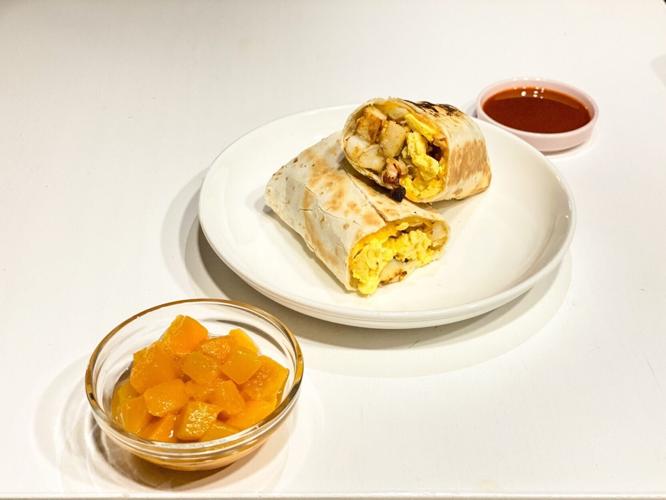

(Photo by cottonbro studio via Pexels)
By Stephen Beech
Teenagers who start the day with breakfast eat better overall, reveals new research.
Those who tuck into breakfast consume more nutrients and less daily fat and sugar than those who skip the first meal of the day, say scientists.
The study of teens aged around 18 who tended to skip breakfast showed that eating one increased their overall intake of important nutrients such as fiber, iron, zinc and choline.
Researchers also found that eating breakfast reduced the intake of high-fat and high-sugar foods throughout the day when compared to those who didn't eat breakfast.
Participants who consumed higher-protein breakfasts saw even stronger benefits, according to the findings.
Study lead author Emma Rose Brown said: "This is one of the largest and longest tightly controlled breakfast trials in adolescents.

(Photo by kaboompics.com via Pexels)
"Our findings suggest that adding breakfast, particularly one rich in protein, may be an effective way to improve nutrient intake and diet quality among older adolescents.
"Although most Americans think that breakfast is the most important meal of the day, there isn't a lot of evidence to support this idea.
"We wanted to see whether consuming a high-protein breakfast would increase nutrient intake and promote healthier eating throughout the day."
The study included 128 young people ages 14 to 21 who skipped breakfast at least six times a week.
Participants were randomly assigned to eat either a normal-protein breakfast, a high-protein breakfast or to continue skipping breakfast.
For the groups eating breakfast, the researchers prepared and packed more than 18,000 meals that included breakfast foods often eaten by teens such as scrambled eggs, burritos, quesadillas and smoothies.

French toast breakfast - meals for the normal protein group contained around 15 g of protein (example pictured), and meals for the high-protein group contained 30 g of high-quality protein. Participants in the high-protein group consumed even less added sugar and more protein, iron and choline daily compared to those in the normal protein group. (University of Texas at Austin via SWNS)


Meals for the normal protein group contained around 15 grams of protein, and meals for the high-protein group contained 30 grams of high-quality protein.
At the start of the study and again after three and six months, study participants in the breakfast-eating groups received a food cooler containing the prepared foods.
They could eat as much or as little as they wanted to over three days.
That approach allowed the research team to precisely track intake while allowing the food to be consumed at home.
Brown, a doctoral student under the mentorship of Professor Heather Leidy from Dell Medical School at the University of Texas at Austin said it led to "excellent" compliance — with participants consuming the provided meals more than 90% of the time.
The research team assessed what participants ate by asking them to recall everything they consumed over a 24-hour period and by weighing the food coolers before and after consumption.

(Photo by Helena Lopes via Pexels)
Food intake was entered into nutrition software for analysis.
The researchers found that although all the groups consumed around the same amount of calories throughout the day, those eating breakfast took in more fiber, iron, zinc and choline overall.
Participants in the high-protein group also consumed more protein, iron and choline compared to those in the normal protein group.
Brown said: "The study also showed that both groups who ate breakfast consumed fewer desserts, sweets and candy compared to participants who skipped breakfast.

A new study showed that consuming breakfast increased the overall intake of important nutrients such as fiber, iron, zinc and choline in teens who tended to skip breakfast. (University of Texas at Austin via SWNS)
"Additional benefits were observed with the high-protein group, who ate even less added sugar compared to the other groups."
The research team now plans to look at how increasing dietary protein at breakfast might affect people's thoughts and cravings about food.
Brown added: "A better understanding of how breakfast protein affects what people eat and how much they think about food throughout the day could help inform practical strategies that support long-term, healthy weight management."
The findings were presented at the annual meeting of the American Society for Nutrition in National Harbor, Maryland,


(0) comments
Welcome to the discussion.
Log In
Keep it Clean. Please avoid obscene, vulgar, lewd, racist or sexually-oriented language.
PLEASE TURN OFF YOUR CAPS LOCK.
Don't Threaten. Threats of harming another person will not be tolerated.
Be Truthful. Don't knowingly lie about anyone or anything.
Be Nice. No racism, sexism or any sort of -ism that is degrading to another person.
Be Proactive. Use the 'Report' link on each comment to let us know of abusive posts.
Share with Us. We'd love to hear eyewitness accounts, the history behind an article.