


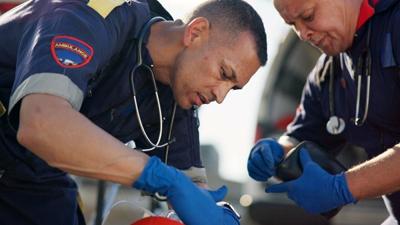

Noise exposure poses long-term risk to first responders
When every second counts, first responders depend on their hearing to assess risk, communicate with their teams, and respond quickly in chaotic situations. But while concern about safety often focuses on visible hazards and physical injuries, one critical issue is frequently overlooked: hearing loss.
For many first responders, repeated exposure to sirens, machinery, and high-noise environments can gradually contribute to long-term hearing damage with consequences that reach far beyond the job. This May, several national observances, including National Police Week (May 10–16), National EMS Week (May 17–23), and Wildfire Preparedness Month, highlight the demands placed on first responders and the risks they face on the job, including hearing loss. Up to 80% of long-term law enforcement, 45% of EMS providers, and 40% of firefighters face hearing loss on the job.
HearingLife, a personalized hearing care company, explores what research reveals about hearing loss among first responders, including why their risk is higher and how it can impact health and job performance.
A common but underrecognized health concern
Noise-induced hearing loss (NIHL) is one of the most common occupational health conditions in the United States, according to the Centers for Disease Control and Prevention (CDC).
For first responders, the risk is amplified by repeated exposure over time, with some studies estimating that a significant share of law enforcement officers, firefighters, and emergency medical personnel experience measurable hearing damage tied to their work.
First responders are at higher risk
First responders are continuously exposed to unpredictable, prolonged, and repeated noise at high decibel levels. Some common noise culprits include:
According to the Occupational Safety and Health Administration (OSHA), noise levels above 85 decibels may cause hearing damage. That means sounds that are loud enough to cause you to raise your voice to speak to someone 3 feet away. For first responders, this is often a way of life.
Why hearing loss often goes unaddressed
People who work in intense, physically taxing occupations often prioritize immediate physical injuries over long-term conditions like hearing loss. They may also feel embarrassed or feel there is a stigma around admitting to hearing difficulties. Hearing screenings across departments are also inconsistent or infrequent, so early symptoms may be missed.


These early symptoms include:
- Tinnitus (ringing in the ear)
- Difficulty hearing and understanding speech in noisy situations
- Turning up the volume higher than you used to on the television or radio
When an occupational hazard becomes a public safety issue
Hearing loss affects situational awareness, communication, reaction time, and decision-making. When a first responder has trouble identifying which direction a sound or cry for help is coming from, it is not only an occupational obstacle; it’s a public safety issue.
"For first responders, hearing isn't just about quality of life, it's about situational awareness, rapid communication with their team, and ultimately, about saving lives,” said Ryan Potter, vice president of audiology, HearingLife.
“The occupational noise they're exposed to puts them at serious risk, yet hearing loss often goes unaddressed. That's why accessible hearing health support matters so much. When we remove barriers to care, we're not just supporting first responders' health, we're investing in the safety of everyone they protect," said Potter.
Prevention, detection, and management
There are three key components when it comes to hearing loss: prevention, detection, and management.
The best-case scenario for first responders is to avoid hearing loss entirely. This requires the availability of hearing protection devices (HPDs) wherever feasible, including sound suppressors on weapons for law enforcement personnel or communication system headsets for firefighters. Unfortunately, not all departments are able to afford the expense of this equipment. That is why detection is key.
Routine hearing screenings can identify hearing loss early, so the issue can be identified and addressed. There are now free online hearing tests available for early detection from home.
If NIHL is found, there are hearing aids and assistive technologies available that have been shown to improve speech perception and communication. Unfortunately, only about 25% of people who would benefit from a hearing aid use one.
As the conversation around first responder health continues, hearing loss is starting to get the attention it deserves. Constant exposure to sirens, engines, and equipment can cause damage that builds slowly over time, often without obvious warning signs.
The good news is that better technology, growing access to screenings, and early intervention are making hearing care more accessible than ever. Hearing isn’t optional for first responders; it’s a critical part of their job.
This story was produced by HearingLife and reviewed and distributed by Stacker.


(0) comments
Welcome to the discussion.
Log In
Keep it Clean. Please avoid obscene, vulgar, lewd, racist or sexually-oriented language.
PLEASE TURN OFF YOUR CAPS LOCK.
Don't Threaten. Threats of harming another person will not be tolerated.
Be Truthful. Don't knowingly lie about anyone or anything.
Be Nice. No racism, sexism or any sort of -ism that is degrading to another person.
Be Proactive. Use the 'Report' link on each comment to let us know of abusive posts.
Share with Us. We'd love to hear eyewitness accounts, the history behind an article.