





(Photo by cottonbro studio via Pexels)
By Stephen Beech
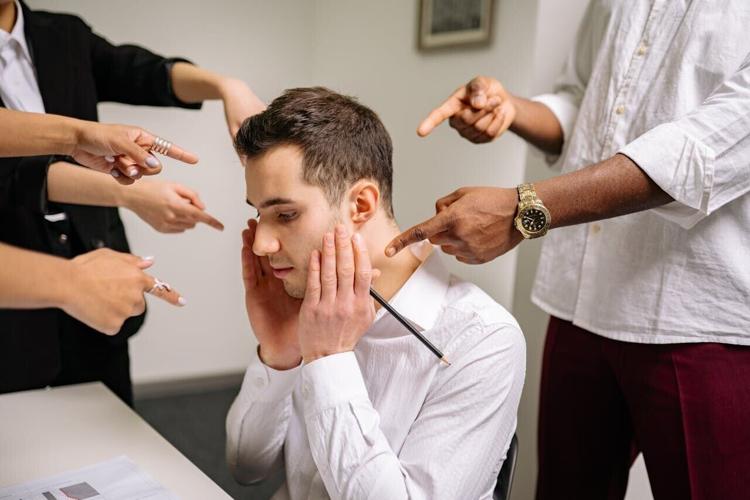
Bullying is more likely to happen in open-plan offices, according to new research.
The layout leads to a "clearly increased risk" of workplace bullying compared with employees having their own office or sharing with just a few colleagues, say scientists.
Open-plan offices, where many employees share the same space, have become increasingly common.
Companies often justify the layout as a way to use premises more efficiently and to encourage creative interactions between employees.
But research has shown that open-plan offices don't promote health, job satisfaction or productivity.

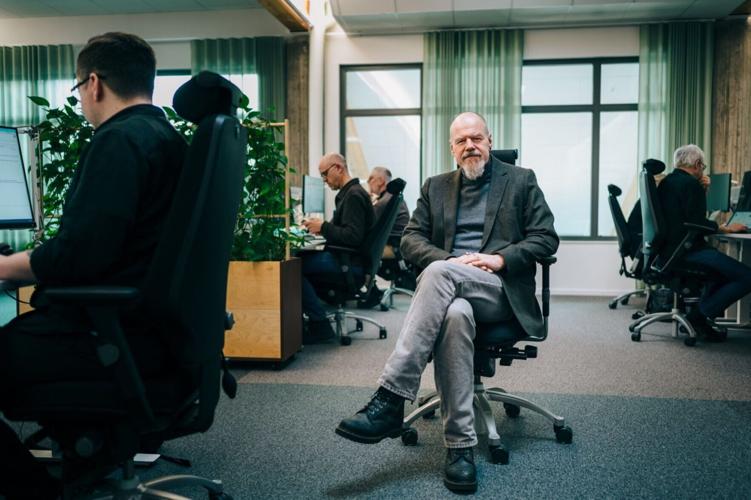
Michael Rosander, professor at the Division of Psychology at Linköping University, Sweden was the study leader. (Anna Nilsen via SWNS)
Until now, it had been unclear whether open-plan offices also affect the risk of bullying and workers’ motivation to look for another job.
Researchers surveyed more than 3,300 randomly selected people working in Sweden.
Three in 10 of those with some form of office-based work (30%) reported that they worked in a traditional open-plan office with no access to private space.
Around one in eight (13%) worked in so-called "activity-based offices" — where employees spend part of their time in an open-plan environment but also have access to designated rooms for tasks requiring peace and quiet.
The remainder had their own office or shared one with just a few colleagues.
The findings, published in the journal Occupational Health Science, showed a clear increased risk of bullying in traditional open-plan offices compared with those who had their own workspace or shared an office with only a few colleagues.
The difference remained regardless of factors including personality traits and the extent of remote working.
Researchers say the findings suggest that the problems are caused by the work environment in the office.


(Photo by Yan Krukau via Pexels)
Study leader Michael Rosander, a professor at Linköping University in Sweden, said: "Increased bullying is a tangible negative consequence of how you choose to organize the workplace.
"It’s important to highlight this, as it hasn’t previously been examined.”
Rosander says that in traditional open-plan offices it is easier to notice colleagues’ shortcomings and become irritated by them.
He said: "If someone gets frustrated and takes it upon themselves to 'do something about' a colleague’s behavior, and there are no clear guidelines for handling such situations, there is a risk that it may escalate into bullying.
"Those who are subjected to bullying lack access to a private space for retreat.
"Activity-based open-plan offices, by contrast, showed no increased risk of bullying, likely due to the availability of private spaces.

(Photo by Yan Krukau via Pexels)
"However, in both types of open-plan office, employees were more likely to consider changing jobs.
"One possible explanation is that activity-based offices also involve more distractions."
Rosander says there are some lessons to be learned by businesses that have introduced, or are planning to introduce, open-plan offices.
He said one is to be prepared to deal with irritation and conflicts before they escalate.
Another is the importance of providing rooms where employees can work undisturbed.
Rosander said placing people with similar needs and tasks near one another may also reduce the risk of disruption.
He added: “Traditional open-plan offices are in themselves negative for the individual, for productivity, and make people more likely to leave their job.
"Social interaction also suffers. So it's worth considering how to handle it."





(0) comments
Welcome to the discussion.
Log In
Keep it Clean. Please avoid obscene, vulgar, lewd, racist or sexually-oriented language.
PLEASE TURN OFF YOUR CAPS LOCK.
Don't Threaten. Threats of harming another person will not be tolerated.
Be Truthful. Don't knowingly lie about anyone or anything.
Be Nice. No racism, sexism or any sort of -ism that is degrading to another person.
Be Proactive. Use the 'Report' link on each comment to let us know of abusive posts.
Share with Us. We'd love to hear eyewitness accounts, the history behind an article.