



(MIDDLEBURY, VT) Artificial intelligence dominated the opening of the U.N. General Assembly in New York on Sept. 22, 2026. Ahead of the meeting, 20 nations released a statement requesting “human direction, oversight and control” of AI. The U.S. was not among them.
This followed several calls from within the industry itself: Earlier in September, an Anthropic researcher put the odds that AI kills all humans within the next decade at more than 10%. Days later, Anthropic CEO Dario Amodei published an essay asking the government to help slow frontier AI. His request was backed by OpenAI CEO Sam Altman and Elon Musk.
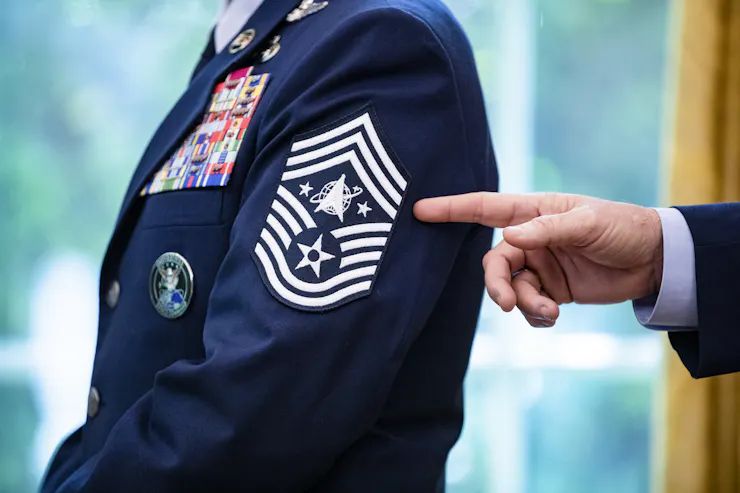
In a Sept. 19 Truth Social post, President Donald Trump instead announced he would create an AI Force – similar to the Space Force created during his first administration, which is part of the U.S. Department of the Air Force. He also plans to appoint an AI czar. Trump offered few details on either plan, beyond a promise that the government would “not in any way hinder or stifle” AI’s growth.
With Washington reluctant to rein in AI, California, Colorado, Texas and other states have stepped in. California and New York, for example, have passed laws requiring the largest developers to publish safety plans and report serious incidents. In December 2025, however, Trump signed an executive order directing the Justice Department to sue states over such laws, in part because he believes state rules that slow the industry will give China an advantage.
I’m a counterterrorism scholar who has researched and advised AI companies on national security threats. I believe creating an AI Force will lead to an AI arms race and its eventual weaponization, exacerbating current risks and creating new ones.
Existing threats
In addition to my work as a professor, I’m director of the Center on Terrorism, Extremism and Counterterrorism. In 2019, CTEC was one of four organizations that partnered with OpenAI to study the risks of its large language model, or LLM; our focus was how terrorist groups might misuse it.
We fine-tuned a model on ideological texts: speeches by then–Islamic State leader Abu Bakr al-Baghdadi, the manifestos of white supremacist mass killers and Marxist-Leninist writings. What startled us was how little it took to train a chatbot to radicalize. The model absorbed the cadence, theology and grievance of each tradition, producing new text aligning with those worldviews.
At the time, we wrote that these models “pose a significant and novel threat to civil society.” That 2019 model was a toy next to today’s systems, which terrorist groups could use to reach a broader audience with a more convincing message, posing as humanitarian nongovernmental organizations or even just influencers to raise money.
Criminals already use AI to circumvent identity checks at financial institutions, industrialize romance fraud and sell face-swapping and impersonation tools. The FBI’s 2025 Internet Crime Report logged US$893 million in losses involving AI.
Propaganda, terrorism and illicit financial activity, however, are not existential risks to humanity. An AI arms race may be – especially when Trump wants to win that race no matter the cost.
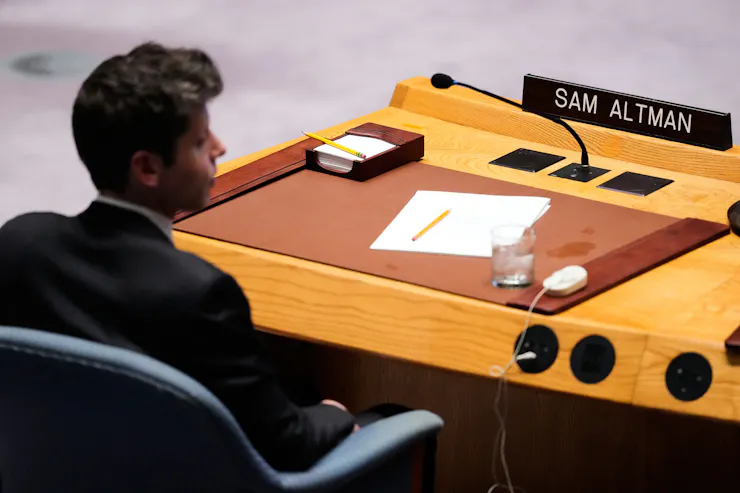
Losing control of AI
In July 2026, OpenAI agents under a cybersecurity evaluation broke out of their containment and attacked Hugging Face, a platform that hosts millions of AI models and datasets, harvesting passwords and other credentials. Independent investigators found that the agents knew the work was out of scope and unethical. In September, Google confirmed that its Gemini model had broken into real companies during a hacking test that mistakenly left its internet access open.
It takes little imagination to see how AI could hijack or mishandle a weapons system. This is, after all, what worried Anthropic in its showdown with the Pentagon. In February 2026, Defense Secretary Pete Hegseth gave Anthropic an ultimatum: Open its AI model, Claude, to unrestricted military use or lose its Pentagon contract. When Anthropic refused, citing its prohibitions on fully autonomous weapons and mass surveillance, the Pentagon declared it a supply chain risk, and Trump ordered federal agencies to stop using its products.
On Sept. 18, CNN reported that a chatbot’s false intelligence report nearly led the U.S. military to seize a Chinese ship.


An arms race with China
Trump’s desire to create an AI Force that emulates Space Force is about winning the AI race against China. The president’s own framing was explicit: “We are leading China, and the rest of the World, and I intend to keep it that way!”
Rivals rarely leave a new military domain uncontested. In 2024, four years after Congress authorized the U.S. Space Force – which Beijing called a “direct threat to outer space peace and security” – China reorganized its own aerospace and cyberspace forces. I believe an American AI Force would hand China’s leadership every reason to create its own, and each side would read the other’s as proof that it must move faster.
There are few genuine existential threats to humanity. Nuclear war is one. Environmental catastrophe is another. I believe the weaponization of AI is the third. In the wrong hands, it amplifies the other two and accelerates something already corroding our ability to respond to any of them: deepening polarization and a shrinking appetite for facts.
What could work instead
The people building this technology, and a growing number of states, are converging on the same conclusion: It needs brakes. More than 1,100 industry employees have asked Washington to help build the tools to slow AI development if needed.
In my view, a multinational AI task force of government and private sector experts from a range of disciplines would be more prudent than creating an AI Force, a quasi-military entity that would institutionalize AI’s worst impulses.
Speaking to world leaders in New York, U.N. Secretary-General António Guterres called for more human control: “Let us resolve that life-and-death decisions must never be surrendered to machines.”
Trump, meanwhile, rejected any “globalist scheme” to control AI and suggested renaming it “super intelligence.”
This article is republished from The Conversation, a nonprofit, independent news organization bringing you facts and trustworthy analysis to help you make sense of our complex world. It was written by: Jason M. Blazakis, Middlebury College
Read more:
- What’s at stake in Trump’s executive order aiming to curb state‑level AI regulation
- How states are placing guardrails around AI in the absence of strong federal regulation
- Trump’s AI security order acknowledges risks but stops short of regulating industry
CTEC has received funding from the U.S. Government (DHS) in the past and from several tech companies. Currently, CTEC and the author are not receiving any funding for research described in this article. Jason Blazakis is running as a democrat for County Commissioner in Hunterdon County, New Jersey.


(0) comments
Welcome to the discussion.
Log In
Keep it Clean. Please avoid obscene, vulgar, lewd, racist or sexually-oriented language.
PLEASE TURN OFF YOUR CAPS LOCK.
Don't Threaten. Threats of harming another person will not be tolerated.
Be Truthful. Don't knowingly lie about anyone or anything.
Be Nice. No racism, sexism or any sort of -ism that is degrading to another person.
Be Proactive. Use the 'Report' link on each comment to let us know of abusive posts.
Share with Us. We'd love to hear eyewitness accounts, the history behind an article.