



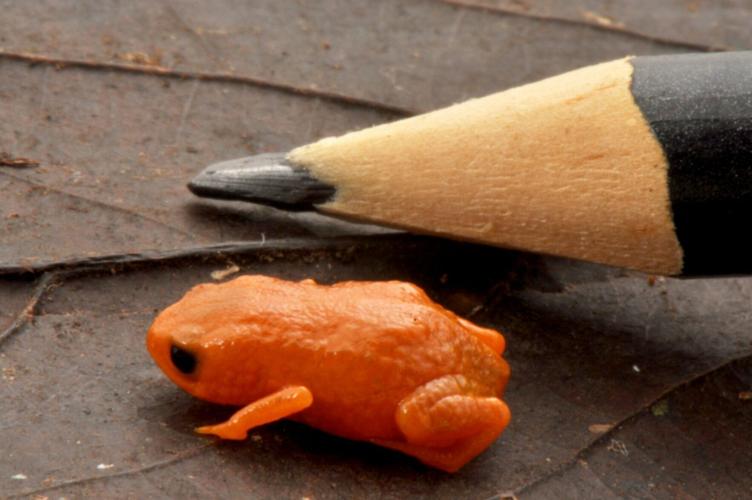
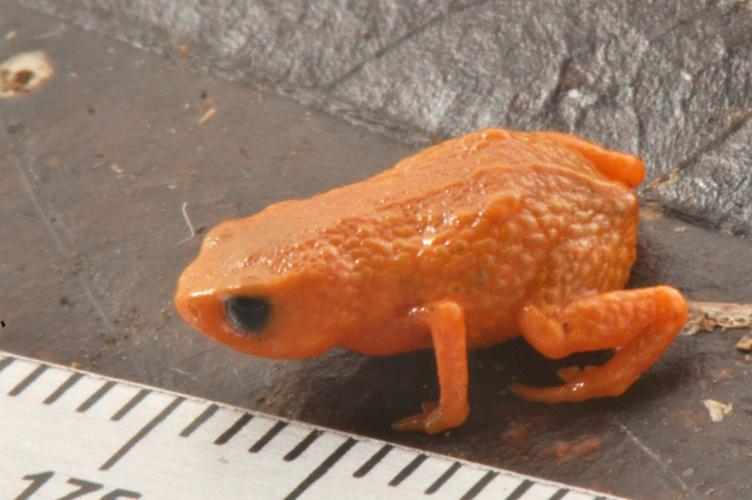
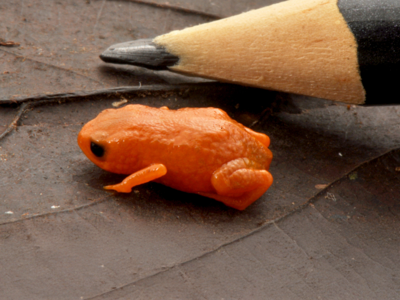

The bright orange amphibian was discovered in the mountain forests of Brazil. (Luiz F. Ribeiro via SWNS)
By Dean Murray
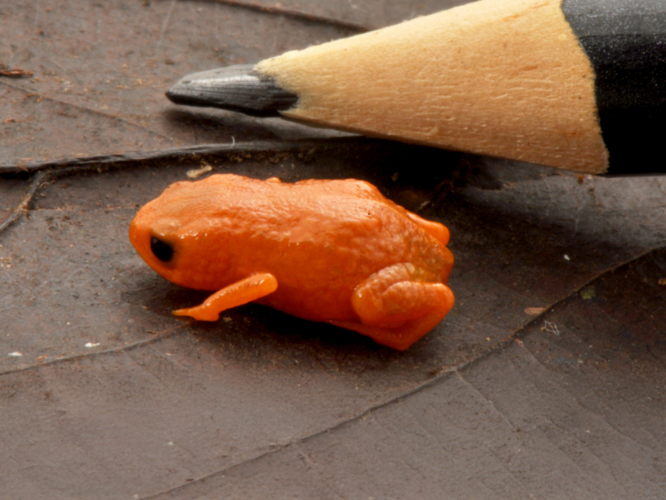
A new species of tiny frog no bigger than a pencil tip has been discovered.
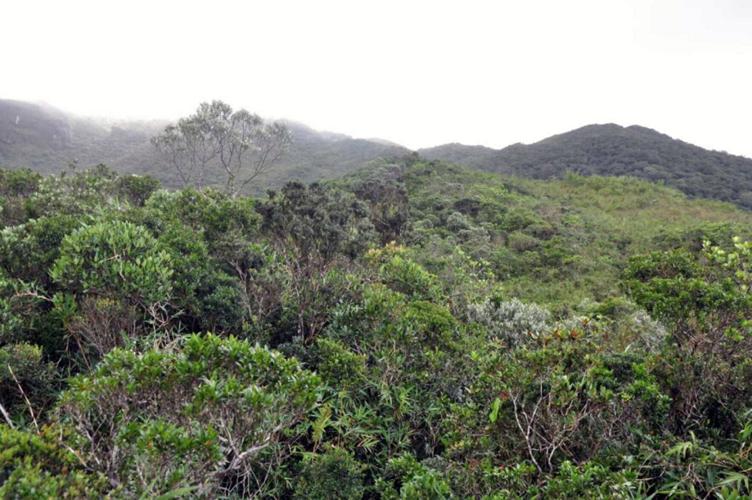
The bright orange amphibian was spotted in the mountain forests of Serra do Quiriri in southern Brazil, prompting fresh calls for stronger conservation of the region’s fragile habitats.
Belonging to a group of miniature “pumpkin toadlets” that live in damp leaf litter, the species is distinguished by its vivid coloring and genetic and anatomical traits that set it apart from closely related frogs found nearby.

The mountain forests of Serra do Quiriri in southern Brazil where the tiny orange frog was discovered. (Luiz F. Ribeiro via SWNS)


Researchers say that the minuscule species are between 8.9 and 13.4 millimeters in length.
The amphibian, named Brachycephalus lulai after Brazil’s president Luiz Inácio Lula da Silva, occupies a range estimated at just a few square kilometers of high-altitude Atlantic Forest.
Although researchers suggest the species may currently be classified as Least Concern, they warn that ongoing deforestation, grassland conversion and climate pressures could rapidly erode the cool, cloud-forest refuges on which it depends.

The species is distinguished by its vivid cooring and genetic and anatomical traits that set it apart from closely related frogs found nearby. (Luiz F. Ribeiro via SWNS)
Scientists behind the description of B. lulai, published this week in the open-access journal PLOS ONE, argue that Serra do Quiriri should receive dedicated wildlife refuge status to protect its cluster of highly localized amphibians and other endemic species.
They say the discovery underlines how many species remain undocumented in the Atlantic Forest, one of the world’s most threatened biodiversity hotspots, and how easily such specialized animals could disappear without targeted conservation measures.


(0) comments
Welcome to the discussion.
Log In
Keep it Clean. Please avoid obscene, vulgar, lewd, racist or sexually-oriented language.
PLEASE TURN OFF YOUR CAPS LOCK.
Don't Threaten. Threats of harming another person will not be tolerated.
Be Truthful. Don't knowingly lie about anyone or anything.
Be Nice. No racism, sexism or any sort of -ism that is degrading to another person.
Be Proactive. Use the 'Report' link on each comment to let us know of abusive posts.
Share with Us. We'd love to hear eyewitness accounts, the history behind an article.