



(NASHVILLE) NASA had a big – and little – problem. For a small satellite, the agency needed a tiny antenna, with very specific communication capabilities and very strict limits on size and weight. The agency gave the problem to a design team adept at simulating the way natural selection engineers solutions.
Design using natural selection is based on a simple but powerful idea with broad applications across the world: When variation in replicable traits exists, and some variants succeed more than do others, those variants will tend to spread to larger and larger percentages of future populations. For instance, early gazelles that happened to be faster were harder for predators to catch, so they were – generation after generation – more likely than slower gazelles to live, reproduce and pass on their capabilities for higher speed.

The NASA team adapted that idea to work inside a computer. They first created two very rough “parent” programs for designing the antenna. They then bred them together, creating digital “offspring” that shared varying halves of each parent, mimicking sexual recombination. To mimic mutation, some coding elements were randomly switched from 0s to 1s, and vice versa. The better-performing offspring programs were kept to become the parents of the next generation, while the rest were discarded.
Repeated over many cycles, this process quickly refined the programs that produced antenna designs until a design outperformed a human-designed version – with stronger signal, greater range and lower energy use – and took less time to develop. It was built, was launched into space in 2006, and performed admirably for the planned 90-day duration of the mission.
To me, as a professor of both law and biology, that success points to a broader truth: When people harness the logic of natural selection, they can often find efficient and effective ways to solve complex problems. As I explore in my book, “Force of Nature: Understanding Evolution’s Deepest Logic – And Putting It to Use,” natural selection is the most relentless efficiency-seeking force in the history of life.
Deepening understanding
Ignoring the power of natural selection can mean missing opportunities – or making things worse.
For example, consider fishing: As global demand for fish has grown, industrial fishing has become highly efficient at removing all the individuals above a certain size. Anything small enough to fit through the holes in a net survives; anything larger dies. At first that might seem sensible: Take the big fish and leave the small ones to grow.
But that strategy shifts the factors that work to change the population for generations to come.
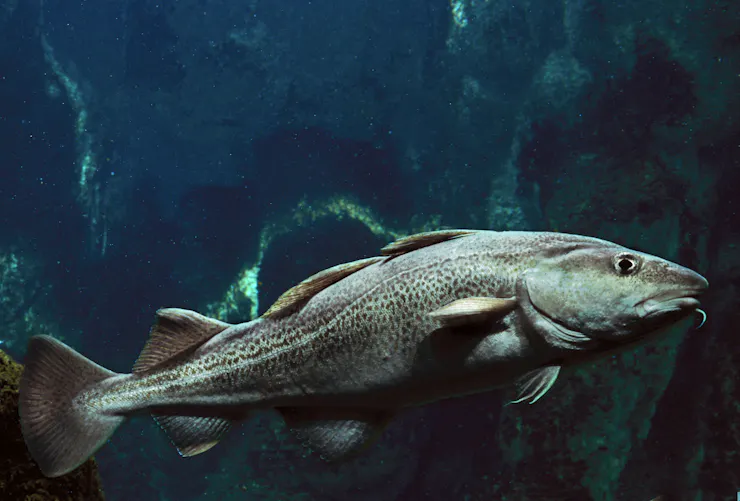
Fish that mature at smaller sizes are more likely than larger ones to escape the nets and reproduce. Over time, the trait of maturing smaller spreads. The result is a population composed primarily of smaller adults. For instance, a 2025 study found that heavily fished Baltic Cod became 48% shorter in length from 1996 to 2019.
The consequences compound. Smaller adult females produce far fewer eggs. In Atlantic Cod, for instance, a female that is one-half as large as a 66-pound female doesn’t lay 50% of the number of eggs; she lays about 4% as many – and her eggs are smaller, reducing the energy available to boost the chances of survival.
By ignoring how selection pressures work, the fishing industry has ended up breeding its future generations primarily from smaller fish with less reproductive ability. That has shrunk not only the average size of adults but also their overall numbers – and contributed to a global overfishing crisis.
Treating cancer
Across many fields, tuning into the evolutionary results of selection offers powerful – and often underused – insight.
Medical scientists increasingly understand the dynamic by which over-using antibiotics has helped to foster the rise of bacteria resistant to antibiotics. Killing off the bacteria that are easiest to kill reduces competition for the more resistant ones.
That insight has inspired a new approach to treating some cancers, called adaptive therapy.
Tumors tend to consist of cells that vary in their resistance to cancer treatments.
Traditional approaches assume that eradication of all cancer cells should be the goal. But efforts to eradicate often backfire and kill the patient too, because treatment-resistant cells survive, have newly lessened competition, and consequently thrive and expand.
By contrast, adaptive therapy aims to keep the most dangerous cancer cells in check by preserving some of the treatment-susceptible cancer cells to compete with them. When a tumor starts to grow, doctors increase the treatment dosages. When a tumor starts to shrink, doctors dose less.


For some patients, this approach can help manage cancer over significantly longer periods, even if – and in fact precisely because – this treatment does not seek to entirely eliminate the cancer.

A world of opportunities
Other engineers are finding even more sources of untapped inspiration in the solutions natural selection has already designed.
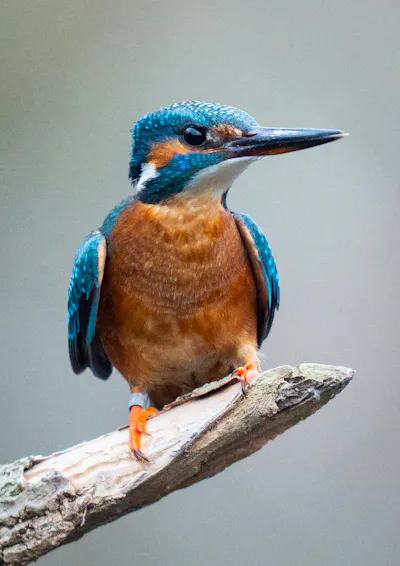
The nose of a Japanese bullet train, for example, was redesigned based on the beak of a kingfisher, a bird natural selection enabled to dive into water with minimal splash. The result was a quieter, faster and more energy-efficient train.
The remarkably strong and tough scales of the Brazilian pirarucu, a fish that evolved among the voracious piranha, inspired new approaches to improving body-armor.
A gecko’s ability to walk upside down on glass, with toe-filament nano-features harnessing the attractive power of subatomic particles, inspired a new class of adhesives.
Beyond physical attributes
Natural selection doesn’t only operate on anatomical or physical traits. It also works on behavioral traits.
In psychology, natural selection perspectives are showing how human brains – which have been shaped by natural selection to process information in ways that influence behaviors – incorporate some forms of information more easily than identical information conveyed in a different way. For instance, people are far better at calculating the conditional probabilities of various risks when those are expressed in natural frequencies, such as “3 out of 10,” than when expressed in the modern language of statistics, such as “0.3” or “30%.” That’s because for 99% of human history, information arrived into brains mainly as whole integers – as people, things and events.
In law, this perspective is illuminating such insights as the origins of the sense of fairness in primate relatives. There is evidence that natural selection has favored the propensity of a person to notice when they are being treated inequitably, to remember who is behind it and to respond negatively both in the present and in the future.
In economics, people tend to value an item they have just acquired far above the maximum price they would have paid to acquire it. There is evidence that this tendency, known as the endowment effect, was favored by natural selection when bargains were risky in a pre-modern world, a time when giving over one item, in trade for another, might risk getting nothing at all from an untrustworthy trading partner.
But that behavioral leaning makes less sense in the context of modern economic innovations like legal rights, banks and laws, and with mechanisms to enforce bargains, such as police and litigation. This is therefore part of a larger research stream that centers on the ways that some modern problems stem from a mismatch between our evolved brains and our modern human environments, which have changed dramatically in an eye-blink of evolutionary time.
What all this means is that the logic of natural selection has enormous practical value: It can help us identify problems, inspire new solutions, and recognize when our own actions are silently undermining our goals.
This article is republished from The Conversation, a nonprofit, independent news organization bringing you facts and trustworthy analysis to help you make sense of our complex world. It was written by: Owen D. Jones, Vanderbilt University
Read more:
- If evolution is real, then why isn’t it happening now? An anthropologist explains that humans actually are still evolving
- Amid a tropical paradise known as ‘Lizard Island,’ researchers are cracking open evolution’s black box – scientist at work
- At its core, life is all about play − just look at the animal kingdom
Owen D. Jones has received funding from The MacArthur Foundation, the National Science Foundation, and the Glenn M. Weaver Foundation.


(0) comments
Welcome to the discussion.
Log In
Keep it Clean. Please avoid obscene, vulgar, lewd, racist or sexually-oriented language.
PLEASE TURN OFF YOUR CAPS LOCK.
Don't Threaten. Threats of harming another person will not be tolerated.
Be Truthful. Don't knowingly lie about anyone or anything.
Be Nice. No racism, sexism or any sort of -ism that is degrading to another person.
Be Proactive. Use the 'Report' link on each comment to let us know of abusive posts.
Share with Us. We'd love to hear eyewitness accounts, the history behind an article.