


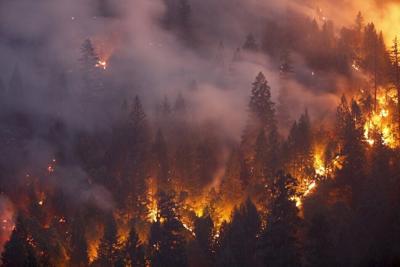
(MERCED, CALIF.) When heat waves hit the Western United States, the risk of wildfires quickly rises. The prolonged heat dries out vegetation, but that’s only part of the cause – heat waves also play other roles in spreading wildfires.
In a new study, our team of fire and climate scientists looked at two decades of wildfire activity in the West, from 2001 to 2024, and for the first time quantified the effect of heat waves on those fires.
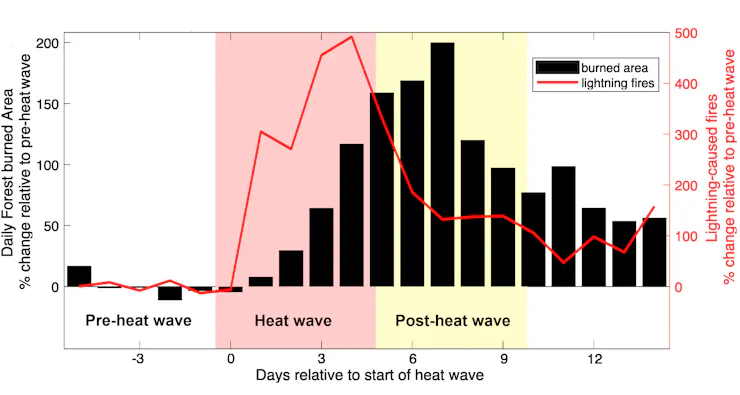
We expected a big impact, but the numbers still surprised us: While heat waves, which we defined as three or more consecutive days with temperatures in the top tenth of hottest days, accounted for only 12% to 15% of warm-season days, we found that 42% of all the area burned by fires had occurred during or right after a heat wave.
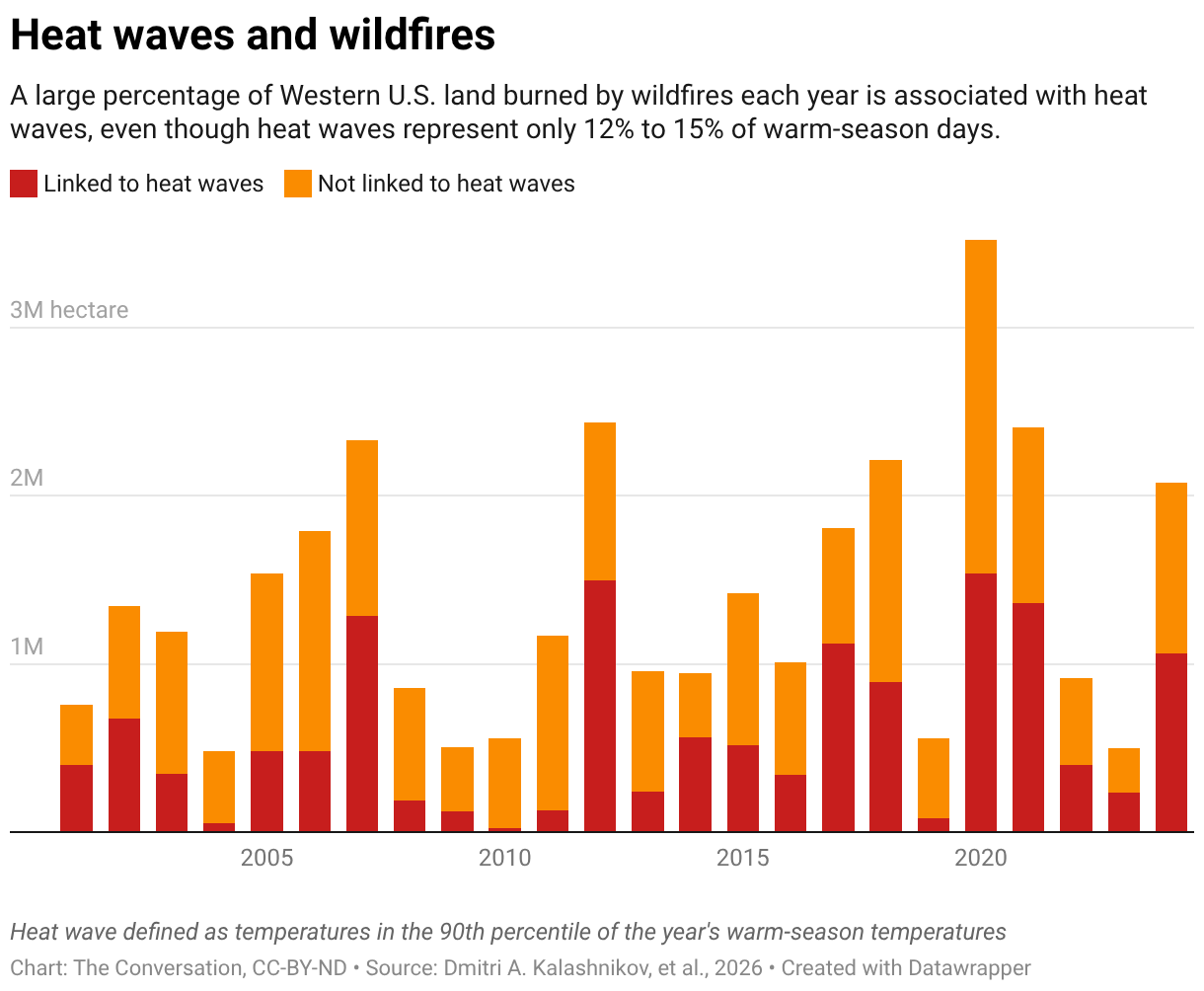
Moreover, the amount of the area that burned each day was more than 50% larger during heat waves than during the cooler days right before the heat wave began in many parts of the West. In some regions, the difference was much larger – up to 300%.
How heat waves worsen fire risk
Heat waves create conditions that favor wildfire ignition and spread in a few ways.
First, hot temperatures increase the atmosphere’s demand for moisture, meaning the rate at which the air can evaporate moisture from the land and vegetation. As a result, these fuels rapidly dry out, making them easier to ignite.
Heat waves also limit nighttime humidity. The drier air allows fires to remain active for longer periods and burn through more hours of the night.
Making matters worse, heat waves can create conditions favorable for lightning because of the hot, unstable atmosphere. We found increases in cloud-to-ground lightning, including “dry” lightning, during and after heat waves across many parts of the West.
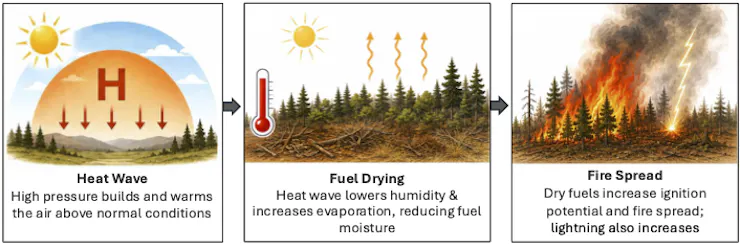
Dry lightning can occur when the precipitation in a storm system evaporates before it reaches the ground. This type of lightning is particularly dangerous because it can ignite vegetation without producing enough rainfall to douse the flames.
These factors combine to heighten the risk of wildfires. That risk often persists even after the heat wave ends, as dry vegetation and dead material on the ground tend to remain unusually dry for days after temperatures return closer to normal – allowing fires to continue growing.
Trends in heat and fires
The connection between heat waves and wildfire activity is becoming increasingly important because heat waves are becoming more common as global temperatures rise, fueled by greenhouse gas emissions.
Since 2001, the number of heat wave days across Western U.S. forests has nearly doubled. During the same period, the amount of forest area burned increased by 2.5 times. Strikingly, without the increase in heat wave days since 2001, we found that the cumulative are of burned forest would have been 37% smaller.


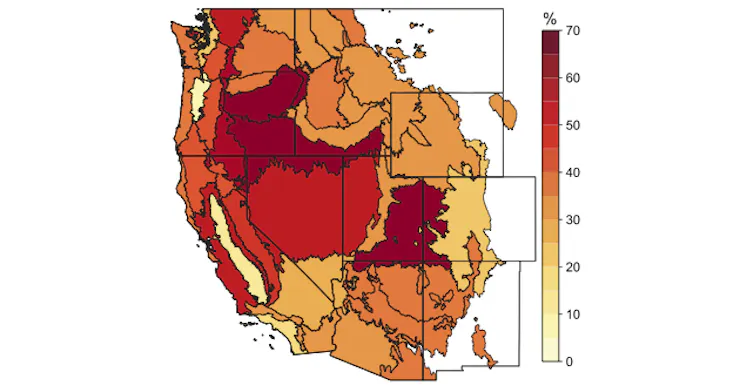
However, not all ecosystems respond the same way.
While we found a strong long-term relationship between increasing heat waves and increasing burned area in forests, this was not the case in grasslands and shrublands, where the total burned area has not increased. In grasslands and shrublands, the amount of land that burns in a given year is influenced more strongly by the amount of available vegetation than by heat alone.
A future with even drier heat waves
Climate change is causing Western U.S. summers to trend hotter and drier. Consequently, relative humidity during heat waves has also declined in recent decades, especially in forested regions of California, Oregon and Washington.
These drier heat waves appear particularly effective at increasing wildfire activity. Alongside long-standing fire deficits, which resulted from the practice of quickly extinguishing fires rather than allowing low-level fires to burn away forest debris, these factors have escalated the potential for large fires in the West.
Wildfire forecasts already account for factors such as wind, humidity and fuel dryness, but they typically have not included heat waves. Our research suggests that heat waves deserve greater attention, as they are not just periods of uncomfortable and sometimes deadly weather, but are also increasingly important drivers of wildfire risk.
This article is republished from The Conversation, a nonprofit, independent news organization bringing you facts and trustworthy analysis to help you make sense of our complex world. It was written by: Dmitri Kalashnikov, University of California, Merced; Cong Yin, University of California, Merced; Madhulika Gurazada, University of California, Merced, and Mukesh Kumar, Wildfires are reversing America’s progress on ozone pollution, the main ingredient in smog
Dmitri Kalashnikov receives funding from the National Science Foundation.
Madhulika Gurazada receives funding through the Farms Food Future Innovation Initiative, supported by the U.S. Department of Commerce's Economic Development Administration Build Back Better Regional Challenge.
Cong Yin and Mukesh Kumar do not work for, consult, own shares in or receive funding from any company or organization that would benefit from this article, and have disclosed no relevant affiliations beyond their academic appointment.


(0) comments
Welcome to the discussion.
Log In
Keep it Clean. Please avoid obscene, vulgar, lewd, racist or sexually-oriented language.
PLEASE TURN OFF YOUR CAPS LOCK.
Don't Threaten. Threats of harming another person will not be tolerated.
Be Truthful. Don't knowingly lie about anyone or anything.
Be Nice. No racism, sexism or any sort of -ism that is degrading to another person.
Be Proactive. Use the 'Report' link on each comment to let us know of abusive posts.
Share with Us. We'd love to hear eyewitness accounts, the history behind an article.