


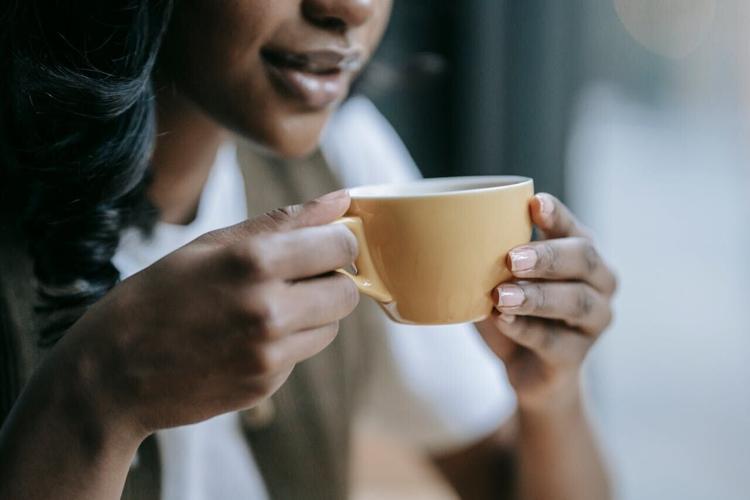




(Photo by Mike Jones via Pexels)
By Stephen Beech
More consistent tasting coffee is possible thanks to state of the art technology.
Scientists used advanced electrochemistry to measure the flavor profile of coffee for the first time.
They say the breakthrough will provide a more consistent brew — and is also the first step for coffee lovers in "understanding at the molecular level" why they love their favorite cuppa.
Researchers at the University of Oregon said it took a surprisingly large amount of work to keep coffee's flavor the same cup to cup.
But they have now discovered a way to measure the flavor profile of a cup of coffee — by sending an electrical current through it.
The team say their research, published in the journal Nature Communications, could help cafes improve their quality control with a simple measurement.
It also allows scientists to quantify and separate the factors that influence how something tastes for the first time.

(Photo by RDNE Stock project via Pexels)
Study leader Christopher Hendon said: "It's an objective way to make a statement about what people like in a cup of coffee.
"The reason you have an enjoyable cup of coffee is almost certainly that you have selected a coffee of a particular roast color and extracted it to a desired strength.
"Until now we haven't been able to separate those variables.
"Now we can diagnose what gives rise to that delicious cup."
Hendon's team repurposed a lab tool that's usually used to test batteries and fuel cells.
They found it could also identify a chemical fingerprint of coffee, a way to quantify a flavor profile that a roaster and barista could then aim to replicate.
Hendon explained that dozens of variables influence a good cup of coffee — including water temperature, grind size, the amount of beans and the beans themselves.
And small changes in protocol can lead to big changes in flavor.
Cafes that cater to coffee lovers invest a lot of effort in consistency.

(Photo by JÉSHOOTS via Pexels)


They constantly adjust parameters so a regular customer will find that a shot of their favorite espresso tastes the same today as it did yesterday.
The industry standard to determine flavor profile is to measure the refractive index of the coffee.
Similar approaches are used in winemaking and other industries.
The measurement of how light bends as it moves through the liquid reflects the strength of the coffee.
But strength alone doesn't capture the cup's flavor.
Most of the flavor people detect in a cup of coffee comes from a combination of strength and darkness, which together make up what Hendon calls a coffee's "roastiness."
He said people's preferences are very individual so it isn't about making a better cup of coffee, but rather a more consistent one that reflects someone's individual tastes.
The tool that Hendon's team adopted, called a potentiostat, is often used in the field of electrochemistry.
It controls voltage and current and tests the performance of batteries and fuel cells.
The device is highly sensitive to the composition of the material that it measures.

(Photo by 100K MAKHASETTE via Pexels)
By repurposing the tool to examine the electrical response of coffee, in essence looking at how electricity interacts with the drink, the research team explained that it offers a more nuanced measurement of coffee's flavor profile.
Hendon and his team identified "distinct" signatures from different kinds of beans prepared in different ways.
That provides a target for a barista to replicate, one that reflects the flavor of the coffee more than strength alone.
As a real-world test of their technique, they sourced four different samples from a roaster in England.
The beans seemed identical to the naked eye, and the researchers didn't know which was which.
But their electrochemical approach accurately identified the sample in the group that had failed the roaster's quality control.
Hendon said: "In the short term, we hope this is something that will make a difference in coffee shops and in the coffee industry."
And for coffee lovers at home, he added: "This is the first step towards understanding why you enjoy coffee, at a molecular level of precision."


(0) comments
Welcome to the discussion.
Log In
Keep it Clean. Please avoid obscene, vulgar, lewd, racist or sexually-oriented language.
PLEASE TURN OFF YOUR CAPS LOCK.
Don't Threaten. Threats of harming another person will not be tolerated.
Be Truthful. Don't knowingly lie about anyone or anything.
Be Nice. No racism, sexism or any sort of -ism that is degrading to another person.
Be Proactive. Use the 'Report' link on each comment to let us know of abusive posts.
Share with Us. We'd love to hear eyewitness accounts, the history behind an article.