






Florentine Codex via Wikimedia Commons
By Stephen Beech
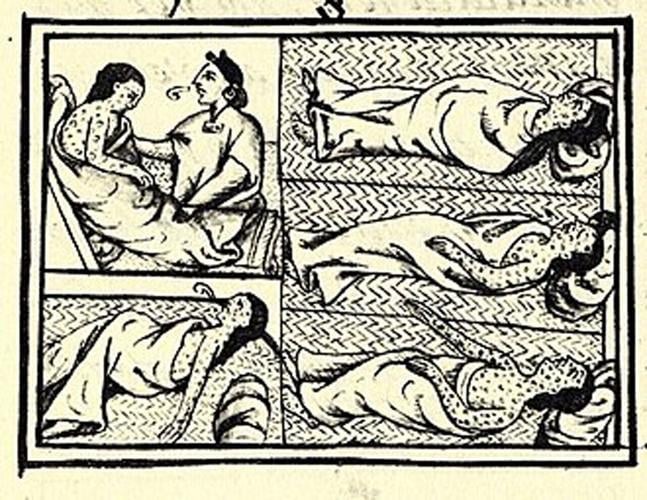
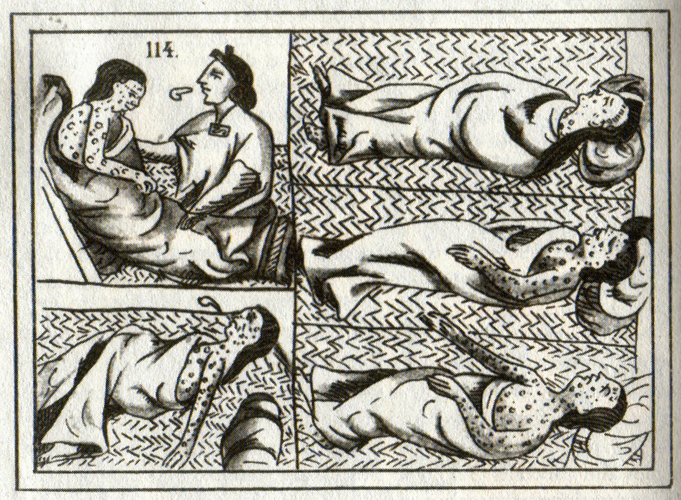
Ancient smallpox genomes have revealed how European colonization carried the deadly disease to the Americas.
Researchers from Trinity College Dublin recovered and analyzed the first ancient smallpox virus genomes ever identified in the Americas.
Their findings, published in the journal Science, provide the strongest direct evidence to date that the disease was introduced through European colonization.
Smallpox, caused by variola virus, played a major role in the catastrophic population decline experienced by Indigenous peoples after European arrival.
Such was the extent of those declines, that many claim smallpox and other introduced diseases entirely reshaped societies, killing hundreds of millions of people.

Bruno Romero González and Dr. Shigeki Nakagome in Trinity College Dublin. (Thomas Deane via SWNS)
But, until now, there had been no direct genetic evidence linking colonial-era outbreaks in the Americas to strains circulating in the Old World.
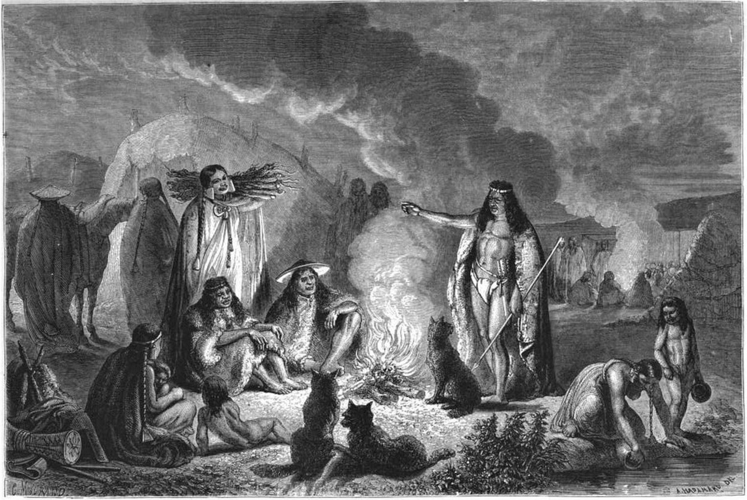
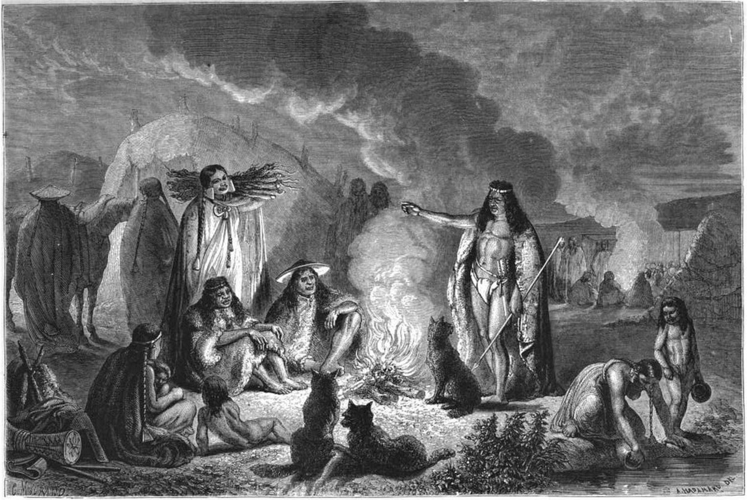
The Trinity College team analyzed ancient viral DNA recovered from two individuals from a local community buried in present-day Chile between the late 15th and early 17th centuries.
The researchers found that the viruses belonged to a now-extinct lineage of variola virus that sits evolutionarily between medieval European strains and the strains that circulated in later centuries.
Shigeki Nakagome, from Trinity's School of Medicine, said: "This discovery provides the first molecular confirmation that smallpox was carried to the Americas during the colonial period.
"But beyond tracing the disease's arrival, our study also sheds new light on how smallpox evolved."


Felipe Guaman Poma de Ayala via Wikimedia Commons
Lara Cassidy, from Trinity's School of Genetics and Microbiology, said: "We found that the virus underwent a long period of genetic change up to the 16th Century, but that its evolution slowed markedly during the height of colonial expansion and major smallpox epidemics in the 17th and 18th Centuries.
"This suggests that the virus may have reached an evolutionary optimum, allowing it to spread successfully with little further adaptation — possibly aided by the lack of immunity newly exposed populations had."
The Trinity team also found evidence that the period of "evolutionary stability" may have ended in the 19th century, when vaccination became increasingly widespread.
As immunity levels rose, the pace of viral evolution appears to have increased again.
Bruno Romero González, a Ph.D. student in Trinity's School of Medicine, said: "Taken together, the findings show how major historical events including colonization, population change and vaccination likely shaped the evolution of one of humanity's most devastating infectious diseases, while also demonstrating the power of ancient DNA to address longstanding historical questions."

Dr. Shigeki Nakagome and Dr. Lara Cassidy in Trinity College Dublin's Front Square. (Trinity College Dublin via SWNS)
The study provides the first direct genetic evidence that Old World smallpox strains were present in Indigenous communities in the Americas during the colonial period, offering molecular support for historical accounts of smallpox introduction through European colonization.
The research team says their findings highlight how population movement, immunity and public health measures can influence pathogen evolution.
Related questions remain highly relevant for modern diseases such as influenza, COVID-19 and mpox.
Edward Jenner developed a smallpox vaccine in 1796 and widespread vaccination campaigns dramatically reduced transmission during the 19th and 20th centuries, although the disease still killed an estimated 300 million to 500 million people worldwide during the 20th century.
A coordinated international eradication campaign was then led by the World Health Organization (WHO), which ultimately succeeded in eliminating the disease
The last naturally occurring smallpox case was recorded in 1977 in Somalia, and in 1980 the WHO officially declared smallpox eradicated — making it the first and, so far, only human infectious disease to have been successfully eradicated worldwide.


(0) comments
Welcome to the discussion.
Log In
Keep it Clean. Please avoid obscene, vulgar, lewd, racist or sexually-oriented language.
PLEASE TURN OFF YOUR CAPS LOCK.
Don't Threaten. Threats of harming another person will not be tolerated.
Be Truthful. Don't knowingly lie about anyone or anything.
Be Nice. No racism, sexism or any sort of -ism that is degrading to another person.
Be Proactive. Use the 'Report' link on each comment to let us know of abusive posts.
Share with Us. We'd love to hear eyewitness accounts, the history behind an article.