


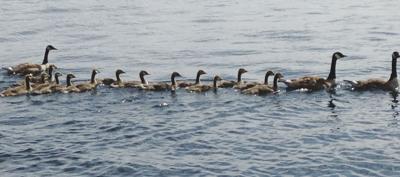
Let’s face it — ducks are cute. Especially the small, fluffy, yellow babies that waddle behind their mothers waiting for their next directions. We know it’s tempting to draw them closer to get a better look, maybe with some stale bread or the leftovers of your ice cream cone, but before you do, ask yourself: Is this really the best thing for the ducks? What other impacts could this cause? According to the New Hampshire Department of Environmental Services, one of the biggest causes of waterfowl overpopulation is due to human influence.
Bread, crackers, or popcorn have no nutritional value for ducks and geese. These foods fill their stomachs and leave little to no room for their natural foods, which are essential to remaining healthy and staying alive. If you feed them bread, they will grow weaker and become more susceptible to diseases, which can eventually lead to their death. A nutrient-deficient diet can also cause wing deformities and weaken a duck’s ability to fly.
Where the ducks eat, they defecate. If you are constantly attracting waterfowl to your property, they will be leaving feces on your land and off your shore. There is a parasite living in many ducks and geese whose larvae are transmitted into the water when the waterfowl defecate. These parasites can infect people swimming nearby and result in a bothersome condition called “Swimmer’s Itch” (cercarial dermatitis).
Symptoms include burning or itching of the skin, small red bumps, and sometimes blisters. Duck feces also naturally contain large amounts of E. coli (Escherichia coli), which, if ingested, can result in gastrointestinal problems. The more you feed the ducks, the higher the potential to expose yourself and others to swimmer’s itch and E. coli.
For your health, the health of the lake, and the health of those adorable baby ducks, please don’t feed the fowl. For more lake-friendly tips and information, contact the Lake Winnipesaukee Association at 603-581-6632 or mail@winnipesaukee.org.


(0) comments
Welcome to the discussion.
Log In
Keep it Clean. Please avoid obscene, vulgar, lewd, racist or sexually-oriented language.
PLEASE TURN OFF YOUR CAPS LOCK.
Don't Threaten. Threats of harming another person will not be tolerated.
Be Truthful. Don't knowingly lie about anyone or anything.
Be Nice. No racism, sexism or any sort of -ism that is degrading to another person.
Be Proactive. Use the 'Report' link on each comment to let us know of abusive posts.
Share with Us. We'd love to hear eyewitness accounts, the history behind an article.