


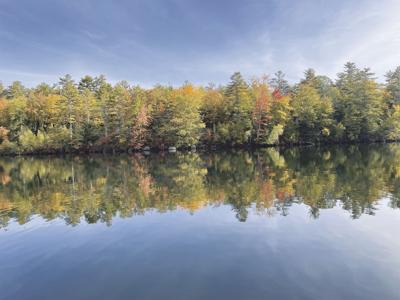
As September rolls in, we say goodbye to another summer in the Lakes Region. Back-to-school routines, sweater weather, and the start of football season are sure signs that fall is upon us. But for me, it's the brief glimpses of reds and oranges that peek through the trees on my morning commute that remind me, soon enough, we will trade in our bathing suits and beach towels for hiking boots and hot apple cider.
But why, exactly, is the northeast such a popular spot for leaf peeping? Why are the colors so vibrant? The gorgeous colors that we love are due to a natural process that occurs when the days get shorter, which triggers a reduction in chlorophyll, the green-producing pigment. This reveals the yellow pigments that have been there all along, and also produces anthocyanin pigments in certain trees, like maples and oaks, which are responsible for the brilliant reds and purples.
When leaves fall to the ground, they decompose and release nutrients and organic matter into the soil, giving back to the trees and plants they were once a part of. While this is beneficial to the soil and land, decomposing leaves can pose a threat to our waterbodies. Decaying leaves that end up in lakes release nutrients, including phosphorous, that fuel the growth of algae, and reduce oxygen availability for aquatic species. Avoid raking or blowing leaves directly into the water to help minimize excessive algal and plant growth. According to a study done by the University of Minnesota and cited by NH Lakes, raking the leaves off your driveway and onto your lawn before it rains can reduce phosphorous runoff by up to 60%.
Leaving fallen leaves has several benefits. They provide habitat, food, and nesting material for wildlife. Many insects, including butterflies and moths, overwinter in leaf litter. Pollinators like bumblebees also rely on leaves for protection. Not only is it beneficial for wildlife, but leaving leaves on your lawn also offers several advantages. Leaf litter acts as a natural mulch, enriching the soil with organic matter and protecting it from harsh winter temperatures. As a result, lawns covered in leaves often green up earlier in the spring. Additionally, certain compounds found in maple leaves can help suppress the growth of weeds like dandelions and crabgrass.
If leaves do get into the lake, as is natural with all the beautiful and healthy trees standing on the shorelines of Lake Winnipesaukee, it is best to leave them there. Raking the water and removing that leaf litter can disturb benthic organisms and impact water clarity. This fall, consider leaving the leaves where they fall to help protect our waterbodies.
•••
Bree Rossiter is the conservation program manager for the Lake Winnipesaukee Association. She manages the water quality monitoring program, cyanobacteria monitoring initiatives, the Winni Blue/LakeSmart program, and assists with watershed management planning efforts. Bree can be reached at brossiter@winnipesaukee.org. The Lake Winnipesaukee Association is a nonprofit dedicated to protecting the water quality and natural resources of the lake and its watershed. To learn more, visit winnipesaukee.org.


(0) comments
Welcome to the discussion.
Log In
Keep it Clean. Please avoid obscene, vulgar, lewd, racist or sexually-oriented language.
PLEASE TURN OFF YOUR CAPS LOCK.
Don't Threaten. Threats of harming another person will not be tolerated.
Be Truthful. Don't knowingly lie about anyone or anything.
Be Nice. No racism, sexism or any sort of -ism that is degrading to another person.
Be Proactive. Use the 'Report' link on each comment to let us know of abusive posts.
Share with Us. We'd love to hear eyewitness accounts, the history behind an article.