


MEREDITH — Timothy L’Ecuyer, artistic director at the Winnipesaukee Playhouse, uses a simple phrase to explain his approach to theater for young audiences.
“Children deserve truth,” L’Ecuyer said. It’s a statement he borrows from one of his mentors, and he said it’s part of the thinking behind the production of “Corduroy,” which is being staged Oct. 20-29.
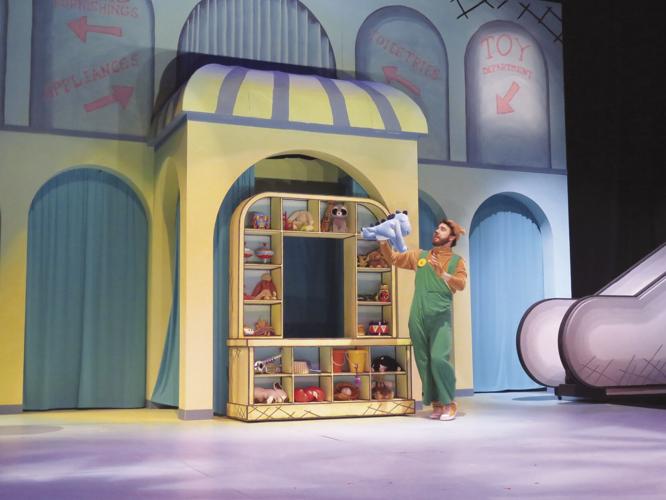
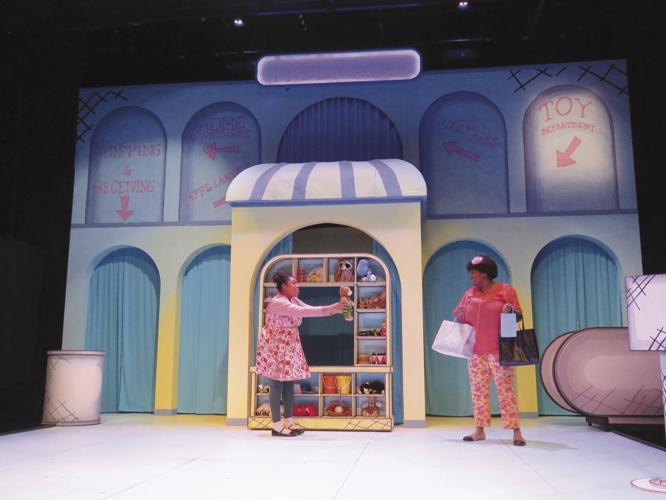
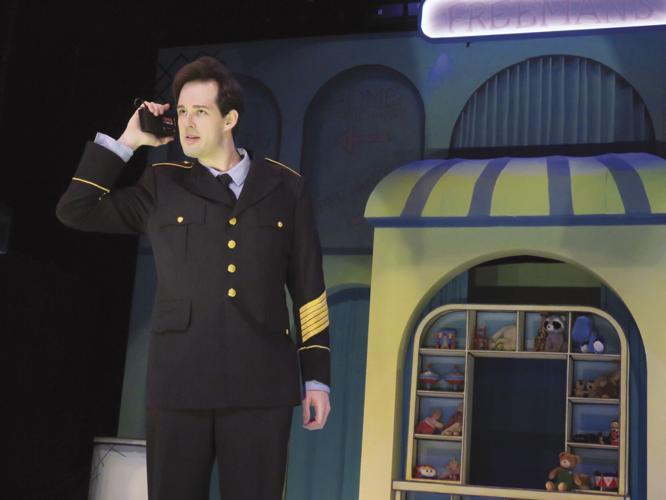
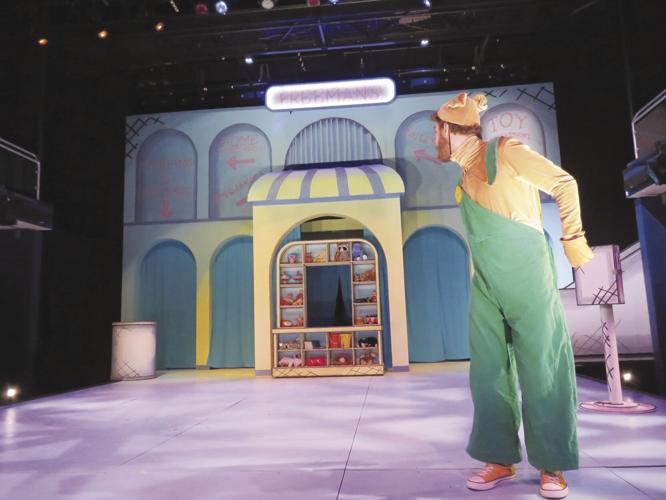
“Corduroy,” based on the landmark 1968 children’s book by Don Freeman, represents a first for the Winnipesaukee Playhouse and something highly unusual for theater in general: a professional cast performing a show for which children are the intended audience.
L’Ecuyer provides a disclaimer that in the playhouse’s early days, there was a professional production about recycling which toured schools around the region, but “Corduroy” is distinct in that its run will take place exclusively at the playhouse. Leadership hopes to make such productions a tradition.
In nearly all other local examples, theater produced for young audiences is either performed by a child cast or adult amateurs. L’Ecuyer said there’s value in those productions — audience members can see other young people acting onstage, and those performers gain confidence and skill — but there are other values that can only be achieved though a professional cast and crew.
“The quality of the work is of a different standard than doing a children’s production with children in it,” said Bryan Knowlton, the show's director. Knowlton, who lives in New York, grew up in Portsmouth, and said he was a young student when he saw his first professional play “West Side Story,” performed by the Seacoast Repertory Theatre. He was inspired by that experience.
“I approach every piece that I ever work on with the same amount of insight into the piece and care for the material,” Knowlton said. “Corduroy” is being given the same level of attention as would a play for adults. In this case, they considered the intended audience as not just children, but children who are still affected by the traumas and disruptions of the COVID pandemic. Colored lighting is used to help audience members understand the mood of each scene, and the team has been careful to limit volume, as some children can be upset by loud noises, and therefore unable to follow the storyline.
“When you create the environment where a child has access to [the material], they don’t feel intimidated by it. They can see it and feel it and touch it, it allows for much more to happen,” Knowlton said.
Cory Lawson, director of education and community engagement for the Winnipesaukee Playhouse, said the intention is for professional shows for young audiences to become a standard part of the yearly schedule, with the hope that local schools will see value in working that year’s show and themes into lesson planning.
“The schools can be studying these really valuable moral lessons, but also talk about vocabulary, story structure,” Lawson said. “It’s a dual approach.”
One thing that L’Ecuyer made evident is that there would never be a “Jr.” production at the playhouse. He finds the junior versions of Broadway shows — pint-sized versions of full musicals, rewritten for young actors and audiences — to be patronizing and even dangerous to the industry.
“The things that [children] are feeling now are worthy of platforming in the same way that adult feelings are worthy,” L’Ecuyer said. Children don’t need to use practice versions of art, and wait until they’re adults to perform meaningful plays. Humans are artists no matter their age, he said.
Lawson agreed: “We don’t need to water down the experience, they will raise themselves up to the material.”
“Corduroy” appeals to the childlike, with its silliness and physical humor. But, L’Ecuyer said, it also speaks to the depth of emotion that young audience members experience. The story, which was groundbreaking in its time for featuring main characters that are female and African-American, gives children a story that deals with friendship and grace, and the need to be forgiven even when someone doesn’t feel like they deserve it.
“There’s a great amount of truth to it,” L’Ecuyer said.
And, as Knowlton said, in a time when experiences are increasingly digital and routed through divisive algorithms, live theater might be the best venue for certain truths.
“Come support live theater, it is so crucial right now,” Knowlton said. “When you go to see live theater, you are participating in a communicative environment. It is so important.”


(0) comments
Welcome to the discussion.
Log In
Keep it Clean. Please avoid obscene, vulgar, lewd, racist or sexually-oriented language.
PLEASE TURN OFF YOUR CAPS LOCK.
Don't Threaten. Threats of harming another person will not be tolerated.
Be Truthful. Don't knowingly lie about anyone or anything.
Be Nice. No racism, sexism or any sort of -ism that is degrading to another person.
Be Proactive. Use the 'Report' link on each comment to let us know of abusive posts.
Share with Us. We'd love to hear eyewitness accounts, the history behind an article.