


FRANKLIN — Homeowners who live on Webster Lake are fed up with the city's handling of short-term rentals in their neighborhood, and are taking legal action.
The residents will petition the court for a writ of mandamus against the city in the new year. Such a writ is an order to compel a government official or entity to perform a legal duty or refrain from an illegal act.
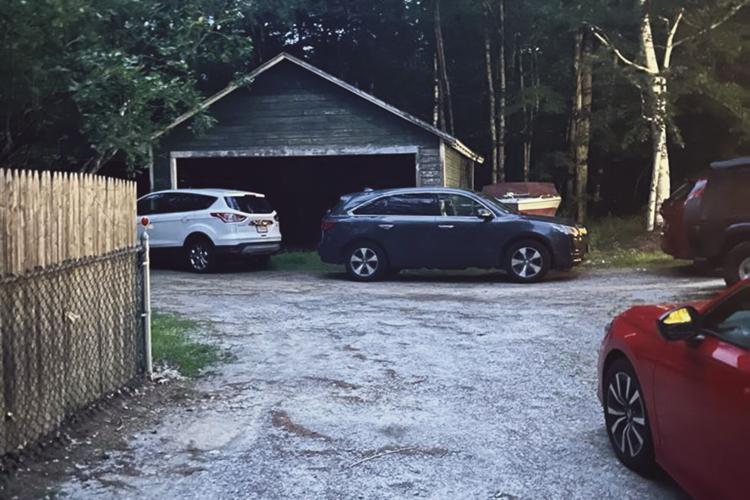
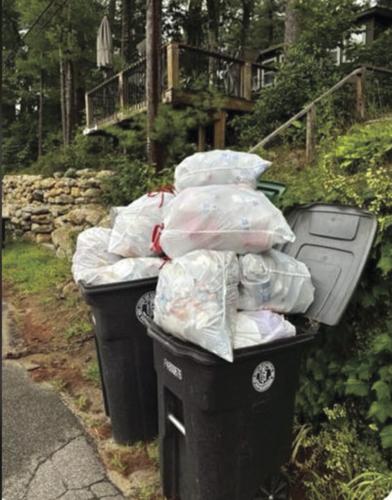
Lake Protection District residents have complained to the city about noise complaints, inappropriate behavior, irresponsible and excessive disposal of trash, and restrictive parking for over a year, with seemingly no progress. New resident Bruce Marshall, a former city council candidate, has expressed his frustrations with these short-term rentals, particularly Airbnbs. He lives across the street from one such rental.
“Some weekends, there's 18 college students in there, parking, throwing garbage everywhere, puking all over the place, throwing food all over,” he said. “It's like living next door to a frat house.”
Janet Flagg has been leading the charge with a group of about 10 neighbors, going to city leaders, and sending a request to the city manager she believes has been ignored. She emphasized she and many other neighbors are not against rentals, but want proper enforcement.
“We're not against short-term rentals. We're just asking that they have regulations,” she said. “We're asking that they're required to take care of their trash. If there's noise disturbances, there's some sort of a repercussion.”
Flagg also mentioned her neighbors have made multiple calls to the police, which she says have been brushed off. City Manager Judie Milner said despite what they say, not enough calls have been placed.
“I can't enforce our disorderly property ordinance unless they call the police. So, they need to do that,” she said.
Marshall and Flagg both expressed disbelief to statements like this from both Milner and former Police Chief David Goldstein. Marshall thinks they are continuing to be brushed off.
“They've been getting them, but apparently the police didn't want to respond,” he said. “Suddenly their logs doesn't show the calls.”
Marshall, who is a lawyer, is taking matters into his own hands, aiming to prove these Airbnbs are violating city ordinance. In Section 305, it outlines requirements in the Lake Protection District for residential and commercial properties. Many Airbnbs are listed as single-family dwellings, which is a permitted use, but the ordinance also includes special exceptions for family apartments and seasonal conversions. One such commercial use the homes could fall under is "home occupations," which requires a special use permit.
Marshall said the rental near his home acts less like a residence and more like motel, as it appears to him it is used commercially. He also suggested the property request a variance so the residents can put reasonable restrictions on the property.
Planning and Zoning Director David Chunn has only been on the job for mere months, yet is already aware of this issue. He said the property in question is a privately-owned residence listed on Airbnb. He said this leads to a gray area in terms of enforcement.
“The business model is very similar to what Uber used to be, which is that it's not technically a cab company, but it's also not technically an independent contractor renting out their vehicle,” Chunn said. “It's the same business model, just instead of cars, it’s houses.”
Chunn recognized this issue regarding short-term rentals spans across many municipalities in the Granite State, especially in tourist areas like the Lakes Region.
“A lot of out-of-state investors will buy properties in tourist areas, like Lake Webster for example, and then buy them as investments to make money using Airbnb, without having to go through any of the regulatory or permitting process,” he said.
He also emphasized many municipalities in New Hampshire have already tried fighting short-term rentals in court, often losing at the state level.
In 2023, the state Supreme Court sided with a short-term rental property owner over the town of Conway, allowing them to operate in residential districts. The Supreme Court also sided with an owner against Sunapee, citing the Conway case. SB 249 passed through the state Senate, designed to prevent municipalities from adopting ordinances which ban residential buildings from being used as short-term rentals, while allowing them to enact ordinances in multifamily and non-residential structures. An interim study was requested by the House of Representatives, and the bill has not progressed since its introduction in 2023. As the court has sided with these short-term rentals more often than not, Chunn said it gives the city pause to pursue any action that could create more problems.
“A lot of the reason there's been a delay on the city side is that cities and municipalities around the state have been waiting for the state Legislature to address this issue. And it doesn't appear that they're going to take any action on it,” Chunn said. “Municipalities’ efforts to regulate those around the state have continually been challenged in court and has gone to the state Supreme Court, where the state Supreme Court has, basically, in almost every instance, ruled into favor of the short-term rental.”
The lack of response rubbed Marshall the wrong way, prompting to filing the petition for a writ of mandamus.
“The city manager, together with the enforcement people, have ignored us for going on two years now, and so I'll be filing the petition in court to force the city to enforce their ordinance,” he said.
The city Legislative Committee is scheduled to address the issue during their meeting at 6 p.m., on Thursday, Dec. 19, upstairs at Franklin Public Library.
Marshall believes the solution is to enforce the current ordinance, not change the zoning rules. The property is "grandfathered in," meaning it enjoys past privileges or requests despite the introduction of new laws or regulations.
“They can sit there and give lip service that the legislative committee will address it,” he said. “You can't address it for this property, because this property, with respect to any new legislation going forward, would be a preexisting, non-conforming use.”
Flagg said, as residents, she and her neighbors feel left out by the city.
“It's making us feel unheard,” she said. “I've been on the lake for 50 years, and there's been sort of this relationship between the “lake people” and the city, where there's not a lot of attention given to the issues on the lake.”


(0) comments
Welcome to the discussion.
Log In
Keep it Clean. Please avoid obscene, vulgar, lewd, racist or sexually-oriented language.
PLEASE TURN OFF YOUR CAPS LOCK.
Don't Threaten. Threats of harming another person will not be tolerated.
Be Truthful. Don't knowingly lie about anyone or anything.
Be Nice. No racism, sexism or any sort of -ism that is degrading to another person.
Be Proactive. Use the 'Report' link on each comment to let us know of abusive posts.
Share with Us. We'd love to hear eyewitness accounts, the history behind an article.