


LACONIA — In the ritual of the Jewish Passover meal, the youngest child asks, “How is this night different from all other nights.” As Passover (the feast which marks the biblical Israelites’ Exodus from Egypt) begins tonight, Jews could well ask during this time of the coronavirus pandemic, how is this seder meal different from all other seders?
At a time when people being told to stay in their homes and not gather, Jews are having to find different ways to commemorate the Israelites liberation from slavery.
The Passover seder is one of the two most-observed Jewish home traditions, according to Rabbi Dan Danson of Temple B’nai Israel in Laconia.
“It’s a time when Jews come home and get together,” he said.
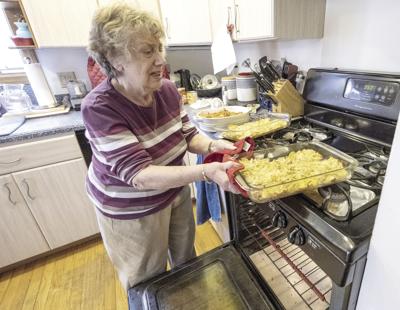
For years, Irene Gordon, of Belmont, has hosted two seder meals — one night for members of Temple B’nai Israel in Laconia who might not have family members to gather with, and on a second night for Gordon’s own family.
But this year, in the midst of the COVID-19 crisis, neither of these meals will be held — at least not in the customary way.
For the friends and acquaintance she would have invited, Gordon instead is preparing a seder-to-go — the meal with all the ritual foods, including the unleavened bread (matzo), bitter herbs and horseradish. For the family seder, Gordon will join with her children and grandchildren for a virtual seder on Zoom.
“I am devastated because I am going to have to do that,” Gordon said about having to partake of the meal away from others.
Danson believes the COVID-19 pandemic has deepened Passover’s meaning.
“This year as we mark Passover we feel like the ones who are going through a struggle,”
Danson said, as the number of people in New Hampshire who have tested positive for coronavirus has climbed to 715 (as of Monday), and the death toll has risen to nine, according to the state Department of Health and Human Services.
At a time when health experts have been emphasizing regular and thorough hand-washing as a way to halt the spread of the disease, the practice of ritual hand-washing will be especially relevant, and not just a quaint custom.
Those eating the Seder will wash their hands twice during the meal. Once before dipping the bitter herbs in salt water, and another time before the blessing over the matzo.
In another part of the Haggadah, the book that lays out the seder’s rituals and prayers, there is a recollection of the 10 plagues which befell the Egyptians and which Jews believe prompted the Egyptian pharaoh to free the Israelites from bondage.
“Plagues caused suffering, but they were elemental to freedom” for the Israelites, Danson reflected.
On Thursday Danson will lead a virtual Seder which all members of the congregation will be able to log into. Using Zoom, participants will attend from their homes, including Danson from Long Island, and cantor Melody Funk from Rumney.
Danson expects the Zoom seder will gather people in five different states, as well as some in Canada and even possibly one person in Vietnam.
There is another portion of the Passover ritual which at this time of stay-at-home, and economic and personal hardship that is likely to strike a particularly responsive chord.
“This year we are enslaved, but next year we shall be free.”


(0) comments
Welcome to the discussion.
Log In
Keep it Clean. Please avoid obscene, vulgar, lewd, racist or sexually-oriented language.
PLEASE TURN OFF YOUR CAPS LOCK.
Don't Threaten. Threats of harming another person will not be tolerated.
Be Truthful. Don't knowingly lie about anyone or anything.
Be Nice. No racism, sexism or any sort of -ism that is degrading to another person.
Be Proactive. Use the 'Report' link on each comment to let us know of abusive posts.
Share with Us. We'd love to hear eyewitness accounts, the history behind an article.