


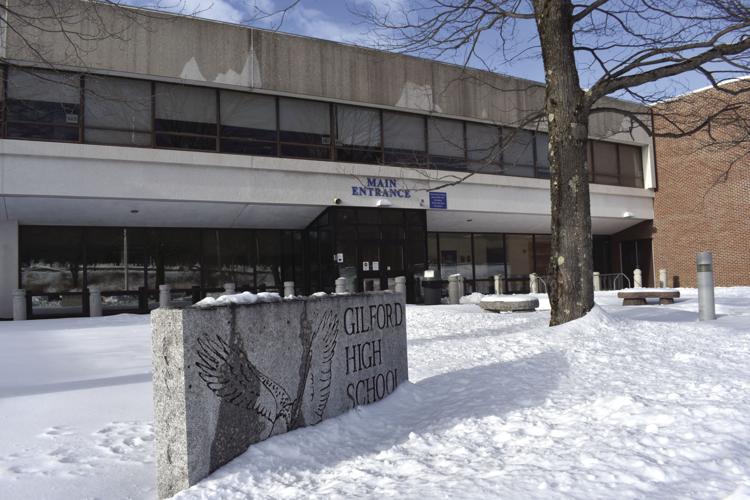

GILFORD — Across New Hampshire school districts, policies to prevent discrimination and promote inclusion of transgender students have sparked polarized debate at school board meetings – and netted mixed reviews from parents and students.
In Gorham and Oyster River – the state’s first district to adopt rules in 2015 – a policy passed with little fanfare or vocal resistance, buoyed by endorsement by transgender advocates and local school board support.
But in Gilford and other Lakes Region communities, the discussion has been more complex. Supporters of transgender students, including their parents and friends, residents of other towns and members of transgender rights groups have been pitted against local parents who say their reservations about the policy are being dismissed, and they’re being left out of a design process that is supposed to be local and collaborative.
“They seem intent on making this happen irrespective of people’s concerns,” said Angelo Farrugia, a parent of two Gilford students. “It’s not that we’re against transgender people. We would like to make this policy fair for all. Inclusion means including someone in what you do, not changing what you do to suit someone else.”
Farrugia and 15 other Gilford residents, including two high school students, aired their views and complaints Dec. 16 at public meeting at Lakes Region Vineyard Church in Laconia.
“There hasn’t been much dialogue,” said Kyle Sanborn, a Gilford parent with concerns about privacy and safety. “It’s just a few parents and kids who are fine with it. No one is saying a child shouldn’t be able to express themselves any way they want. But when that expression infringes on someone else, that’s when I have a problem.”
Critics worry about the influence of vocal supporters from outside the district. Gilford’s transgender and gender non-comforming policy is headed to a school board vote on Monday, and has changed little from earlier drafts, they say, and doesn’t recognize residents’ ongoing concerns.
“Outside interest groups are coming into the meetings. They certainly don’t represent the town residents,” said Kevin Shea of Gilford. “You’re dealing with a silent majority. People are afraid they’re going to be singled out or verbally attacked for their own beliefs.”
Others worry that the policy is being rushed without considering its long-term effects on access and fairness – or making residents aware of its financial impact. Renovating all school facilities to accommodate inclusion and privacy could cost millions and boost taxes, critics say, though no potential price tag has been disclosed.
“The elephant in the room is the financial obligation in the works. It’s going to make a lot of people who aren’t involved want to get involved,” Farrugia said. “Taxes are going to go up substantially because of this, and the townspeople need to be made aware.”
Vote coming
On Monday, Jan. 6, the Gilford School Board, including the district’s two representatives from Gilmanton, is poised to vote on the second draft of the district’s proposal. It calls for including transgender and gender non-conforming students in all facilities, activities and sports that match their consistently-expressed gender-identity, which can differ from sex at birth, and from the gender they recently expressed. Gender identity refers to how a person thinks of themselves – such as male, female, an identity in between, or gender-fluid, which changes. It’s distinct from sex, which is based on chromosomes and physiology.
Gilford’s current draft echoes a model designed by the New Hampshire School Boards Association in 2015. It calls for pronoun use that reflects gender, privacy protection for students who don’t want their parents notified about a gender identity change, and sharing of locker rooms and restrooms according to preferred gender identity, not sex – with private options allowed for those who are uncomfortable.
The association policy has guided 20-plus New Hampshire school districts that have codified transgender rights during the last four years. Most have devised stand-alone documents mirroring the association’s model. Others have gone a different route, addressing transgender inclusion and specific rights as additions to policies that already exist.
“Now that gender identity is a civil right added to the state statute, these students are required to be protected, just as in other civil rights,” said Gilford Superintendent Kirk Beitler, who believes the school board will act on the policy Monday. “We’re trying to make it inclusive of all, and that we’re supporting all children in school.”
In July, Gov. Chris Sununu signed SB 263, which made it possible for local school districts to be sued for discriminating against transgender students, and required them to design local policies to conform with state law.
SB 263 requires districts to come up with protocols to prevent, assess, intervene and respond to incidents of discrimination based on age, sex, gender identity, sexual orientation, race, color, marital status, familial status, disability, religion, national origin and any other protected classes in New Hampshire.
Overreach?
“Gender identity is not the only protected class in that bill, but this policy only focuses on one,” Sanborn said at the Vineyard Church meeting.
“Are you overreaching what was actually required by law? Creating a special class is a concern,” said Franklin City Councilor Karen Testerman, echoing points raised Dec. 9 at a Franklin School Board hearing, which drew about 40 residents with varied concerns. The policy was returned to the school board for review.
At the Vineyard Church meeting, 13 Gilford parents, two from Laconia, and two Gilford High School students discussed their worries over the safety and viability of shared restrooms and locker rooms, including privacy for biological males and females who will share facilities with members of the opposite sex, and the potential safety of gender inclusion in restrooms that are open to outsiders during school events. Transgender inclusion applies to members of the public who come on school property, Beitler said.
Many questioned the wisdom and safety of combining females and transgender females, who are biologically male, on girls’ sports teams – and vice versa – which they say puts biological females at a competitive disadvantage to biological males, because of innate physical differences and capacities based on sex.
The policy also calls for including parents in meetings to design individual accommodations for their transgender children, but doesn’t clearly or definitively require parents to be notified if a student discloses a new gender to a guidance counselor or school official. Some Lakes Region residents say that may violate FERPA, the Family Educational Rights and Privacy Act of 1974, which gives parents access to their children’s educational records.
“My emphasis is on good government, open and transparent. Are local government’s doing what they’re supposed to be doing and doing it right?” said Murphy of Gilford, a member of the town’s budget committee, and conservative activist who runs the statewide website, Granite Grok.com.
Community criticism of the policy’s required pronoun use according to a student’s preferred gender identity recently got the school board to change it to a strong recommendation that should be followed.
“The school board doesn’t have the power to grant a new right to an individual that causes a legal obligation to others,” Murphy said. “When does a state statute or a policy at a local level outweigh enumerated Constitutional rights” to conscience or free speech?
Competing opinions and values, issues of local control and debates over the actual requirements of existing federal and state law are bound to build steam as more of the state’s 167 school districts come up with rules to prevent bullying, ensure fair treatment of students, and insulate schools from lawsuits related to discrimination against transgender students and staff.
According to 2016 research by the Williams Institute at UCLA School of Law, approximately 0.6 percent, or 1.3 million adults in the U.S. identify as transgender and state transgender advocates put that figure between 1 and 2 percent in New Hampshire.
Locally, some local boards have included gender identity on existing policies. The Inter-Lakes School District, for instance, added gender identity, gender expression, transgender identity and non-binary gender identity to categories, including sex and sexual orientation, that are already protected under state and federal law. Transgender students and staff can use locker rooms and restrooms that match their consistently-expressed gender identity; anyone who feels uncomfortable and requests privacy can use a single restroom or the locker room on a separate schedule, according to an addendum to Inter-Lakes’ policy.
Laconia recently added gender identity to its equal rights policy, which went through a first reading. A task force will oversee coordination and implementation, School Superintendent Steve Tucker said.
According to Palana Belken, trans-justice organizer with ACLU-NH, community resistance is not uncommon. “There’s such a variety of viewpoints in New Hampshire. A 20-minute drive can be a world of difference,” Belken said.
In Gilford, across the nation and in other countries, controversy lingers over whether civil rights protections based on gender identity can legally trump civil rights protections based on sex. In Gilford early this fall, one parent, reflecting the views of other parents, teachers and coaches, started a website, “Protect Gilford Girls,” which has since become inactive.
Competing in sports
Nationally and internationally, disagreements fester among medical and sports authorities and women’s groups over whether it’s fair to include people who are biologically male with male sex-based attributes – such as greater bone density, musculature, blood flow and lung capacity that don’t automatically erase or reverse with hormone treatment – on playing fields with athletes who are biologically female.
According to Dr. Jack Turco, an endocrinologist and director of the transgender clinic at Dartmouth College, there are no significant differences in physiology and biology that lead to advantages in sports until puberty, after which testosterone surges. Puberty occurs at different ages, for some as early as late elementary school and middle school, and for others not until later in high school, according to medical practitioners.
Hormone suppression treatments can delay puberty, but ethical and medical questions persist over their wisdom and safety.
In Australia, 260 doctors signed a petition in September denouncing the use of puberty blockers, which affects the limbic system and can stunt bone growth, memory, executive function, and decrease brain size at a rate 10 times faster than aging, according to research cited by Dr. John Whitehall, a professor of pediatrics at Western Sydney University.
Testosterone levels determine muscle mass, circulation and breathing advantages that produce greater power, speed, and endurance. Puberty is the threshold for dramatic divergence in physical ability between the sexes, Dr. Bradley Aravelt, an endocrinologist and chief of medicine at University of Washington Medical Center, said in an article on the NCAA’s website.
In Glastonbury, Connecticut, three female high school track competitors are suing the school district and state’s interscholastic sports association over transgender inclusion on sports teams which they say violates Title IX, a federal law passed in 1972 to erase historically-unequal access to sports participation and competition between males and females. Title IX prohibits males from playing on female teams. The question has been referred to the U.S. Department of Education, but no decision has been made. Connecticut is one of 19 states that allow transgender high school athletes to compete without hormone treatment or other restrictions.
Gilford’s policy contains no hormone benchmarks or medical guidelines for transgender athletes to participate on teams that match their consistently-expressed gender identity. Gilford’s and the state’s public schools follow the NH Interscholastic Athletic Association’s policy, which endorses including transgender athletes in intramural and interscholastic sports without medical requirements, but defers individual decisions to school principals, according to Jeffrey Collins, executive director of the NHIAA.
At the same time, the NHIAA states its support of Title IX, which precludes males from female sports. As a result, the question of transgender inclusion in school sports remains sticky – and politically loaded.
“There’s a double standard in the NHIAA policy,” Sanborn said.
In 2020, the New Hampshire state Legislature will vote on SB 1251, which will require the state’s schools and colleges to keep school-sponsored sports and teams designated for the female sex open only to members of the female sex in agreement with Title IX. Sex will be determined by a student’s internal and external reproductive anatomy, naturally-occurring level of testosterone, and chromosomes, according to the bill.
Across Lakes Region schools, the issues of transgender inclusion continues to simmer below a cordial but divided surface.
Supporters of transgender inclusion policies go to meetings of other supporters, and critics attend meetings of fellow critics – even though both gatherings are open to the public.
Residents say school boards are in a difficult position. Some accuse board members and school administrators of pandering to special interests and notions of political correctness that ignore physical and medical facts.
Parents of transgender students say they and their children have experienced increased judgment and fear in the enduring spotlight, and a volley of hateful remarks, as well as expressions of sympathy and solidarity. Critics of transgender policy elements and policy legitimacy say they’ve been pelted by insults, including some that cast them as hateful bigots.
“If you disagree, you’re automatically shouted down,” said one Gilford parent, who declined to be named.
Another doubted if a petition calling for policy revision could gain any traction in town because too few people would be willing to be named. “I think a lot of people would sign it, but a lot of people wouldn’t,” Sanborn said. “It only takes a couple on social media to make it really uncomfortable for people.”
“If there was only a way to get an open, honest dialogue, it could be hammered out to the point that everyone’s happy,” said Bruce Wallston of Gilford.
•••
The Sunshine Project is underwritten by grants from the Endowment for Health, New Hampshire’s largest health foundation, and the New Hampshire Charitable Foundation.
Roberta Baker can be reached by email at Roberta@laconiadailysun.com


(0) comments
Welcome to the discussion.
Log In
Keep it Clean. Please avoid obscene, vulgar, lewd, racist or sexually-oriented language.
PLEASE TURN OFF YOUR CAPS LOCK.
Don't Threaten. Threats of harming another person will not be tolerated.
Be Truthful. Don't knowingly lie about anyone or anything.
Be Nice. No racism, sexism or any sort of -ism that is degrading to another person.
Be Proactive. Use the 'Report' link on each comment to let us know of abusive posts.
Share with Us. We'd love to hear eyewitness accounts, the history behind an article.