


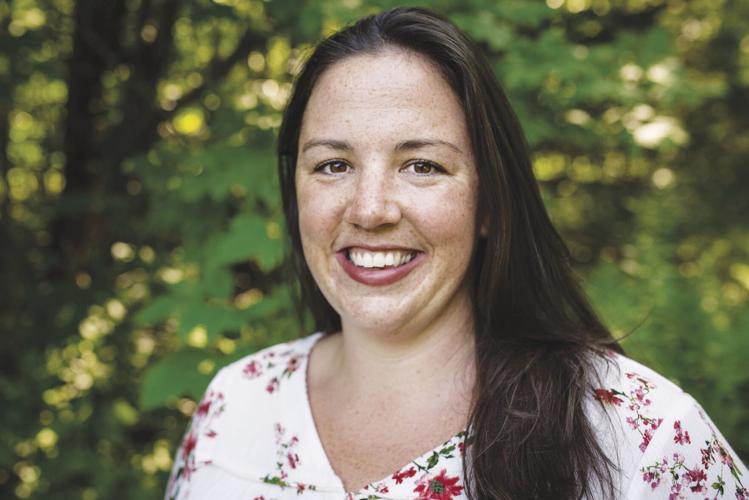




On this episode of Granite Beat, Julie Hirshan Hart and Adam Drapcho talk with Phil Kincaid, for several decades an editor at different New Hampshire news outlets and former executive director of the New Hampshire Press Association, and Kelly Burch, an accomplished freelancer whose work has been featured in many national publications. This editor-reporter team is behind a Granite State News Collaborative reporting series called The 306 Project, which is tracking an effort to reform education in New Hampshire.
This article has been edited lightly for length and clarity.
Julie Hirshan Hart: Kelly, how have you created a freelance career for yourself and why was that the right choice for you?
Kelly Burch: I'm a little bit of a freelance evangelist, so I would definitely recommend it to others. For me, it's really been the only way. I grew up in a household where my parents were self-employed; they were business owners in the contracting field. So I always knew I wanted to be a writer, but I wanted their flexibility. And for better or worse, all that responsibility that comes with being self-employed. So about 10 years ago, after my first daughter was born, I decided to try working in a newsroom through my pregnancy, and it was fine. I got a lot of experience, but I ultimately decided I wanted to have more control over my career. So I started freelancing and I haven't looked back since.
And for me, it's been accommodating of my life. I have two kids, and I'm able to deal with them. It's been financially very secure for me, I'm the breadwinner in our family, and a lot of people have the conception that freelancing can't be a lucrative or stable career path. That's certainly not the case. Professionally, it's given me the opportunity to work on such a wide variety of projects that it's really fulfilling.
Julie Hirshan Hart: Phil, your LinkedIn page says you've been an editor since the late ‘70s. Why were you drawn to editing? What in your view makes a good editor? How has that role changed over time?
Phil Kincade: Well, that's a pretty heavy question. I think the reason why I was drawn to editing is because as much as I loved reporting, it was a nonstop job. I used to say, when I was a reporter, I had a little knot in the back of my head that never went away, because I was always thinking. When I went to the desk, what happened was now I had a chance to be part of all of these stories and guide resources and to be able to sort of direct what kind of coverage was being done. That knot in the back of my head that was always there kind of went away.
I think that's why I found it to be a real draw, and it's amazingly different today than it was back then. Back then, we all worked in newsrooms, we all showed up, we were editors and reporters. Today, I am now a project editor, everything is done online. Everything's done through email, it's done through online editing. It's just a totally different experience because it's much harder to make connections to reporters, and for reporters to kind of really understand what you're looking for. You might say something that could be taken the wrong way, because it's in an email.
Adam Drapcho: Let's turn to The 306 Project. What's the significance of the name?
Phil Kincade: Well, that's actually part of the state statute. So there's this process that the state goes through every 10 years where they're going to update and rewrite the minimum standards for public approval, and that's called Education Statute 306. It's overseen by the Joint Legislative Committee on Administrative Rules, which was established in the early ‘80s. It's basically a legislative check on the executive branch.
For example, the board of education is now responsible, the department of education is now responsible every 10 years for rewriting those minimum standards. But they have to write them and submit them to this Joint Legislative Committee, which will then make the final approval. That's where we are at right now. We are in the process of where those minimum standards are now being finalized so that they can be submitted to the legislative committee.
Adam Drapcho: Why did this issue come to your attention? Why did you make the determination that it was worthy of a series?
Kelly Burch: Phil, and Executive Director for Granite State New Collaborative Melanie Plenda, first brought this to me. I have two kids who are in public school in New Hampshire. I think I'm a fairly well-informed parent, but I had no idea that this was happening.
I immediately saw there's been a lot of tension and concern within the education community, from teachers and administrators, the unions about this process. So immediately that had appeal because it seemed like there was a story there. There was tension and disagreement, and I wanted to figure out what that was about, and how it was going to impact students in New Hampshire.
As we got into it more, we realized there are really two issues here. There's the 306 minimum standards, which Phil just explained. Separate to that, there's the issue of competency-based education, which is sometimes also called competency-based learning. That is an approach to education that looks fairly novel than as it would have from when we were in school. Under a competency-based model, students are able to learn at their own pace. If you fail a test, you may be able to take that again to relearn the material and give it another shot. The proponents would say that really mimics the real world where you're being assessed not on your time in the classroom or completing assignments, but on really demonstrating that you know the material. So competency-based learning, separate to the 306s, has fairly widespread support, but there are a lot of inequities. There's not a ton of cohesion in how that is applied both in New Hampshire and nationwide. So we decided to look at these two issues in light of each other, but also, since they are separate, to move into a series that looks at both of them.
Adam Drapcho: For those who haven't seen your reporting yet, could you give us an idea of what conflicts arose?
Kelly Burch: There are quite a few here. And really, this gets into a lot of educational jargon. I think that's the reason it's hard for people to understand.
At the really high level, the current proposals for the 306s are moving New Hampshire even further along the track of competency-based education. When I went into the reporting, I thought that was going to be the tension, whether that switch to CBE — competency-based education — was a positive. And I was immediately surprised to see that really everyone on all sides of the issue agreed that CBE is the future of education. So that main issue I thought we were looking at was off the table, because there was consensus there, which was a pleasant surprise. But then I realized really the devil's in the details.
A few of the most contentious points about the 306 is not necessarily the concept of competency-based education. There are changes to the language in the document that a lot of people have raised alarms about. For example, they have replaced the term “certified educator” with simply “educator,” and they've removed the word “local” from references to local school boards.
To understand why those seemingly small changes are such a big deal, you need to have a picture of the educational ecosystem in New Hampshire right now. There's a ton of tension, I really don't think it can be overstated, between educators and the state and the state Department of Education under Commissioner [Frank] Edelblut. There's really a mistrust there, which we did a whole story on. So when educators see these seemingly small changes to language, they're concerned about the intent behind that and how it could be used to possibly undermine public education. So language is a major issue.
There are also changes that lean more heavily into competency-based education. For example, the term “grade level” is replaced with “learning level.” And that reflects the belief in CBE that a student should be able to learn where they are. If my kindergartener is reading at a second-grade level, he should be able to go to the second-grade class and get that enrichment, while his peers in kindergarten who are learning the essentials of phonics and sight words, continue to get that education in their classroom. But again, there's concern about how that would be implemented, because that takes a lot of coordination from schools. If a kindergartener is going to be moving up for reading, the entire school needs to be studying reading at the same time, same for math. So there's a lot of logistics that educators are concerned they won't have support for if these changes are made into requirements.
Finally, a third issue is the topic of extended learning opportunities, or ELOs. These are opportunities for kids, particularly in high school, to learn outside the classroom. Intuitively, this makes a lot of sense to a lot of people. It's the idea behind internships and vocational learning. Currently they're allowed in New Hampshire high schools, but high schools can put limitations on how many extended learning opportunities a student can do, and they're not widely available at younger learning levels. Under the current 306 proposals, those would be available to students in middle and high school, and districts would not be able to limit the number of ELOs that a student can get credit for.
Phil Kincade: There's another issue here that's breeding this mistrust. That is the idea that much of this work that has been done with the revamping of the standards has been done in private, out of public view. The board of education entered into a contract with the National Center for Competency-Based learning, which was formed by Fred Bramante, a very familiar name in New Hampshire politics. He is the former chairman of the state board of education, he has run for governor a couple of times, he touts himself as the father of competency-based learning. And they signed a contract with this group in November of 2020, and they issued a draft proposal of changes in March or April of 2023, but they never held any public session about what they were doing until May 17. So this bred an incredible amount of distrust from educators who were very concerned about what was going on because they had no idea. So when you talk about some of the distrust, as Kelly pointed out, a lot of it is predicated on this notion that the education community was not made part of this discussion.
•••
This article is part of The Granite Beat, a project of The Laconia Daily Sun and the Granite State News Collaborative, of which The Sun is a partner. Each episode, Adam Drapcho and Julie Hirshan Hart will explore with local reporters how they got some of the most impactful stories in our state and why they matter. This project is being shared with partners in the Granite State News Collaborative.


(0) comments
Welcome to the discussion.
Log In
Keep it Clean. Please avoid obscene, vulgar, lewd, racist or sexually-oriented language.
PLEASE TURN OFF YOUR CAPS LOCK.
Don't Threaten. Threats of harming another person will not be tolerated.
Be Truthful. Don't knowingly lie about anyone or anything.
Be Nice. No racism, sexism or any sort of -ism that is degrading to another person.
Be Proactive. Use the 'Report' link on each comment to let us know of abusive posts.
Share with Us. We'd love to hear eyewitness accounts, the history behind an article.