


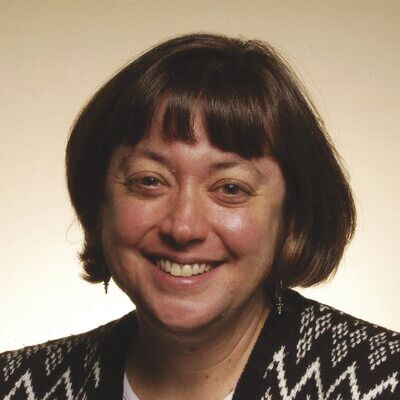
On this episode of The Granite Beat, hosts Adam Drapcho and Julie Hirshan Hart speak with their first guest who doesn’t work in New Hampshire. Felice Belman, currently deputy Metro editor for The New York Times, has deep roots in the Granite State with previous experience at the Concord Monitor. Belman discusses the differences between legacy newspapers and newer startups, the unique responsibility and resources of a publication like The Times, and the subjective decision-making process for determining which stories to cover.
This transcript has been edited lightly for length and clarity.
Adam Drapcho: You made your career at legacy newspapers during an era when there's been a proliferation of alternative news outlets. Do you think publications such as The Monitor, The Globe, and The Times provide something that newer startups just can't?
Felice Belman: The word legacy is interesting, partly because it’s at least partially code for, “We still have the albatross of the cost of printing, the cost of maintaining presses, the cost of delivering newspapers,” and all of that is really expensive. Startups are usually just online and they don't have all that overhead. So in a way, they're fortunate I think. When I started, legacy organizations were all there was. It's sort of what I know. Being at The New York Times is a luxury for staffers, but I do think there are startups and other new operations doing really creative and important journalism all over the place, including in New Hampshire, and more broadly in New England.
Adam Drapcho: Do you see some things you can do at The Times that you just wouldn't be able to at a non-newspaper outlet?
Felice Belman: Well, I do think that The New York Times is unique in this country for the size of the platform it has. There are few other publications with such a big reach, so I'm constantly mindful of how many people we are actually talking to. It sort of ratchets up the responsibility of choosing wisely what stories we write. We could write about everything or anything, so why are we choosing this story today? Why is this the most important or interesting thing we're doing? Also working for such an enormous publication comes with resources that just don't exist at smaller operations. For instance, if there's a school shooting in Nashville or deadly tornado in Mississippi, we can send scads of journalists there and not just reporters, but also videographers and still photographers, and we can rotate people in and out and still have others available to do other stuff. I felt that going from Concord to Boston and then from Boston to New York, it's just at a whole different level. It's just a luxury that isn't available to journalists in many other places.
Adam Drapcho: I imagine that broad reach goes in both directions, meaning that not only do you have so many readers, but so many people are trying to send in tips and information about things they think that you ought to be reporting on. How does an organization like The New York Times or The Boston Globe sift through all incoming information to decide what is worth assigning to a reporter?
Felice Belman: That's a really good question. I feel like it's very subjective decision making that goes on, it's not really a science. At the Concord Monitor we knew exactly who we're writing for and it was possible to understand your audience and what they were interested in — nothing could be too small, because everything is of interest when you are writing about the place where people live and work and go to school.
I'm now covering New York City news at The New York Times, but my first couple of years here it was the national desk and you're right, we get pummeled with tips and calls and suggestions. Some people are promoting ideas that they would like us to investigate, they see scandal or wrongdoing or something somewhere. But there's also PR people all the time and regular people.
I think a lot of the calculus is that, if something interesting is going on in Laconia and you’re a reader in San Diego, would you read the story? Is there something about what's happening in Laconia that is so inherently interesting that it doesn't matter that it's Laconia? Or is it an example of something going on all over the country?
There was a stretch when local school board meetings had become the forum for everybody's anger. People were coming and participating more than ever during COVID and just post-COVID because so many of the meetings were now accessible on Zoom. But then people started coming in person and I think the meetings in lots of places all over the country became really rancorous. It sort of morphed into a different kind of parent activism on all sorts of issues about what goes on in classrooms. That's a story you could tell from many, many parts of this country. There are probably towns in New Hampshire where you could center a story like that and then broaden it out and tell the whole thing.
That's a variety of story The New York Times will do where there's something going on nationally, and you choose a smart place to tell that story from. You win some and you lose some. There are stories that we think are going to do really well with readers and they bomb.
Adam Drapcho: There must be a tension in that, though. I imagine there must be stories where you must feel that if The Times doesn't publish it, no one will. So from a philosophical perspective, you might make the argument that you should do that story regardless. But then there's also the more practical side that says, 'We need to be publishing stories that resonate with readers." Is that a tension you feel in making that decision?
Felice Belman: Yeah it definitely is, and I think there are some stories that we feel a sense of mission and obligation on, regardless of whether we think they're is going to draw readers. One example of this is, there's a reporter on the Metro staff at The Times who has done the most excellent reporting on abuses within the jail complex at Rikers Island.
She's terrifically well sourced with sources among incarcerated people, among the guards, among the union, among the bureaucracy. She's written an awful lot about it. Some of those stories are sensational and do very well with readers, but not all of them. And I think we do them because it's a real public interest or concern about how we treat the people we lock up behind bars.
So we're gonna do those stories, regardless of whether the whole country is going to read them or not. It feels like this is part of our mission. There's other stories like that where we know going in that the audience is going to be small, but it feels important for that small audience. I think it's just a balance.
And I feel like almost any newsroom is going to be weighing decision-making like that at some level. What makes it a little bit easier here is that we've got really generous staffing and so can do more than one or two or three things at once, and I think that's not true of smaller places.
Adam Drapcho: What was it like to go from a small-market state like New Hampshire to a world-renowned publication? Did you find any of your lessons learned here were useful on the grander stage where you now stand?
Felice Belman: You get to make mistakes on a small stage, but it's harder on a big stage. So I think it's better to learn in a small venue and not have the whole world coming at you. You know, places like the Monitor and the Keene Sentinel and the Portsmouth Herald, the way they existed 30-35 years ago is not really the way they are.
There used to be places with sizable staffs of journalists. I remember at the Monitor, we had at one point 16 or 17 reporters and a Franklin Bureau and a Laconia Bureau. But they were also places where you could learn where there was really good editing, and you could be 22 years old and have an opportunity to cover politics and education and crime and fires and town meetings and get a really well rounded education on the basics.
I think it’s harder now to find places like that, and as a result there are young people who come to larger publications without that sort of basic training. And the world is really different. Those smaller venues are different even than they used to be, even the ones that still exist.
I do think one great thing about New Hampshire covering New Hampshire, it's so close up, you know? There aren't these layers of PR people between you and the people you're covering, there's much less of that in New Hampshire than there are in bigger venues. So it was not easy, yet not too hard to get the governor, or have a sit-down with the commissioners making the actual policy or carrying out the actual policy of the legislature. You could talk to the Speaker of the House, you could talk to the head of the Ways and Means Committee without having to set up an appointment 12 weeks in advance or go through PR people or just get canned email statements.
It's great to then launch yourself out into the world with those sorts of expectations and not feel like you have to just settle for written nonsense from some staffer, but really push to talk to the people you want to talk to. I feel so grateful to have had that sort of experience.
Adam Drapcho: I tend to check The New York Times website several times throughout the day, and I sometimes notice that the same story will be up but with a different headline. Do the headlines get rewritten as a result of real time feedback?
Felice Belman: They definitely do, I sometimes will put a story on the website and it doesn't do as well as we thought, readers aren't flocking to it. And one thing we can do to try boosting its fortunes is to play with the headline. Maybe we emphasized the wrong thing, or maybe there's a more engaging way to get into it.
There's a guy here who's such an excellent headline writer, and he often will notice that your story isn't doing as well as it could and he'll suggest a test. I don't know if everybody has this technology, but The Times is able to put two different headlines on a story so that half of the readers get one and half get another, and then we see which story version people actually read.
An hour later, we'll know which is the better headline and go with that one. Then we can have the people who are really sharp about these things put out a memo about what we learned, what sort of headline does well or doesn't, here's why we think these tank but these other ones worked well.
So it's not a science, but we can learn from it. For example, people like headlines with numbers in it. So if you say the subways are much less crowded than they used to be, it’s better to say there are 40% fewer people on the subway. There are some that get overused and then don't work so well anymore. Headlines that start with how the city council managed to waste all your money or something like that, they only work if the story really delivers on what the headline says. So that's something to think about.
•••
This article is part of The Granite Beat, a project by The Laconia Daily Sun and The Granite State News Collaborative, of which Laconia is a partner. Each week Adam Drapcho and Julie Hirshan Hart, will explore with local reporters how they got some of the most impactful stories in our state and why they matter. This project is being shared with partners in The Granite State News Collaborative.


(0) comments
Welcome to the discussion.
Log In
Keep it Clean. Please avoid obscene, vulgar, lewd, racist or sexually-oriented language.
PLEASE TURN OFF YOUR CAPS LOCK.
Don't Threaten. Threats of harming another person will not be tolerated.
Be Truthful. Don't knowingly lie about anyone or anything.
Be Nice. No racism, sexism or any sort of -ism that is degrading to another person.
Be Proactive. Use the 'Report' link on each comment to let us know of abusive posts.
Share with Us. We'd love to hear eyewitness accounts, the history behind an article.