


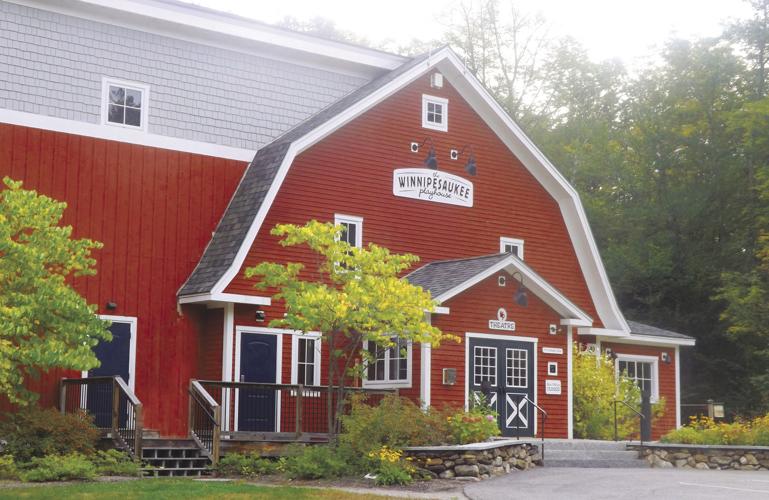

LACONIA — The Winnipesaukee Playhouse is among the businesses that will be hurt if the City Council requires owners to occupy homes they wish to offer for short-term rental in most of the city, one of the founders of that business says.
The City Council will discuss the issue on Monday.
Neil Pankhurst, who is also the producing artistic director of the playhouse, has testified to councilors that he owns a house where visiting actors, musicians and technicians stay during the theater season.
After the theater season, he rents it to visitors to defray expenses. He objects to the owner occupancy idea.
“It’s that element that makes it difficult for anybody,” he said. “Living in the property sort of isn’t an option for us.
“There is a potential that we would not be able to keep the property. Then we’d be back to square one and potentially we’d have to adjust our season.”
Planning Director Dean Trefethen has sent an email to the City Council, saying the proposed regulations could unduly restrict problem-free rentals, drive these businesses underground and benefit wealthier neighborhoods at the expense of middle-income areas.
Mayor Ed Engler has suggested requiring owner occupancy in short-term lodging outside The Weirs.
The Planning Board is recommending a system that would allow short-term lodging in most areas without the requirement for owner occupancy.
The system is intended to minimize potential conflicts between short-term renters and neighbors. It would include inspections, permits, fees and rules for dealing with parking, noise, trash and complaints.
“I agree with the goal of trying to preserve traditional neighborhoods and keep affordable housing available for year-round residents, primarily for young to middle age families and workers,” Trefethen said in the email.
“However, we must not lose sight of the fact the STL movement is real, is happening in the city now, and will likely continue regardless of any regulations or restrictions. And STL is not just about vacation and weekend stays. It is just as likely to happen on Pine Street or Gilford Avenue as it is in the traditional ‘resort’ areas of the city.”
Most short-term lodging establishments operate without problem, including some that have been rented among friends for decades. The city embarked on the regulatory scheme after complaints were made over a couple of problematic short-term rental homes.
While online platforms such as Airbnb and VRBO bring tourists to the area, short-term lodging also serves other purposes.
“The Planning Department is aware of several houses where the predominant use of the STL concept is business travelers and professionals staying in the city for a couple of weeks to perhaps a few months,” Trefethen said. “We have not had any complaints about these locations.”
Trefethen said the city will drive short-term rentals “underground” if its regulations are too restrictive.
“I think we want to bring this completely out in the open, but if 75 percent of the city can't participate, then I think we can expect this to happen anyway,” he said in his email. “The Genie is out of the bottle, so to speak, and we're not going to be able to put it back in.
“We're also setting up a situation where the wealthier areas of the city get to benefit from STL and middle income areas do not. This is neither fair or desirable.”
He offered up a potential solution.
“Perhaps if we restore the provisions of allowing it in most zones and that outside the CR (commercial resort) and SFR (shorefront residential) zones the number of rentals are limited,” he said. “Not sure if 18 was the right number, but certainly if it was something between 12 and 18 then we still have gone a long way toward discouraging the buying of properties by investors for the sole purpose of doing STL."
For his part, Mayor Engler said he continues to favor an owner-occupancy requirement.
“There are really two issues,” Engler said. “One is the quality of the facility and its impact on the neighborhood and its effect.
“One could make the argument that as long as they are nice and quiet and only 90-year-old ladies are staying there and all go to bed early, then who cares, it is not a nuisance.
“But it is still a motel. The question still remains, ‘Do you want a motel on a residential street?’
“Why have zoning at all if you’re going to allow motels to function on residential streets?”
Engler has also said it is important to maintain the residential character of neighborhoods and essential to preserve housing stock — already in short supply — for people who live and work in the area.
At the Sept. 23 council meeting, he said he wants to encourage families to move to the area and would like to see neighborhoods with more young people.
Engler said that when he moved into his home on Dartmouth Street 20 years ago, the neighborhood was full of kids.
“They were playing wiffle ball and who knows what,” he said. “They were bicycling up and down the street.
“Now there is one child, one child on the entire block. That’s not good and that’s not healthy and that’s one of the things we’re trying to turn around. If suddenly, the houses on either side of me become Airbnbs, that’s not going to help that at all. It makes it worse.”


(0) comments
Welcome to the discussion.
Log In
Keep it Clean. Please avoid obscene, vulgar, lewd, racist or sexually-oriented language.
PLEASE TURN OFF YOUR CAPS LOCK.
Don't Threaten. Threats of harming another person will not be tolerated.
Be Truthful. Don't knowingly lie about anyone or anything.
Be Nice. No racism, sexism or any sort of -ism that is degrading to another person.
Be Proactive. Use the 'Report' link on each comment to let us know of abusive posts.
Share with Us. We'd love to hear eyewitness accounts, the history behind an article.